A contractor evaluating a new excavator in 2027 faces a choice that did not exist five years ago. Diesel and battery-electric platforms dominate the current market, but hydrogen combustion and fuel cell equipment are showing up on the demo circuit and in early field trials.
The potential benefits of hydrogen-powered equipment include fast refueling, longer operating times than battery-electric equipment, and zero tailpipe carbon emissions. However, infrastructure gaps, hydrogen supply constraints and upfront costs still limit where the technology fits today. Contractors considering the option need to understand what hydrogen does well, where it struggles and which applications make the most sense for early adoption.
How Hydrogen Engines Work in Heavy Equipment
Before evaluating where hydrogen fits, it is important to understand that not all hydrogen-powered equipment works the same way. The technology generally falls into two categories: hydrogen internal combustion engines and hydrogen fuel cells.
Hydrogen internal combustion engines burn hydrogen directly and operate much like a traditional diesel engine. Fuel cell systems take a different approach, generating electricity through a chemical reaction and using that power to drive an electric motor. While both rely on hydrogen as a fuel source, their operating characteristics, maintenance requirements and equipment designs can look quite different.
Where Construction Sites Benefit Most From Hydrogen

Unlike battery-electric equipment, which may require extended charging periods, hydrogen-powered machines can typically be refueled in minutes and returned to work.
Combustion engines cost less to build than fuel cells and use existing service infrastructure at most dealers. Fuel cells deliver higher efficiency but require compressed hydrogen storage and more specialized service training. The choice between them shapes which contractors can realistically adopt the technology first.
Both technologies refuel in minutes rather than the hours battery-electric equipment requires. Alternative fuels construction planning benefits from hydrogen's runtime profile on jobs where downtime hurts most. Alternative fuels for construction equipment increasingly include hydrogen alongside electric and biofuel options.
Hydrogen’s biggest advantage is its runtime and refueling profile. Unlike battery-electric equipment, which may require extended charging periods, hydrogen-powered machines can typically be refueled in minutes and returned to work. That makes the technology most attractive in situations where downtime, battery weight, or charging infrastructure create operational challenges.
Contractors evaluating hydrogen for the first time should focus on jobs where diesel remains the practical default today:
-
Large earthmoving equipment - Excavators, wheel loaders, and dozers where battery weight and size cause design problems
-
Continuous 10-plus-hour shifts - Work cycles that exceed practical battery runtime without expensive swap infrastructure
-
Remote sites without grid access - Locations where charging infrastructure would take longer to install than the project runs
-
Cold-weather operations - Winter work where battery performance drops sharply and hydrogen holds output steady
-
High-power short-cycle applications - Aggregate crushing, quarrying, and other jobs demanding sustained peak output
Hydrogen can also reduce jobsite noise compared with diesel while maintaining similar operating characteristics. As contractors evaluate electric, biofuel, and hydrogen alternatives, these types of applications are where hydrogen currently appears to have the strongest potential fit
Infrastructure Gaps Slowing Hydrogen Adoption
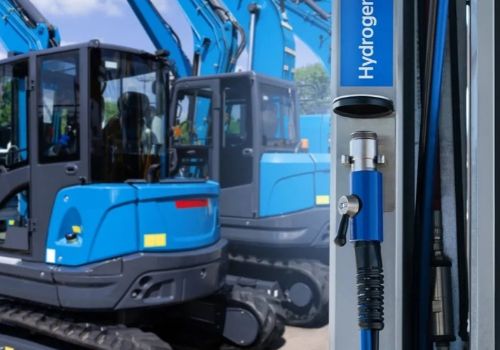
Hydrogen-powered equipment may be entering the market, but fueling infrastructure remains limited in many regions. While a handful of industrial corridors and pilot projects have built out hydrogen supply networks, most contractors do not have easy access to the fuel needed to support day-to-day operations.
That creates a practical challenge. Refueling stations for construction equipment are still uncommon, and larger deployments may require on-site storage, delivery agreements, or other supporting infrastructure. For many contractors, questions about fuel availability are likely to come before questions about equipment performance.
Cost is another consideration. Hydrogen often remains more expensive than diesel or grid electricity on an energy-equivalent basis, particularly when sourced from renewable production methods. As a result, battery-electric equipment may be the more practical option in locations where charging infrastructure is already in place.
That picture is expected to change as federal and state investments continue to support hydrogen hubs and related infrastructure projects. For now, however, fuel availability remains one of the largest factors influencing where hydrogen-powered equipment can realistically be deployed.
Where Hydrogen Fits
Hydrogen is not the death of diesel or the replacement for electric equipment. It is a third path with specific strengths and clear limits that suit some contractors and some jobs more than others.
Hydrogen has moved beyond the concept stage, but its long-term role in construction equipment remains tied to infrastructure, fuel availability and cost. The coming years will show whether those pieces develop quickly enough to support wider adoption. Until then, pilot projects will continue to serve as the industry's testing ground.