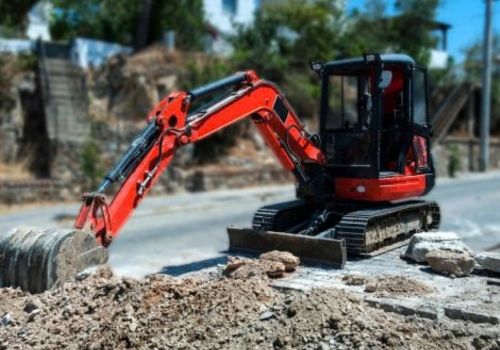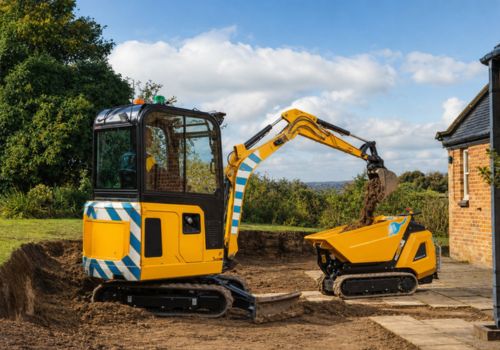
It’s just past 1 p.m. on a cold Tuesday, and the electric excavator that breezed through two full shifts on last week’s utility job is already flashing a low-charge warning. Same machine, same operator, same battery and a spec sheet rated for a full day.
What changed is the work: frozen ground, a heavier bucket and an uphill haul road. Published runtime reflects a machine in a mild test yard. But the actual duty cycle reflects the job at hand, and today it drained the battery early.
Understanding the conditions that affect battery performance is essential to planning equipment use, charging and project schedules.
WHAT A DUTY CYCLE MEASURES
A duty cycle is a pattern of how a machine draws power over time. An eight-hour shift is rarely eight hours of work. A machine spends part of the day parked, repositioning or waiting, and an electric drivetrain uses almost no energy during those gaps.
Two views matter. The macro workday cycle sets the total energy, in kilowatt-hours, the battery must store. The micro in-use cycle sets the peak power the battery must deliver for the hardest tasks. An excavator digging and dumping is a pulsed load, with short bursts of high demand between low draw, and that stresses a battery differently than the steady pull of a pump.
WHAT DRIVES ENERGY USE UP
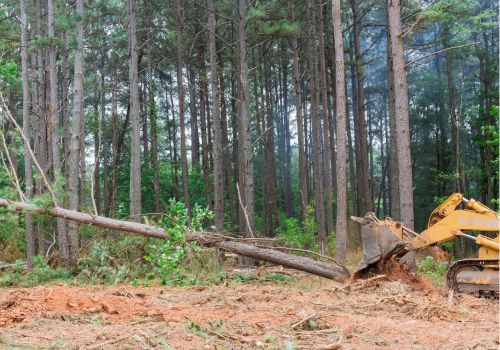
Task type moves the needle more than the badge rating. In a three-year Dutch field study that tracked seven battery excavators over 2,300 working days found that energy use varied by as much as 33% between applications. Forestry proved the most energy-intensive, while railway maintenance required the least. The 17-ton machines averaged 28 kilowatt-hours an hour; the 35-ton tracked machine drew 52.
High loads, frequent acceleration, grade, heavy attachments and auxiliary systems such as cab heating all add draw. Cold compounds it. A 2025 national-lab study of electric vehicles in Fairbanks, Alaska, reports that range fell to roughly 60% of the rated figure across U.S. counties that dropped below 14 degrees, and vehicles stored outdoors lost far more than those kept warm. The same chemistry affects equipment batteries, so a machine that performs as expected in mild conditions may fall short on a cold-weather jobsite.

That is the trap. Idle preserves charge, so it hides the poor utilization of a fuel gauge would expose.
Idle reads differently on an electric machine. A diesel burns fuel at idle; an electric machine draws close to nothing, so long stretches of idle barely touch the battery. In the Dutch study, idle time accounted for roughly 30% of monitored hours without derailing the shift.
That is the trap. Idle preserves charge, so it hides the poor utilization of a fuel gauge would expose. On a machine that is genuinely working hard, low idle is a signal that the cycle is dense and charge will run down fast.
CHARGING IS A SCHEDULING DECISION
Runtime and charging go hand in hand. In the Dutch study, a standard battery covered 56% of working days. A 45-minute fast charge on a 40-kilowatt connection raised that figure to 73%, while a lunchtime battery swap increased it to 90%. Returning the battery to a full charge took about 12 hours after an average shift and 15 hours after a 10-hour day, longer than most overnight charging windows. That makes power access, charging contingencies and the risk of a missed charge important considerations when assigning an electric machine to a job.
PILOT BEFORE YOU COMMIT
The best way to determine whether an electric machine fits a job is to measure actual performance rather than rely on assumptions about daily runtime. Before committing an electric machine to a project, run a short pilot and log the task performed, hours, energy used, ambient temperature, charging time and output. A week of real numbers show whether the machine fits the cycle, and which shift, season or task to keep it away from.
From compact equipment to heavy machinery, electrification is reshaping construction. Stay up to date on the latest technologies, trends and contractor experiences at CONEXPO-CON/AGG News