Fleet managers across the country weigh new options every time equipment replacement decisions land on their desks. Electric construction equipment now sits on that list alongside diesel machines for the first time in decades and the decision is no longer hypothetical for contractors bidding urban work or public infrastructure projects.
Adding a battery-powered machine changes far more than the original equipment invoice. Charging needs, jobsite power access and crew habits all shift once electric equipment arrives on an active job. Skipping the planning step usually means absorbing extra expense somewhere down the road, whether through emergency electrical upgrades, missed shift starts waiting on charge or generator rentals that were never in the original bid.
Understanding Electric Construction Equipment Costs on Site
Purchase price is only the starting point when comparing electric and diesel machines. Charging infrastructure, service upgrades and downtime during charging all add to the total cost of ownership over time.
For small and mid-sized contractors, the upfront gap still lands as a real barrier. A 2026 market analysis from the International Energy Agency notes that electric construction equipment can carry a 50 to 100 percent acquisition premium over comparable diesel units in the most battery-intensive categories. That premium alone can push the decision back a year for a contractor evaluating a fleet replacement.
Battery prices are moving in the right direction. The same analysis found lithium-ion pack prices declined 20 percent in 2024, slowly narrowing the gap between electric and diesel acquisition costs. Contractors expecting the gap to close faster than that will be waiting a while, since construction-machine battery packs are lower volume and more ruggedized than automotive cells.
Most contractors evaluate machines against a three- to five-year ownership horizon, not the full technical life of the equipment. The longer the planning window, the more the fuel and maintenance savings on electric construction equipment catch up to the acquisition premium.
How Much Does Electric Construction Equipment Really Cost on a Jobsite?
When calculating the expenses of electric machinery, expect the battery capacity to drive a large portion of the cost. Machines in the 50 to 200 kWh range balance runtime against price and total weight, and that band covers most excavators, loaders and compact machines contractors are actually considering.
Runtime data helps set realistic expectations. Volvo CE started serial production of its A30 and A40 Electric haulers, which are rated for up to six hours of runtime per charge in initial European deployments. Most medium-class electric excavators complete a full shift on one charge, with fast-charging systems delivering a partial recharge in about an hour on break.
Factoring charging time into daily schedules helps crews avoid productivity losses and unexpected delays. A machine plugged into a Level 2 charger overnight may show up ready to work the next morning. The same machine plugged into a slower feed may only be at 60 percent when the crew arrives, which reshuffles the entire day's dig plan.
Where Electric Machines Make the Strongest Case

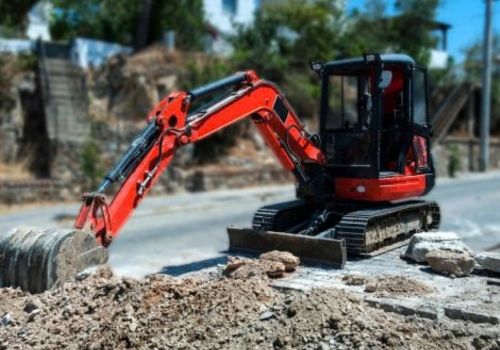
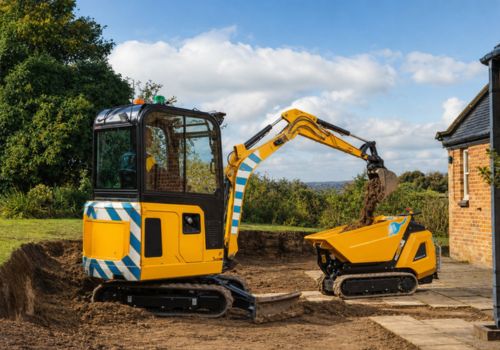
Electric excavators and loaders can work early-morning or late-evening shifts without triggering noise complaints, and quieter operation opens up bid windows on hospital, school and hotel-adjacent projects.
There are several use cases that signal electric machines may be ideal. Urban and noise-sensitive projects sit at the top of the list. Electric excavators and loaders can work early-morning or late-evening shifts without triggering noise complaints, and quieter operation opens up bid windows on hospital, school and hotel-adjacent projects.
Public funding programs also shift the math in specific markets. California's Clean Off-Road Equipment program offers vouchers to help contractors buy zero-emission construction machines, and additional California Air Resources Board funding covers charging infrastructure with enhanced amounts for disadvantaged communities and small businesses.
Contractors working in states with similar programs should factor available incentives into the acquisition math before writing off electric on price alone. Diesel still makes sense for remote locations without utility service or projects with unpredictable duty cycles.
Planning Charging and Power Needs Before Purchase
Once it’s decided that electric machinery will be used, every electric machine needs to have a reliable power source within reach of the active job. Some sites have grid power sufficient for overnight charging. Others need generators, portable battery banks or utility service upgrades brought in for the project.
Mapping the power plan before delivery day matters most on projects longer than a few months, where the utility interconnect timeline can slip past mobilization. Contractors who wait until the machine arrives to sort out charging often pay for temporary generator rentals that erode the operating cost savings the equipment was supposed to deliver.
Running extension cords across an active site creates safety risks and operational challenges. Many contractors set up dedicated charging zones on the jobsite instead, keeping cables clear of moving equipment and locating chargers close enough that operators can plug in at shift end.
Electric Equipment Rewards Contractors Who Plan First
Electric construction equipment offers real advantages for the right jobsite, duty cycle and long-term budget. Planning for power, charging and downtime upfront turns those advantages into measurable savings instead of surprise costs later in the project.
The fleets that will lead the next decade of jobsite electrification are the ones treating charging capacity as core infrastructure, not an afterthought bolted on after the purchase order clears. The equipment is ready. Whether the jobsite is ready is the question that decides which contractors actually capture the return.