Downtime rarely comes out of nowhere. Most failures build over time. In reliability engineering, there’s a clear pattern—early warning signs show up before a full breakdown, giving teams a window to act if they catch it early.
That matters because downtime has a direct impact on productivity. Studies consistently show that unplanned equipment failures are one of the main drivers of project delays.
Superintendents and field leaders don’t need to diagnose mechanical issues, but they do spend the most time around the equipment. That position matters. Small changes in how a machine sounds, performs, or behaves are often the first warning that something isn’t right.
Here are five signs worth paying attention to:
1. Changes in Sound
Operators usually have a feel for how a machine should sound. When that changes, even slightly, it’s worth noting.
A new rattle, a higher pitch, or a rough startup can point to wear or components starting to loosen. It doesn’t need to be loud to matter. Small differences are often the earliest signal, and they’re easy to dismiss if no one calls them out.
2. Slower or Inconsistent Performance
A machine that is still running but falling behind is easy to overlook. It shows up as slower cycle times, reduced power, or inconsistent results.
Those changes usually don’t stay small. They often point to added strain inside the system, which leads to larger issues if they’re ignored.
3. Leaks, Residue, or New Smells
Fluid leaks are the obvious red flag, but smaller signs matter too. Residue buildup, damp areas, or new smells can all point to early failure.
Hydraulic fluid, fuel, and oil don’t tend to stabilize on their own. They usually get worse. Even a faint smell can be a sign of overheating or pressure building somewhere it shouldn’t be.
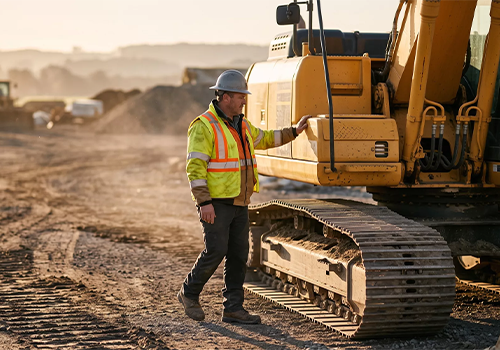
A quick walkaround catches most of this before it turns into a bigger repair.

When operators start working around a machine instead of with it, something is usually off.
4. Operators Adjusting More Than Usual
When operators start working around a machine instead of with it, something is usually off.
It might show up as constant corrections, extra steps during operation, or changes in how the equipment is run just to keep output consistent. Those adjustments are easy to miss unless someone asks about them directly.
Operators see these changes first. If they don’t have a simple way to flag them, they often go unspoken.
5. More Frequent “Small” Issues
A single minor issue may not slow things down much. When the same type of issue shows up again and again, it’s usually not random.
Frequent resets, repeat fixes, or recurring problems with the same component often signal a larger failure building in the background. Waiting until it fully breaks is what turns a small repair into downtime.
CATCH IT EARLY, KEEP IT MOVING
None of these signs require a mechanic to notice. They come from paying attention to how equipment runs day to day and speaking up when something changes.
That approach makes a measurable difference. Facilities that rely on preventive or predictive maintenance practices see significantly less downtime than those that only react after something breaks.
Most equipment failures follow a path. The early signs are usually there. When teams pay attention to them, they have more options. Repairs stay smaller, maintenance can be planned, and work keeps moving forward.
From preventive maintenance strategies to equipment troubleshooting, proper upkeep can help improve reliability and reduce downtime. Explore more maintenance articles at CONEXPO-CON/AGG NEWS.