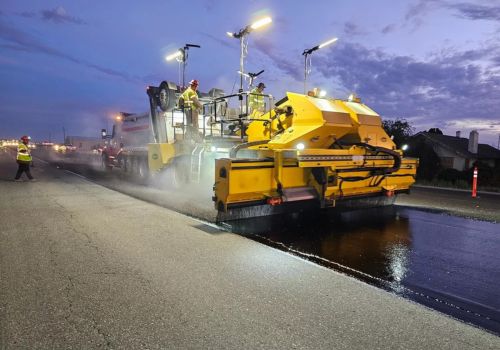
As daylight hours grow shorter in the fall and winter, construction crews often find themselves working in low-light conditions, especially during early mornings and late afternoons. Without adequate lighting, reduced visibility can increase accident risk, making construction site safety an even greater priority as winter approaches.
Proper lighting helps reduce incidents, improve productivity and keep crews aware of their surroundings, especially as work progresses and conditions change. Portable and connected lighting options give superintendents the flexibility to adjust coverage as needed, helping prevent near-misses and ensure smoother handoffs between shifts. With several lighting solutions available, it's worth considering which options work best for different areas of a construction site and how to use them effectively.
1. LED Balloon Lights for Wide-Area Coverage
LED balloon lights hang overhead and throw diffuse light across a wide area without harsh shadows. Construction site safety improves when crews see the ground and each other clearly during morning setup. The balloons run cool and mount to poles or lift arms without adding heat risk.
Balloon lights work best on pours, excavations, and tasks where tower-light glare causes eye fatigue since their 360-degree spread cuts down on dark corners a directional light leaves behind. Most balloon units run on standard job power or plug into a small construction generator. Rentals are widely available for short-duration night work.
2. Portable Tripod Lights for Fast Setup
Tripod lights fold, roll, and stand up in under a minute, which suits fast-moving crews. A single crew member can set up three tripod units in the time a single tower takes to raise.
Tripod height reaches 10 to 12 feet, enough for a small work area or an equipment staging zone. Battery-powered models allow you to skip the extension cords entirely.
Tripods pair well with a rolling battery pack or a small construction generator for remote spots as their footprint fits into the bed of a service truck without eating cargo space.
3. Tower Lights for Full-Site Construction Safety

Regardless of the equipment selected, lighting coverage should be checked regularly as site conditions change. Conducting a weekly walkthrough after dark helps identify poorly lit areas that might otherwise go unnoticed during daytime inspections.
Tower lights are the workhorses of large construction sites, with most models extending 20 to 30 feet to illuminate expansive work areas. Rather than relying on dozens of smaller fixtures, superintendents can improve construction site safety by strategically positioning a few towers along site perimeters, access roads, and other high-traffic areas.
Once coverage needs are established, the next consideration is power and fuel efficiency. Diesel-powered towers are a common option, while modern hybrid models combine generator and battery power to reduce fuel consumption during periods of lower demand. LED-equipped towers offer additional efficiency, with some models providing significantly longer runtimes per fuel tank than older metal halide systems.
Regardless of the equipment selected, lighting coverage should be checked regularly as site conditions change. Conducting a weekly walkthrough after dark helps identify poorly lit areas that might otherwise go unnoticed during daytime inspections.
4. Rechargeable Cordless Lights for Tight Spaces
Cordless work lights are often used in tight spaces where larger lighting setups are not practical. Magnetic bases and hook mounts make it easy to attach them to steel, scaffold, or formwork and move them as work progresses.
Many models share the same battery platform as common power tools already carried by the crew, reducing the need for additional batteries and chargers on-site. Runtime on high output typically ranges from two to six hours, though cold weather can affect battery performance.
5. String Lights for Walkways and Access Paths
String lights work well along walkways, stair towers, and material routes where crews need consistent lighting over a larger area. They are especially useful for access paths between parking areas, trailers, and active work zones, which can be easy to overlook during lighting setup.
Rated LED strings hold up well in cold, wet, and dusty conditions and can remain in place throughout the winter. Most plug into standard jobsite power or run from a small generator with minimal power draw. Replacement bulbs and connectors are inexpensive to keep on hand, making string lights a practical option for high-traffic routes used by workers, equipment operators, and delivery vehicles.
6. Vehicle-Mounted Lights for Mobile Work Zones
Vehicle-mounted lights turn a service truck or utility vehicle into a mobile lighting rig. Roadway, utility, and paving crews use vehicle mounts to stay lit without dragging a tower along.
Magnetic and bolt-on options fit most service trucks without permanent modification. Wiring to the vehicle battery keeps runtime tied to engine hours. Portable inverter generators also give mobile crews a compact power source when the vehicle battery falls short. Angle-adjustable heads let the operator aim light where the work is happening rather than at a fixed point. The mounts also serve as backup when a primary source fails on a night pour.
7. Solar-Powered Lights That Skip the Construction Generator
Solar-powered towers and post lights charge during the day and run through the night on stored power. Solar-powered lighting is particularly useful on remote construction sites or in areas where fuel delivery is difficult or restricted. Since these systems operate on stored solar energy, they can reduce or eliminate the need for construction generators, helping contractors avoid fuel-related expenses and potential project delays.
Modern solar-powered lighting units can provide 12 to 15 hours of runtime on a full charge, although actual performance depends on weather conditions and battery capacity. Because these systems need direct sunlight to recharge efficiently, they work best in open areas with minimal shade. Cloudy winter weather can limit charging and reduce available runtime, making backup lighting essential in regions with prolonged overcast conditions. Despite these limitations, the fuel savings can help offset the higher rental costs of solar-powered units over the course of a project.
8. Connected Smart Lighting for Construction Site Safety
Connected lighting systems allow superintendents to monitor and control jobsite lighting remotely through a phone, tablet, or centralized dashboard. Depending on the system, they can adjust brightness, manage lighting schedules, and check equipment status without having to visit each fixture individually. This makes it easier to maintain adequate lighting coverage as crews move between work areas and site conditions change.
Connected systems bring runtime, fuel use, and fault reporting into existing telematics dashboards, giving supervisors one place to monitor equipment performance. They also reduce the need for manual adjustments in the field. Coverage can be changed remotely as crews relocate, and maintenance teams can address issues earlier when fault alerts identify a problem before lighting is lost
Building a Winter Lighting Plan That Actually Works
Winter lighting is rarely a single-product decision. Balloon lights handle wide-area work, tripods and cordless units fill gaps, and towers or solar-powered systems can provide coverage around the perimeter. The goal is less about choosing one lighting solution and more about making sure the entire site is covered, including material staging areas, access routes, and active work zones.
A lighting plan is only as good as the coverage it provides after dark. Walking the site before sunrise or after sunset remains one of the simplest ways to identify shadows, blind spots, and areas that need additional light before they become a safety concern.