A piece of equipment goes down on a jobsite. What follows is not a single decision, but a chain of calls, approvals and handoffs before anything changes in the field.
Time is lost between those steps.
Ben Preston, co-founder and COO of Gearflow, sees this pattern across contractors and fleet teams. In one case, a contractor he worked with was managing procurement through layered workflows and, to better understand the process, measured what it takes to purchase a single part. It took 24 separate steps.
Most delays trace back to three issues: unclear intake, limited visibility once requests are in motion and teams consumed by coordination rather than decision-making.
A project manager may follow up on a request that has already been handled. A field crew may be waiting on equipment without knowing there has been a delay. Time is spent confirming details instead of keeping work on track.
“It’s more of a death by a thousand cuts than one big event,” Ben says.
When procurement spans teams and tools, decisions slow before work reaches the field.
HOW CONTRACTORS CAN REDUCE THE DRAG
Existing systems track work and costs but do little to coordinate the steps in between. In practice, “work happens in sequence, not in parallel,” which slows decisions and extends timelines, Ben shares.
As a result, teams spend more time on follow-ups, updates and data entry, pulling experienced staff away from higher-value work and contributing to burnout. The process also depends on individuals who know how to navigate it, so when they leave, that knowledge goes with them.
To address those gaps, step back and map the process end to end. Try starting with a simple swim lane diagram on a whiteboard. By laying out each step alongside the people and systems involved, teams can see how work actually moves and where it slows.
The next step is tightening how requests move from need to resolution. Contractors can focus on three areas:
-
Start at the jobsite. Simplify how issues are reported by replacing complex forms and email threads with faster, more consistent inputs. Clear intake reduces rework and prevents delays from the start.
-
Bring vendors into the workflow. Many procurement steps rely on dealers and rental providers, yet those interactions often occur outside core systems, leaving a large portion of the process managed separately from internal workflows. Bringing those partners into the workflow reduces back-and-forth and improves coordination.
-
Make data available at the moment of decision. Ensure teams can see cost, availability and repair timelines when decisions are being made, not after the fact. This includes decisions such as whether to repair or replace equipment or to rent rather than use internal assets.
These changes shift time away from coordination and toward execution.
BUILDING A CONNECTED PROCUREMENT WORKFLOW
To improve efficiency, contractors are moving toward more connected procurement workflows that bring requests, communication and sourcing into one place.
In a more connected workflow:
-
Requests are tracked from submission through resolution.
-
Communication stays tied to each request.
-
Information is available when decisions are made, not after the fact.
Technology supports this shift by bringing requests, communication and sourcing into a single workflow, giving teams a clearer view of status and next steps. “That way, teams have full visibility into what’s happening and can move faster,” Ben explains.
The faster teams can move from need to resolution, the less time is lost between steps. In a process built on coordination, even small gains in visibility and speed have a big impact on how work moves out in the field.
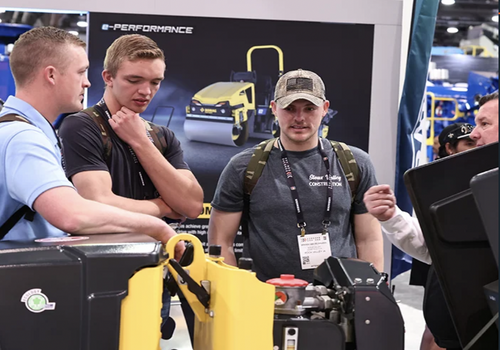
Gearflow introduced its latest procurement platform at CONEXPO-CON/AGG, highlighting the industry’s growing focus on improving visibility and coordination across equipment workflows.
PHOTO CREDIT: SHUTTERSTOCK/PAPARAZZZA