The construction industry isn’t short on technology; it’s short on people.
With an estimated need for 450,000 additional workers by 2027 and a growing wave of retirements, contractors are facing a fundamental challenge: how to do more with fewer experienced workers.
At the same time, new technologies from AI and robotics to drones and digital twins are advancing rapidly. The question is no longer whether the tools exist. It’s whether the workforce is ready to use them.
That tension between innovation and workforce readiness was a central theme during The Global Technology Trends Shaping the Construction Industry session at CONEXPO-CON/AGG 2026.

Technology must be tied to real jobsite problems and implemented in a way that crews can adopt. Otherwise, even the most promising innovations fall short.
TECHNOLOGY CAN HELP—BUT ONLY IF IT’S USED
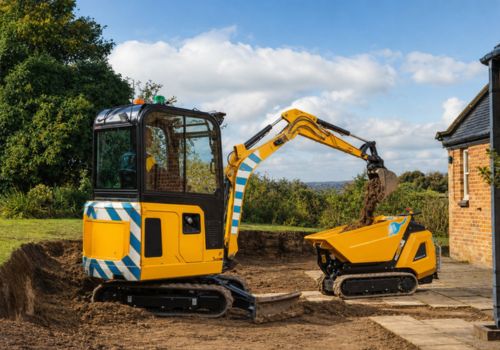
Automation and robotics are often positioned as the answer to labor shortages. And in many ways, they are.
“The compute power is finally getting ready for prime time,” says Ty Findley, co-founder and general partner at Ironspring Ventures. “That’s enabling a lot of the autonomy opportunities that we’re looking at.”
Autonomous equipment can improve productivity, precision and safety. But even the most advanced systems depend on how they’re used in the field.
“You need to have the ability to sense the environment around you,” says Vivin Hegde, founding partner at Zacua Ventures.
For contractors, that means technology must be tied to real jobsite problems and implemented in a way that crews can adopt. Otherwise, even the most promising innovations fall short.
CLOSING THE GAP BETWEEN DATA AND THE FIELD
One of the biggest barriers to adoption isn’t access to data; it’s how that data is shared and used.
“How do we make AI human and interactive so that people realize and experience it from a human perspective and not just from a transactional nature?” asks Zulq Malik, founder and CEO of SMARTBUILD.
On many jobsites, critical information is still siloed and accessible to only a few people. AI has the potential to change that by guiding users through workflows and making data more accessible across the team.
The result is not just efficiency, but usability. Tasks like safety documentation can drop from 15 minutes to just a few minutes, making it easier for crews to adopt new processes without adding complexity.
MORE DATA, FEWER BARRIERS
Drones are another example of technology evolving to better support the workforce.
Instead of requiring manual operation, drones are increasingly moving toward autonomous, continuous data capture, reducing the burden on crews while improving visibility across the jobsite.
“Think of it as a Roomba that just flies over the construction site, sucks up data and magically makes the model in the cloud,” says Colin Guinn, CEO of Guinn Partners.
As these systems shift from weekly to daily use, they create a steady flow of data without requiring additional effort from workers in the field.
THE REAL INVESTMENT: PEOPLE
Even with rapid advances in automation, one message was consistent: technology alone won’t solve the labor challenge.
“It’s not just about the machines you buy, but the people who operate them,” says Bharani Rajakumar, founder and CEO of Transfr.
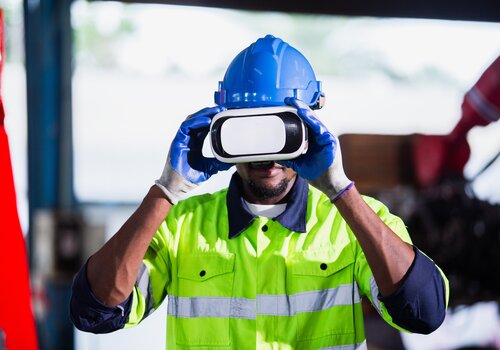
Training is becoming just as important as equipment investment. Tools like virtual reality and simulation are helping workers learn faster, build confidence and gain experience before ever stepping onto a jobsite.
But the risk for contractors is clear. If you upgrade your machines, but don’t upgrade your operators, you limit your ability to scale.
A WORKFORCE-DRIVEN FUTURE
Construction is becoming more connected, more automated and more data-driven. But at its core, it remains a people-driven industry.
The companies that succeed won’t be the ones with the most advanced technology. They’ll be the ones that make that technology usable by integrating it into workflows, training their teams and aligning it with real jobsite needs.
Because the future of construction isn’t just about smarter machines. It’s about enabling the people who use them.
Listen to the full discussion of global trends shaping the industry in our free on-demand recordings of the Ground Breakers stage from CONEXPO-CON/AGG 2026.
PHOTO CREDIT: SHUTTERSTOCK/FOTO EAK