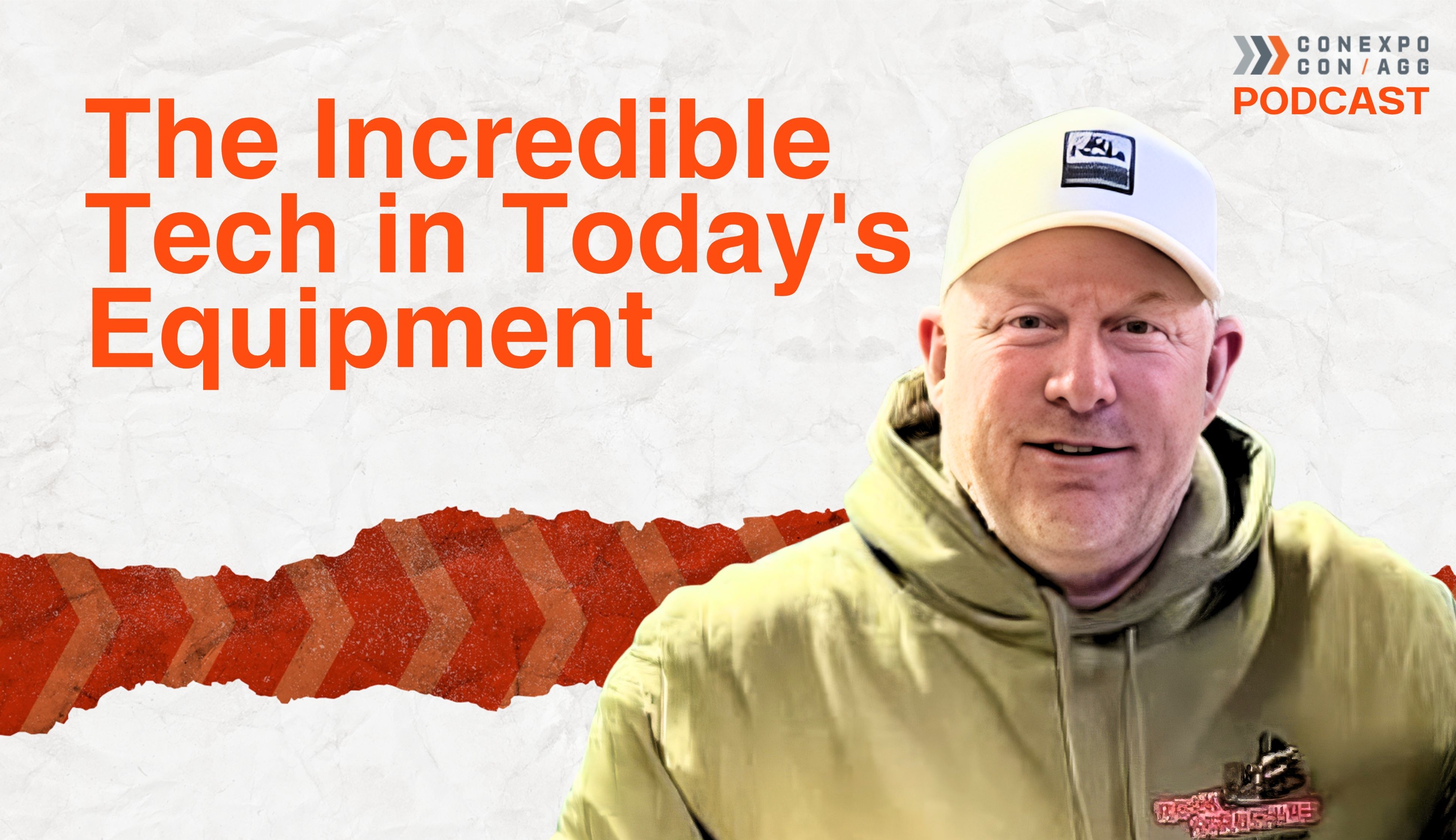



What is the future of construction technology? Veteran excavation business owner Ryan Goodfellow of Rock Structures joins the show to discuss the real trends separating hype from high-ROI investments. He offers a detailed analysis of new machinery from brands like Hyundai, John Deere, and Hitachi, explaining how integrated systems are becoming the new standard.
Many contractors left the show wondering which technologies will actually make a difference on the job site. Ryan explains why features like integrated payload scales, 2D/3D systems, and advanced operator cabs are no longer luxuries but necessities for efficiency and profitability. He provides a clear perspective on how to grow a construction business by focusing on becoming better, not just bigger, a strategy that has kept his team loyal and his clients happy for years.
Topics:
- How global equipment brands are changing the market
- Growing an excavation company without getting bigger
- Why leaders should show up on jobsites more often
- The mindset that builds long-term success in construction
Watch now:
Listen now:
Listen on your favorite app: Apple Podcasts | Spotify | YouTube
Subscribe to the CONEXPO-CON/AGG YouTube channel to be notified of new episodes.
Join more than 65,000 industry peers who receive construction industry news and trends each week. Subscribe to CONEXPO-CON/AGG 365.
Episode transcript:
Taylor White: Welcome back to the CONEXPO-CON/AGG Podcast. I am your host, Taylor White. We are now post-show. We have so much to catch up on. The guy I have on here today has been on the podcast back in 2023 or 2024. I would like to introduce a guy who is super busy at the show: Ryan from Rock Structures, thanks for being here.
Ryan Goodfellow: I appreciate you having me on, Taylor.
Taylor White: We briefly saw each other at CONEXPO. We did not get any time to catch up. We both had a busy schedule. Your schedule was probably busier than mine. You were booth hopping. You were at every booth promoting products. You were hanging out with people. How was your CONEXPO experience?
Ryan Goodfellow: It was good. It was busy. I have been going to CONEXPO since 1987. They first had the show there after bringing it from Texas. I missed two years. The show has taken on a different meaning for me. I went as a kid. Now I go as an adult and a business owner. I never thought I would be sponsored to attend CONEXPO. I never thought I would be part of the show. I have many connections with manufacturers. It makes the show fun. It also takes the fun out of the show. You do not get to see everything. I barely made it into the North Hall. I missed the Central Hall and the South Hall completely. I did not make it out to the Platinum Lot. It was a long walk. I did not get to see what I wanted. The West Hall was great. The Festival Lot was great. The lot with John Deere was great. I saw some things. I just did not see everything. It is bittersweet.
Taylor White: I agree with you. Many people on our CONEXPO show said they tried to say no to more things this year. That is smart. It is tough when you have an online presence. People want you at their booths. They want you talking. I wanted to spend more time walking around. I wanted to see people who watch our content online. Connecting with them is the best part. You have attended the show for a long time. What is the biggest change you have noticed?
Ryan Goodfellow: The show is much bigger now. There are more vendors. There are more manufacturers. There is more information. I walked into the North Hall and was blown away. The technology was impressive. I do not just mean GPS. I mean everyday items you need to run your business. Electrical parts and wear parts filled the space. We rarely think about where our machines come from. We do not think about our wear parts, tracks, chains, or links. We automatically assume everything is built or assembled in the United States or Canada. Our eyes are closed to the reality. Many parts are made in different countries. They might be assembled in the United States. The origin does not matter. We just need the parts. Some parts offer better quality than others. You must specify the quality you want. We need these other countries to build our equipment. Look at the engine labels on the machines. They come from China, Japan, and South Korea. You walk into those halls and realize the scope of the industry. Manufacturing spans North America, Europe, and Asia. The reach of the excavation and construction world is amazing. We need help from everyone to get our supplies.
Taylor White: You bring up a good point. Look at the size of the booths. You have Caterpillar, Komatsu, and John Deere. They are the main brands. Now outside of those, the SANY booth is getting bigger. The Develon booth is getting bigger. The XCMG booth is getting bigger. The presence is growing. Look at Jimmy Starbuck. He is a big spokesman for SANY. These booths are growing for a reason. They are capturing market share. Every brand has its place. Quality speaks for itself. People push back at first. Then they start embracing the new brands. SANY came to our area seven years ago. Everyone said they would never buy one. Now you drive by a job site and see them working. It makes you think. Seeing these global brands grow is the biggest shift at the show.
Ryan Goodfellow: Look at the South Korean brands. Hyundai owns Develon now. I visited Hyundai in South Korea last August. They showed me a brand new machine. They debuted it at CONEXPO. Everyone saw the larger machines. I ran those machines for a week. I tested the tiltrotator and the 2D and 3D GPS. I put them through the wringer and gave feedback. I was blown away by their progress. The older Hyundai machines were just decent. These new machines are amazing. They have the nicest cabs in the industry. They feature dual screens, a nice seat, and good cameras. Caterpillar released their Next Gen models five years ago. They are great machines. These other companies are catching up quickly. John Deere moved away from Hitachi. They arrived at CONEXPO with a full production line. Their machines have over 165,000 test hours. Their technology is ready. John Deere, Hyundai, and Develon have integrated payload systems. They have integrated 2D and 3D systems. They are moving towards integrated tiltrotators. Technology is the primary focus. People talked about electric machines at the last show. We did not see many this time. Hitachi debuted a new model with a seven-inch screen. It is a step in the right direction. It is not quite enough. I think they realized this after the show. They need to step it up. I ran a John Deere 135 at the Rototilt booth. I cleaned up the booth after the show. The machine was incredibly smooth. I have owned John Deere machines before. They were basically Hitachi excavators with John Deere motors. I know they run well. Hitachi needs integrated monitors with 3D and payload systems. We will likely see that from Hitachi at CONEXPO 2029. They will fall behind if they fail to update.
Taylor White: Is there a market for simpler machines? I will spend more money to give my operators the best tools. They want the technology. They want the ventilated and heated seats. That is the reality. You need comfortable cabs to attract good operators. Will Hitachi and Kubota always have a place with basic machinery? Some machines just offer a radio and air conditioning. Are there enough contractors who only want a machine that digs? They do not care about the fancy features. What do you think?
Ryan Goodfellow: Those buyers will always exist. Think about the daily operations. I loaded a truck with boulders on Saturday. I used a Caterpillar Next Gen excavator. We did not have a scale on the site. I used the excavator to weigh every rock. The system tallied the weight. I reached 32.4 tons. The driver wanted exactly 32 tons. I told him to weigh the truck at the local stop. He called me back and reported 31.8 tons. We were very close. Some operators just want to run the machine. They do not care about 2D or 3D systems. They do not care about tiltrotators. They do not care about air-conditioned seats. Basic seats wear out. Premium seats keep operators happy. Payload systems change the game. You know exactly how much material you move each day. Many contractors load trucks without knowing the weight. Drivers get pulled over and fined for overloading. They refuse to return to the job. I can show a driver the exact weight I loaded. I can prove I put exactly 31.68 tons in the truck. This technology will become standard. We discussed this with John Deere six years ago. We need to track the daily tonnage. Many companies base their pricing on yardage or tonnage. Daily tracking reveals if your operator is productive.
Taylor White: We rely on payload data for change orders. We charge a per-ton rate. The information is easy to find. Our machines record the exact weights.
Ryan Goodfellow: That is exactly right. The industry is moving in that direction. Buyers might reject premium seats. They cannot ignore the safety cameras. A strong HVAC system is vital. Good visibility through large glass windows matters. Dual monitors provide a huge advantage. You place your 3D system on one screen. You run your machine data on the other screen. Some manufacturers only offer one screen. You cannot split the view. You need two monitors if the screen cannot split. The industry will adopt this setup soon. SANY will add this technology. They are fighting for market share. Hyundai, Develon, Caterpillar, and John Deere already offer it. You mentioned the large XCMG booth. Kobelco had a massive booth. Liebherr always maintains a strong presence. Mobile crushers are the next trend. Small crushers process 70 tons an hour. You load them with mini excavators. Large crushers weigh up to 80,000 pounds. Mid-size crushers will enter the market soon. They will weigh around 40,000 pounds. Contractors will use them heavily. We have a lot of rock near Park City. Builders construct large homes there. On-site crushers eliminate the need to export material. Hauling away ground rock costs money. You can crush the rock and reuse it. Gravel and aggregate prices are high. Recycling material on the job saves cash.
Taylor White: Material reuse is popular here. Soil remediation machines are gaining traction. Ottawa has strict rules for soil management. Anything other than topsoil goes to excess soil depots. Disposing of dirt is expensive. You must find a site classified for fill. You can transport the material there. You can also clean the soil on your site. Those soil cleaning machines cost a million dollars. The machine pays for itself after a few large jobs. We last spoke about your residential projects. You build large homes and boulder walls. What has your business done since our last talk? Have you bought new equipment or trained your team?
Ryan Goodfellow: The business is largely the same. We do 90 percent residential excavation. We build rock walls. We hired a project manager and estimator a year ago. He helps us complete tasks and submit bids. Our builders want us to handle development work. They want us to do the horizontal construction. We install the roads and main utility lines. They want us to dig the basements after that. We are taking on more development projects. Adding the new manager to the team helps. I am not trying to scale the business. I am not looking to become bigger. I am looking to become better. I told him we need to refine our current operations. We employ 18 to 22 people. That is the perfect size for us.
Taylor White: It is a fun size.
Ryan Goodfellow: It is a really good size. Everyone gets along well. Everyone helps each other. We are starting a company softball team. The camaraderie is strong. We occasionally hire someone who causes trouble. Every business deals with bad hires. We keep our team happy. We have a very low turnover rate. We want to improve our daily operations. We take on development projects when it makes sense. Some crews prefer development work. They still enjoy digging residential basements. I let them do both. They handle both types of work well. Mixing up the tasks keeps the crews interested.
Taylor White: You needed help in the office. What was the deciding factor to hire this specific person for the role?
Ryan Goodfellow: We searched for a manager for three years. We found one candidate we liked. He stayed at his old job. We hired a second candidate. He did not work out. He had a good attitude. He got along with the team. He failed to understand the role. He learned too slowly. The new manager fits right in. He has a great personality. He asked to bid on subdivision projects. I told him we could do that. One of our crews wanted to build subdivisions. I lacked the time to sit in the office. I spend my days taking care of customers. I check the job sites. I answer questions for the crews. The field work takes all my time. The new manager fills the void in the office. He puts the numbers together. He gathers the data. He installed new tracking systems for us. A business grows as fast as good people allow. We can buy all the equipment we want. We still need the right people in place. A bad crew ruins your reputation. You will never get a call back after a bad job. I needed a strong manager in the office. He helps us grow our knowledge base. He monitors the quality of our work.
Taylor White: Getting people into key roles is difficult. We struggle with that in our company. I focus on outward tasks for both of our businesses. Finding crucial employees takes effort. It takes a humble mindset to admit your weaknesses. You must hire people to fill those gaps. What is your ideal role within the company? What tasks do you handle best?
Ryan Goodfellow: My ideal role centers on relationships. I build and maintain connections with clients. I can run the machines. I can do the physical labor. I annoy the crews when I work with them. I make jokes on the site. Someone takes the joke the wrong way. They threaten to quit over a misunderstanding. I have to explain I was just messing around. I serve the business best by managing relationships. Customers expect top quality from our team. We must deliver on those expectations. We run six crews in total. I trust four of those crews completely. The other two crews are less experienced. They do a great job. I just monitor them closer. I handle the overall flow of the business. The crews handle the daily labor. Not everyone knows how to maintain client trust. We are exploring new business avenues. We want to sell attachments and supplies. We plan to sell to other contractors. We will promote high-quality products. We are looking at attachments from Sweden. The European parts offer excellent quality. We will explore those options. I turn 51 next month. I need a plan beyond physical excavation. I do not have a formal exit strategy. I want one of my daughters to take over. We will see if she wants the responsibility. My role involves finding the work and keeping people happy.
Taylor White: What advice do you have for business owners listening right now? What are your key tips for maintaining relationships? You must do good work. What else goes through your mind? Do you take clients to lunch? Do you buy them hockey tickets? Do you just stop by the sites? They see your face and know you care.
Ryan Goodfellow: You must stop by and see them. Constant contact is the most important habit. Clients want to know you care about their project. They see you on the job site. You discuss the project details with them. This proves you know what is going on. You take care of the contractor and their client. A happy client makes the contractor's life easier. The contractor repays you with loyalty. You can buy them dinner every week. A bad job ruins the relationship anyway. Doing a great job builds real trust. You must treat the customer the way you want to be treated.
Taylor White: I know you handle this well. We get pulled in different directions. I have three kids under four years old. Managing a family business is tough. We have been crazy busy lately. I realized I only visited sites during emergencies. I went when the client called about a problem. I went when the foreman reported an issue. The crews panicked when they saw my truck. They thought something was wrong. You do not want that reaction. I started scheduling random site visits. I try to bring the guys coffee in the morning. I check the progress and talk to the team. Many business owners only show up during a crisis. You must show up when things are running smoothly. Regular visits prevent the big problems.
Ryan Goodfellow: My guys like having me on the site. Sometimes I make them nervous. I ask why they feel nervous. I am not there to dictate their tasks. I just watch the progress. I check the overall job site. They tell me if they need supplies. My guys know I will do the hard work. I will not ask them to do a job I refuse to do. That principle carries a lot of weight. I asked a crew to clean an area one day. They complained about the spilled concrete. I told them to break it up. They hesitated. I grabbed a shovel and scraped the thin concrete off the ground. It took two minutes. I told the guys to put forth the effort. You can achieve anything you want. You just have to want it. The mind is a powerful tool. You might need help sometimes. You can still reach your goals. People feed off your energy. Negativity breeds more negativity. A positive attitude creates positive results. Being negative ruins your day. It makes your life harder. We can do hard things. Life is exactly as hard as you make it. Your attitude dictates your success.
Taylor White: Those are wise words. I like that perspective. We are approaching the 45-minute mark. We should end on that positive note. I feel fired up. It is always a pleasure talking to you. I wish we had more time to catch up at the show. I appreciate you taking the time to talk today. We might wait three years to see each other again. We will pick up right where we left off. I appreciate the time you dedicate to the industry.
Ryan Goodfellow: It is my pleasure. I enjoy getting to know people like you. The industry features many great people. Good things are happening right now. We can all help each other. You just have to reach out. We picked right up where we left off. Time goes by fast. You decide what to do with your time. Relationships are everything. You must keep them strong.
Taylor White: I agree completely. Thank you for coming on today. Let's get back to work.
Ryan Goodfellow: You bet. Thanks, Taylor. Have a good day.
Taylor White: Thank you for joining the show.