Walk onto almost any construction site and the hard hat looks largely unchanged.
Workers still wear them to protect against falling tools, flying debris and overhead hazards. Most crews probably don't think twice about the equipment sitting on their heads.
What has changed is the role head protection plays on today's jobsites.
The first hard hats were built to solve a straightforward problem: too many workers were getting hurt by falling objects. When Edward W. Bullard introduced the Hard Boiled Hat after World War I, the goal was preventing devastating injuries in mines and industrial workplaces.
WHEN PROTECTION MEANT SURVINING IMPACT
For decades, manufacturers experimented with different materials, moving from canvas and leather to aluminum and eventually fiberglass. Designs became lighter, stronger and better suited to different working environments. But the role on the job site never really changed. A hard hat existed to protect a worker when something went wrong.
That thinking started to shift as safety professionals gained a better understanding of how head injuries occur.
Many serious incidents don't involve an object falling straight down. Workers slip, fall from equipment or strike structural components while climbing, leaving the head vulnerable to impact from any angle. Modern safety helmets reflect that reality. Unlike traditional Type I protection, which focuses on overhead impacts, Type II head protection is designed to help protect against impacts to both the top and sides of the head.
In other words, head protection evolved from guarding against one specific hazard to addressing a broader range of jobsite risks.
THE SHIFT FROM PROTECTION TO PREVENTION
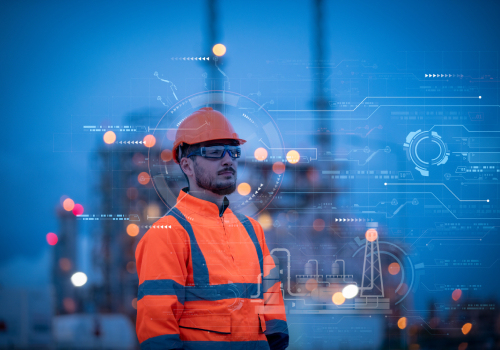
Now some of the newest helmets entering the market include features such as fall detection, GPS location services, cameras and two-way communication systems. Adding a layer of real-time visibility that can help crews respond more quickly when something unexpected happens.
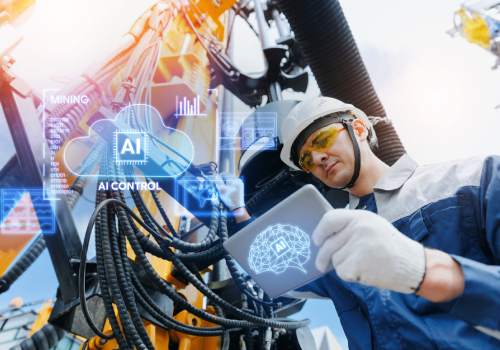
A field technician troubleshooting a machine no longer has to wait for a specialist to arrive on site. In some cases, remote experts can see the problem in real time and help diagnose it from hundreds of miles away. During an emergency, location-aware systems may help supervisors account for personnel more quickly, while fall-detection technology can alert teams when a worker may need assistance.
The possibilities are compelling, but the next generation of hard hats introduce questions that the industry has never had to answer. How often will crews need to charge the equipment? Will workers wear it if comfort suffers? Who owns the data generated throughout the workday, and how should that information be used?
Those practical concerns may prove just as important as the technology itself.

The hard hat was once a standalone piece of protective equipment. Today, some manufacturers are reimagining it as a connected tool that links workers, equipment and information across the jobsite.
Not every contractor will move in that direction at the same pace. What is clear is that the role of head protection continues to expand. Over the last century, it has progressed from protection to prevention and now toward awareness.
That's a much bigger change than the shell material ever was.
Emerging jobsite safety technologies like connected PPE, are providing a new way for contractors to protect workers. Read more in Safety Innovations: New Tools and Equipment for Hazard Prevention in Construction.