Construction safety has always depended on what crews can see, hear and act on before work begins. The challenge is that risk rarely announces itself in one clean moment. It builds through multiple small decisions made every day across jobsites.
That gap between what happens in the field and what leaders can see is where artificial intelligence (AI) is starting to play a larger role in safety.
A 2025 construction safety study from ASSP and J.J. Keller found that 96% of respondents track leading indicators, yet more than half were only somewhat confident or not confident that their current technology supports compliance and reduces risk.
Here’s how AI can help turn safety information already being collected into earlier action.

The most useful AI safety tools help supervisors and crews ask better questions.
FROM REPORTS TO WARNING SIGNS
Traditional safety reporting looks backward. Incident reports, near misses and claims help teams understand what went wrong, but they often arrive after the jobsite decision that mattered most.
With observation-based AI safety tools, that work moves upstream.
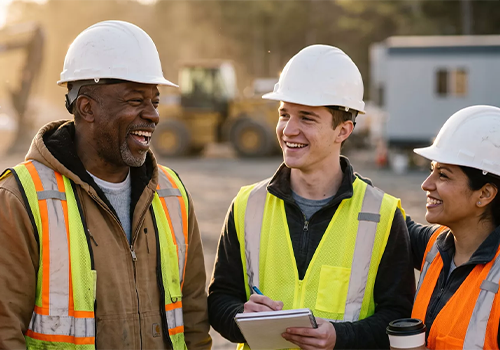
Teams track everyday safety interactions from proper ladder height to PPE compliance to high-risk areas like open shafts. Observations are documented as positive behaviors or potential risks. Workers and supervisors log these interactions throughout the day to capture real-time conditions across a project.
“The frequency and type of observations you gather becomes predictive of where risk is building,” says Josh Kanner, senior director of product and strategy, analytics and AI at Oracle.
PATTERNS MATTER MORE THAN SINGLE OBSERVATIONS
One observation may not raise concern, but repeated patterns can point to a larger problem. AI can sort through safety notes faster than a person reviewing separate reports.
AI safety forecasting like Oracle Construction and Engineering Intelligence helps teams identify where incidents are most likely to occur and what actions may reduce risk. At its core, the system measures engagement — how often people are talking about safety and what they’re seeing.
Recurring issues tied to a task or area are flagged early. Teams respond by reinforcing safe practices, adjusting workflows or focusing attention on higher-risk work.
That visibility gives leaders a way to prioritize support across jobsites earlier, reducing risk to help prevent incidents.
AI CAN STRENGTHEN COACHING IN THE FIELD
The most useful AI safety tools help supervisors and crews ask better questions while work is being planned.
Turner Construction’s SafeT Coach is one example. This AI-powered safety assistant supports pre-task planning, morning huddles and field safety decisions. Users can ask plain-language safety questions, review hazards tied to an activity or upload a jobsite photo for risk analysis.
A jobsite photo loaded into SafeT Coach flagged excavation equipment operating too close to a pedestrian walkway, prompting the team to relocate it before it became a safety issue.
And while AI can surface a trend or prompt a better question, the coaching still happens person to person.
“AI is nothing without us,” Josh explains. “It’s nothing without humans, especially when it comes to safety.”
TRUST DETERMINES WHETHER THE SYSTEM WORKS
Workers need to understand what is being tracked, why it matters and how the information will be used.
A system built around blame will not produce reliable data. Crews may stop reporting concerns or enter information only to satisfy a requirement.
A coaching-focused system that logs both positive and negative incidents as data points is more likely to earn participation because workers can see changes in the field.
Leaders should be clear that the purpose is to identify risk earlier, improve communication and support safer work planning.
Where to Begin:
- Review which leading indicators are already being tracked
- Digitize observations, inspections and pre-task planning notes
- Look for repeat concerns by task, trade, location or project phase
- Use trends to guide huddles, coaching and supervisor support
- Explain how safety data will be used before rolling out new tools
- Connect every insight to a visible field action
Jobsites move too quickly for safety leaders to rely only on after-the-fact reports. AI can help turn everyday observations into better safety decisions.
“It’s not just a technology choice; it’s an operational decision about how you run your company,” Josh notes.
Editor’s Note: This is the third part of our AI in Construction series. Read part one to learn how to use AI in the office and part two to learn how to build AI-ready maintenance teams.
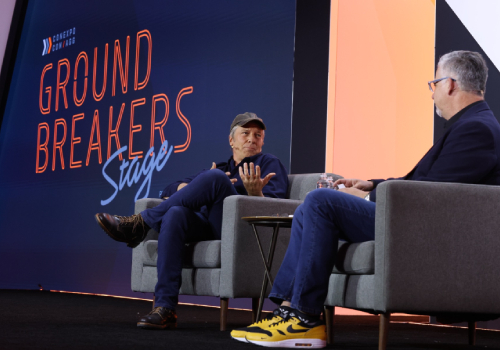
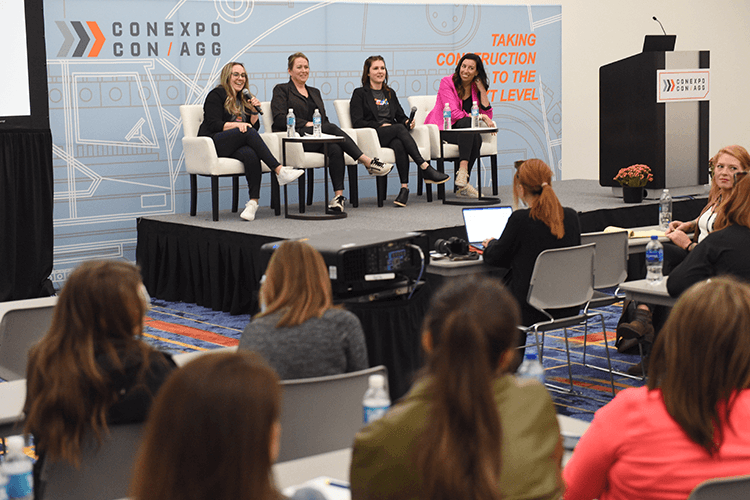
Hear more from Josh Kanner about AI and Construction Safety: Real Examples, Real Results. Watch the full session with On Demand Education Access from CONEXPO-CON/AGG 2026.
PHOTO CREDIT: SHUTTERSTOCK/METAMORWORKS