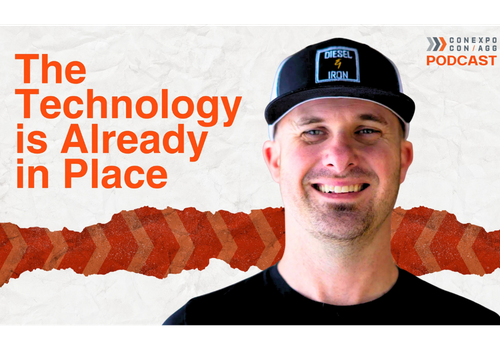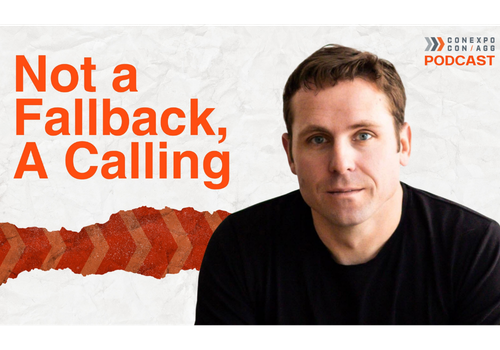



Geoff Dodge chased an Indy racing dream until a lost backer left him $100,000 in debt. Rebuilding with just $1,000, he bootstrapped Lamb Excavating to handle the tough utility work others avoid. Now back in a sprint car, Geoff uses racing as a platform to promote the trades through his "Racing to Build Brighter Futures" mission.
Taylor talks with Geoff about treating the trades as a calling. They discuss Geoff’s work launching Indiana’s SkillsUSA Heavy Equipment pathway and a new partnership with Indiana 811, Ohio 811 and the IURC to improve underground safety training. Geoff’s playbook for the youth is clear: find an interest, get a foot in the door, and let your work, not a degree, prove your worth. Success here is about hard work and creative problem-solving.
Topics:
- Why the skilled trades need more young talent
- How SkillsUSA is preparing future heavy equipment operators
- Why safety training is transforming the construction industry
- Why skilled trades offer unlimited career growth
Watch now:
Listen now:
Listen on your favorite app: Apple Podcasts | Spotify | YouTube
Subscribe to the CONEXPO-CON/AGG YouTube channel to be notified of new episodes.
Join more than 65,000 industry peers who receive construction industry news and trends each week. Subscribe to CONEXPO-CON/AGG 365.
Episode transcript:
Taylor White: Welcome back, everybody, to the CONEXPO-CON/AGG podcast. I am your host, as always, Taylor White. With me here today, I have an awesome guest. His story pretty much sums up everything that this podcast is about. Proving that the trades aren't a fallback, that they are a calling. Geoff Dodge grew up around racing. He got his name from a driver that his dad was watching at the hospital the day he was born. He grew up watching his old man win on Pikes Peak and in sprint cars. And by the time he was a kid, there was never really a question about what he wanted to do. He won Rookie of the Year and a scholarship at the 2005 Knoxville Nationals, which moved him to Indianapolis to race the Indy Lights series. He got to live out a childhood racing dream at the Indianapolis Motor Speedway.
But here is where it all gets interesting today. Geoff is a racer who became an excavator, who became a racer again. He is co-owner of Lamb Excavating in Indianapolis, a company that has built its name doing the dirty, complicated work most flippers run away from: sewer replacement, basement waterproofing, foundations, drainage, and septic. And now, he is closing the skilled trade gap by showing kids the opportunity that is sitting right here in the trades. He works with SkillsUSA, he is tied into the National Equipment League, and he is basically using a sprint car as a billboard for the next generation of operators and diesel techs. Geoff, welcome to the show.
Geoff Dodge: Thanks, Taylor. I am a little bit humbled that you pretty much have my story already, so I don't know, are we done?
Taylor White: No, I tried to do my best to explain to people this is who we got here today. But, you know, how did a kid from Colorado Springs kind of end up running dirt in Indy?
Geoff Dodge: That is a good question. So, as a kid, I was really only into two things, man. It was race cars and heavy equipment. And my mom was a school teacher, my dad is a finance wealth management guy, so we don't have any background in this industry. But I was the kid that when they would come and do work on our street was out there the whole time. Pretty soon, that became my mom driving around and sitting at construction sites while I watched. If I could sad puppy dog well enough that one of the guys working on site would let me take a ride in a backhoe or sit in an excavator or something while they were loading a truck, like, that was the greatest day ever. So, I kind of like what you say when you say, you know, our industry is a calling. I would say I had that calling, and at five years old, I told my mom I was going to be a backhoe operator or a race car driver and she said those were both terrible choices. So, basically, that is what I have spent my whole life doing and feel like life is the better for it.
The story of how I got to Indianapolis is kind of unusual. You did mention my dad was a racer, so that was the kind of connection to racing was family. That was number one, for sure. And not that being in the dirt business was a fallback, but I was going to race as long as I could first. I did get lucky and win a scholarship at the Knoxville Nationals, which is kind of the Indy 500 of sprint car racing in Knoxville, Iowa, and got a chance to come to Indy. I had grown up, it was 1988, I watched Rick Mears win the 500, and it was like, that is what I want to do. My dad told me when we started racing karts, he was like, "Yeah, you are never going to race at Indianapolis. I can't get you there." And it just worked out that we got a chance to come here and take a shot at it. I learned my first lesson of big-time auto racing partway in, which was one of the backers of my scholarship pulled out and they said, "Hey, that is the end of the road unless you can come up with another 100 grand." And it was like, "Well, I guess it is back to the dirt tracks I go." And I think I want to stay in Indiana because Colorado is an awesome place to be. The mountains are wonderful, I miss them every day, but it is a terrible place to be if you want to drive race cars compared to here in the Circle City.
Taylor White: It is interesting how you kind of took that pivot. What essentially called you back to earthmoving? And then I want to get into more about, you know, some of the trade gap stuff that you are solving right now. But what was the big driving factor to go back into the trade? How did we end up in construction?
Geoff Dodge: So, that is a good question. My grandfather had horses, so if you have been around horses, there is usually like a skid steer or something around. And at about seven, my grandfather and my dad were having an argument and had a skid steer hung up on the side of a barn. And I kind of was like, "I will do it." And so I became the family equipment operator starting at about seven. Now, we weren't doing anything crazy, but that was an outlet for that interest and it kind of allowed me to learn to run a machine. I did some more of that stuff for some other people that boarded horses kind of through high school just cleaning stuff up, loading stuff out. Nothing major, but was competent on a skiddy.
So I ended up here in Indianapolis, I was working a dead-end sales job to pay the rent and racing, and I had a buddy that was flipping houses. And so I went over to go check out what he was doing and the backyard was a mess. And I said, "Hey, what are you going to do back here?" And he said, "Well, I have got a guy who is going to come clear it all out and tear out this old garage foundation and put in some gravel parking." And it was like, "Well, what are they going to charge you to do that?" And he told me a number and I said, "Well, if I could save you 500 bucks, would you let me do it?" And he was like, "Yeah, I don't care. That sounds good." And so I rented a skid steer and hired some tri-axles and did the project. And at the end of it, it came out pretty nice and he came to me and said, "Man, like, what did you make in the last day and a half? Not that I need to knuckle you on what you made, I am just curious." I told him, "Hey, I made a thousand bucks." Yeah, so my partner was like, "Man, we need to do this every day." And I said, "If we can find the work, I would love to." So that was kind of the beginning of leaving my dead-end sales job and we did flip houses and do kitchens and bathrooms and stuff for about a year.
And then funny how oftentimes what seems like a terrible thing turns into the greatest opportunity to come along that you could. The house that I did the backyard on, he was the real estate agent on it as well and kind of made an honest error in disclosure, and we got notice that we were being sued because the basement was wet. And it was kind of like, "Certainly they can't enforce judgment if we offer to come fix it." And so I started doing a bunch of research on how to best fix the problem and figured, "Hey, we could go rent equipment if we can find a month's worth of work and probably go fix that problem in the fourth week of the rental." That led to what we call the month of excavating and that was it, man, like we never looked back.
Taylor White: That is quite the story. Yeah, normally you don't hear people kind of go from race car driver to something else to, you know, construction. And do you feel like now that you are in it, it is like, why the need, I guess, to try and solve this skills gap, right? Like, let's touch on that. I mean, a huge part of our conversation before this one even kind of came on, we were talking about, you know, Mike Rowe and that podcast as well too, and we kind of touched on it there as well. It just would be interesting to know, you know, what are we missing here?
Geoff Dodge: As Lamb Excavating kind of started to be a thing and grew and we went from building paver patios and fixing the odd sewer line to doing work for large builders and contractors and trying to grow our business, it felt like we were struggling to find good people and we were definitely struggling to find young people that had potential to solve difficult problems. I mean, before I started doing the work, I guess I didn't realize just how technical it is and what sort of creative problem-solver you need to get through what even is a fairly simple project. And I felt like we were, I mean, I hate to say it this way, but we were forced as a newer company that was trying to find its feet that we were using everybody else's recycled garbage and having pretty recycled garbage results.
So I looked back at my own story and you see the traditional way that we have done it for the last what, 40 years maybe, that if you struggle in a traditional academic environment, maybe you ought to go to trade school. And, you know, if you are going to have a successful career, you have got to go to college. And I thought what would it take to find a younger version of me to say, "Wait, I am going to choose this industry. I am not going to fall into this industry, I am going to choose it and I am going to be proactive about it because I have an interest, I have always had an interest in it." And the only thing I could think that kept me from choosing it from day one was the fact that I didn't realize there was as much opportunity here as there is.
And I wanted to stay in Indiana because I wanted to find a way to keep racing, wanted to own my own program so that I wasn't beholden to a car owner who has 10 people calling him every week trying to steal your seat. And so we built the business with the goal of being able to put my own stuff together to race and it took six years and we got there. And so I kind of just stood back and looked and was like, "Man, I have a platform, I have my own success story, and if somebody had walked into my middle school or high school and said this was my dream and this is what I was able to build in construction, I would have been all in."
Taylor White: Okay, you might realize that Geoff looks a little bit different and so do I if you are watching this on video right now. That is because the first little bit of the podcast we had some technical difficulties and now the second part of the podcast we are back again. So Geoff, welcome back once again.
Geoff Dodge: Yeah, thanks for having me back. I am sorry that my internet hamster got tired and wasn't turning the wheel fast enough, but glad we get another shot at this.
Taylor White: Yeah, no, that sounds good. I mean, we were leaving off realizing you and your partner realized, okay, like, you know, there is possibly something here with the business. And I kind of would like to know more about and getting into like what is your day-to-day. You know, and for a little bit of background, right when we got on this thing, you were already on a call going like, "I will go out there, I will unlock the gate, I will do this, I got a sock kid in my truck." So you seem like you are pretty involved with the day-to-day.
Geoff Dodge: Yeah, we are a small company. We employ between 6 and 10 people depending kind of where you catch us. I am the lead estimator, so most of the work we do runs across my desk, but I still go out and do work also. So the particular site that we were on the phone about, we are putting a new septic system in for a park expansion here in Indianapolis. It is our first experience working on a union site, so that is one that I kind of felt like I needed to be involved and make sure that we didn't step on any landmines, so to speak. I still run quite a few jobs, still going to the field is my favorite part. I haven't built with my partner, we haven't built this massive enterprise that is afforded us these cool opportunities at something that in my mind is fairly accessible for some of the young people that we come across to think that they can achieve.
Taylor White: I think that is really important what you said there at the end because a lot of people that aren't listening maybe don't know or they do know, but your big mission, your big thing that you also focus on is closing this skills gap that we have. And I would like for you to tell us a little bit about "Racing to Build Brighter Futures" and kind of where did that come from.
Geoff Dodge: Yeah, so we will take a couple steps backwards and build back up to it. Ultimately, I stayed in Indiana because this is the epicenter for a race car driver. So if I was to go home and go to work with my dad into the quote-unquote family business, which is finance, there would be no point in continuing racing and I wanted to continue racing. So I had to find something I could do in Central Indiana that would hopefully get me to a place that I could build my own race team. I had kind of gotten to the end of my appetite to work for other people on the racing side of things, was tired of building up operations only to get handed 9/16 wrenches to take my seat out before it really got good.
The reality is in the racing world, like there is way more talented individuals with helmet bags than there are good opportunities. So I wanted to build my own opportunity, something that I had control over and could build on. So six years into the construction business, I got to the place where it was like, "Okay, cool, I think I can start building my own race team here." So we put a race car together and in trying to raise additional support for our racing effort, somebody very wise told me that the key to raising motorsports sponsorships or whatever is you have got to find the story that you are most qualified to tell that the world needs to hear that you use racing as a platform to transmit that story.
And so it was kind of profound, it took a little bit of time to just kind of simmer, but ultimately I settled that, "Hey, you know, I have built this small construction company that has gotten me to this place." And I looked at the rest of my life, things that I never really cared about when I was in my early 20s, and that had all transformed for the positive as well. And I thought, you know, my biggest challenge and I think probably our biggest threat as an excavating business is where is the next generation of young talent that is going to come into our industry. We are on the utility side of things and we often have to come up with creative and innovative solutions for our customers' problems that are both constructible, fit within budget, and solve the problem.
And I was feeling a little bit like we didn't have maybe the sharpest end of young talent choosing our industry. And so I looked at my own history and thought, you know, if somebody would have come along and showed me what was possible in construction when I was 16, 17, 18, I might have gone with this as Plan A, not Plan B. And so that was kind of the aha moment was that race car was a shiny object that we could take out and ultimately we think some of our most important work is with middle school-aged kids because they are getting ready to make career path elections when they get to high school. Here is something that I can come and whether they have any interest in motorsports or not doesn't matter. If some young person looks and goes, "Well, gee whiz, if he can go racing and build that race car on the back of what he has done in construction, if I want to have the coolest boat at the lake or a single-income household or horse property, whatever it is in the back of their mind that is kind of their life's dream that they are not really sure that they can achieve." The goal is to show them that our industry is a place that you can do that. So if you have an interest in working with your hands, if you have an interest in building things, if you have an interest in solving problems, that you should choose our industry. You should keep it towards the top of your plans as opposed to the fallback. We want to kind of bust the mold of, "Oh, you are struggling in a traditional academic environment, maybe you should choose the trades." We would like to find some of those kids that excel in a traditional academic environment and say, "Hey, why don't you come to our industry and become ultimately industry leaders that can help serve your community and solve problems."
Taylor White: I really liked that. One thing that you said that makes me, I would love to know your answer on is you said we wanted to show these young people, you know, what is possible in the industry. So I am going to ask you, what is possible?
Geoff Dodge: I think a better question would be what is impossible, and I don't have an answer for that, Taylor. I think really at this point in time in our industry, the only thing that you are limited by is your own capacity to build a team, solve problems. I started this journey with less than $1,000 to my name. I was renting a room in somebody's house for 300 bucks a month and we did that first job. I rented the equipment to do it, I hired the trucking, and I made a little bit of money and it just sort of was grown organically from there. And it only took six years to get to the place where I was building a race car. Like, that was probably as much time as it would take some people to get through college. So I don't know that there is anything that is off the table in our industry. I am not a business savant, I am not really good at delegating and building a system and turning it over to somebody else. I am pretty good at being able to go out and price a job and then go build it. I think that there are plenty of people who probably are capable of much, much more than I have done in this industry and my hope is that we will bring some of them in because we have been doing this now for about 10 years, 11 years, I think this year I think is our 11th year.
And within Central Indiana, so call it Marion County, which is where Indianapolis is, and the donut counties that surround Marion County, I can't drive five minutes in any direction in any of those counties and not come across something that our little company has either built, fixed, or worked on, and we are not a huge company. So our goal is to try and bring in the next generation of talent for our industry and if we can raise up some more of them, I think about the amount of stuff that they will touch through their careers and what that will mean for our community and their communities.
Taylor White: The SkillsUSA work, what are you doing with the students there?
Geoff Dodge: Again, kind of to give the picture of how we got there. As this idea that, "Hey, we are going to use my race program as an opportunity to show these kids what is possible." And I am out talking to some people that I know and everybody is saying, "Geoff, it sounds like you are doing nonprofit work. You need to start a nonprofit." And so I did a little bit of research and it was like, "Oh man, by the time we get a nonprofit stood up, I will be out of money and out of time and we won't have done anything." So I thought there has got to be a nonprofit that is already working on this. Found SkillsUSA, they had heavy equipment and civil construction as a career pathway, at least at the national level. So I got in touch with our state director and said, "What do we have to do to get involved with these kids?" And she said, "Well, we don't have heavy equipment or civil construction here in Indiana." And it was like, "Okay, so what do we got to do to start it?" So a couple of our partners, at the time we had Diamond Equipment, which is a Case Hyundai Takeuchi dealer with five locations, headquartered in Evansville, Indiana, Terra Haute, Mount Vernon, Illinois, Bowling Green, Kentucky, and Nashville, Tennessee.
And then a guy that I had been watching on YouTube trying to figure out how to do stuff, Mike Simon, who the public would know as Dirt Perfect.
Taylor White: Great guy.
Geoff Dodge: Super great guy. And so I called Mike and I called Bob Brucken from Diamond Equipment and said, "Hey, we need to start a heavy equipment career pathway within the SkillsUSA Indiana space." And so Bob provided the equipment and Mike provided some moral support and some ideas and I wrote the curriculum based around what we would hope that a young employee might or might be capable of. And we have grown it now for, I think four years now, here in Indiana and we have really tried to model what they do nationally. SkillsUSA is an awesome organization. They offer leadership training, opportunity to kind of compete and kind of showcase what all the different trade schools are turning out in a single place at regional, state, and a national level. And at the national level for heavy equipment, it is really, really neat what they do and it is cool to see what the industry does. I think you have got to give Amy Crouse from Volvo a lot of credit for what they have built and kind of the whole MO is that the industry comes together and works together for the betterment of tomorrow. And so it is neat to see the major OEMs all sitting at the same lunch table, literally and figuratively, and putting this opportunity on for the nation's best students.
Taylor White: You mentioned that maybe you have some new partnerships or something along those lines.
Geoff Dodge: Lamb Excavating was what kind of provided the startup point for this, but we would not have been able to make it as far as we have if it wasn't for industry partnerships and people that have believed in what we are trying to do. So I mentioned kind of our core startup group of partners. We have got a few others that have come along along the way: Drainage Solutions, a pipe supplier here kind of in the Midwest. We obviously work to support SkillsUSA. RBC Wealth Management has helped us. But there is one that we are really, really excited about that has just come on board. One of the places that we saw the young people were sort of struggling was in the area of underground utility safety. So that is understanding the 811 process, knowing what those marks mean, what the obligations were as an excavator under the dig law.
And so at SkillsUSA Nationals, we made acquaintance with the folks at Ohio 811. They were standing up the underground utility safety portion of SkillsUSA's national heavy equipment curriculum and I heard about what they were doing in Ohio and was like, "Man, can you guys try to get us plugged in with your counterparts here in Indiana because I would love to get some of that happening here." Two-and-a-half-year journey that ultimately had me and the program standing in front of the Indiana Underground Regulatory Commission Board. Funny story when you get off the elevator and you think you are going to Indiana 811 and realize you are walking into the IURC and you are thinking to yourself like, "Uh oh, this is where no contractor ever goes by choice." But they have been awesome.
And so we are able to announce today that there is a conglomeration of the Indiana Underground Regulatory Commission, Indiana 811, and Ohio 811, and we are going to be bringing trainers to all of these trade programs. So at SkillsUSA, we see kind of the top in our state, the top students in our state. We take 10. So there are a lot of students that don't ever see us at state. And so we are going to be sending these trainers out to their programs to teach class for the day. We have also got some outreach that we are going to be doing at the races to reach DIY homeowners because that is another kind of hard group for the 811 message to land with, but they are very much considered excavators under the Indiana dig law and Ohio dig law. And so it is an exciting partnership for us, one because I know that it can do a lot of good. We have already sort of quantified the results of what you can do with a little bit of training through our SkillsUSA kids. And two, it is something that everybody in our industry has to deal with. And so I think it gives our effort a little bit more credibility to just have a recognizable name involved. And I think within our industry space, everybody knows 811.
Taylor White: Yeah, what are you most excited for about something like this? I mean, that is a big move, right? You have all these three different things kind of coming together here to make this. Like, what are you most excited for this and what do you think that the best value is going to come out of this?
Geoff Dodge: I think I am most excited to see, so I mentioned we have kind of a test. The Ohio 811 people were very gracious and came to Indiana on their own dime for our state competition this year. We have been running the SkillsUSA national standard exercise for a couple years, which is what they developed. And I was seeing students where our high score was like a 35% and our median score was like a 25%. So this year, we conducted a 30-minute training the day before the event and we saw our high score jump to an 85% and the median score moved about 10%. So our median score was a 35%. So to see that big of a jump in 30 minutes, I am really excited to see what three hours of training does for these young people. I think there is no reason that we shouldn't see all passing scores.
And with the state of the industry and sort of the aged population of tradespeople moving out and frankly not enough of them coming in, if we can reach a lot of these young people coming in, I think we have an opportunity to kind of change the culture of the industry as it pertains to underground safety. And I have said for a long time, like, you give me someone that understands how not to damage infrastructure and I can give that person a lot of reps to get good at the rest of the job. You give me somebody who is a really awesome operator and can do all the stuff great, but if they can't keep themselves out of trouble, I can't give them the seat time they need to reach their potential. So I think I am most excited just to see how far we can move the needle as far as what kind of the culture of our industry is. I am very, very excited that ultimately the state, the government in this case, saw us as a worthy way to move the needle.
Taylor White: Yeah, I think you nailed it when you said, not you know, just kind of modernizing or refreshing the culture of the industry. You still have, you know, a lot of old outdated ways of, you know, safety or just culture as a whole. And I think that a lot of this stuff definitely modernizes it and bring it up to today's standard, which I think is super important. And I think that it is really cool that we could also show them we are trying to do here, right? Like, we have been around for an example since 1968. My grandfather started this business. Things are a hell of a lot different from when my grandfather was out on a job site and, you know, it would be Friday afternoon and you had pints with the guys and then you go home. Times have so much changed and for the better. And I think that it is like the new culture, it could be it is still cool to be safe and it is still fun and, you know, you can still have that camaraderie that is so strong in our industry. I am interested to know like what would you tell a 17-year-old who thinks that they need a degree to be successful?
Geoff Dodge: You have kind of touched on something that is interesting. And my first answer to that 17-year-old is what do you want to be successful at? If you think you just need a degree to be successful, the answer is you don't. If you want to be a brain surgeon, like you probably need to go spend 12 or 15 years in school and if you’ve got to borrow a bunch of money to get there, do it because that is what you want to do. If you don't have a plan for what you are going to do with that degree, then I wouldn't even bother. I would say what are you interested in and how can you go and start using that interest as a profession? I look at myself and I was very fortunate not to get buried under student debt. I couldn't have chased race cars in circles for as long as I did, I certainly could not have started Lamb Excavating and got this business kind of bootstrapped up and going if I had a big student debt obligation following me around.
What I hope to tell a 17-year-old like that is, one, what are you interested in? Let's find a way that you can use that interest as a profession. And two, if you are interested in building stuff and working with your hands, like our industry is a place that you should explore. And I told a girl that was wanting to be a doctor, she was a middle school-aged girl and was like, "Hey, what are you planning on doing?" And she says, "Well, I want to be a doctor." And I said, "Well, how are you going to pay for school?" She goes, "Well, you know, I am going to have to take student loans." And I was like, "Okay." I was like, "Well, what are you going to do while you are going to school? Like, have you ever thought about what you might be able to do to make a bit more money than flipping burgers while you are going to college?" I said, "You know, when you are in high school, you can graduate high school with a Class A CDL." And she is like, "Well, I don't really want to be a truck driver." I said, "Well, fair enough. But if you came out of high school with a Class A CDL, you could go drive a tri-axle dump truck right here, you be home every night. It is the summer, so the tri-axle companies are always looking for more drivers because they are trying to run those trucks 24 hours a day with paving operations. You come home from school, you drive a dump truck, you are probably making six times what your friends are making, and you could use some of that to help pay for your school and you will come out at the other end when you are a doctor and you will have a heck of a lot less student debt to pay off." I have got a close friend of mine who is a doctor and, you know, he is 40 and just finished paying off his student loans. So like even if you still have to borrow a bunch of money and you take our industry as a stepping stone in your path to where you are ultimately going, that is okay and that is good for our industry, that is good for the person.
And by the end of it, she was kind of like, "You know, I never really thought of that." And I said, "Well, the key is you got to have that Class A CDL." And out in the world, it costs me the better part of 10 grand to get somebody a Class A because the schooling is five or six thousand dollars and most of the people can't afford to sit in class for three weeks without a paycheck. So if you are in high school and you can have that driver's license when you graduate, like that is a foot in the door anywhere you want to go. And I think that is the other thing I would tell the 17-year-old kid is you are really looking for a foot in the door. In many places, your degree is the foot in the door to get your career started. But in our industry, there are a million different ways that you can jam your foot in the door. It might be that truck driving license, it might be the fact that you are a certified welder, it might be the fact that you have come through a civil construction program and it is you might know a thing or two before you get started. So you are looking for that thing that basically gets somebody to give you a chance. And then once you have got your foot in the door and you have got your first job, what you do job over job over job as you build your career is going to dictate far more of where you end up than what piece of paper got your foot in the door.
Taylor White: Yeah, I feel like if I was told that at 17, it would really open up my eyes. I think that our industry is definitely one of the most unique industries in the sense of you want to make x amount of dollars and you want to, whatever success is to you. Like have a good work-life balance or is it monetary value or is it happiness and showing up every day. And, you know, you can have all those things in this industry and, you know, I look at a lot of people because, you know, we have people that apply that have so many degrees and stuff like that. But a lot of the times, it is just like somebody that really wants to put in hard work. And hard work outtrumps so many things I find in life. That is kind of like just my motto because I wasn't a gifted high school student. I probably didn't try as hard as I should have, well, definitely didn't. But, you know, I am not the smartest guy in the room and I don't know I know I am not. But I will work extremely hard and I will outwork the next guy or girl beside me. And I have always just told people that, especially at our round table meetings or our company-wide meetings. Like, you guys want to go up to management or be management, the opportunity is there. We have living proof of it here in our office. You know, guys that started as foremen and now they are, you know, project managers. We have a girl that was a truck driver and now she is our coordinator in the office because she like put in that extra. So like, I just think that that message and it is what you are saying as well, it is like and maybe that person, that girl that wants to be the doctor, she goes gets her CDL, she finds out that, "Hey, actually, this is a really good industry to be in and stay in and I can make good money at it as well too. Maybe I will stay in kind of this lane." Like I just think that the barrier to entry is actually somewhat low in construction, but there is so much opportunity, right? There is so much opportunity.
Geoff Dodge: I think that is you touched on something there, Taylor, too that we have seen pretty frequently across call it the skilled trades. We kind of champion five different career paths: so heavy equipment operators, truck drivers, welders and fabricators, precision CNC machinists, and automotive and diesel techs. But in the places that you go with those skills, our industries promote from within often. And so I have had a lot of people that we have interviewed that it is like, "Well, what do you do now?" And it is like, "Well, I am the national sales manager for a trailer OEM." And you are like, "Okay, how did you start?" "Well, I started welding. I came in the shop, I was a certified welder and I started off welding." "And then what happened?" "Well, there was an opportunity on a sales team and I was kind of ready to try something different. So I went and I decided to become a salesperson." Like, "Oh really? That is interesting." He, "Yeah, I wasn't very good at sales, but I really knew the product. And so that allowed me to sell and I knew the product because I built the product." And he said, "Well then pretty soon I am the highest-performing salesperson on this sales team, so they made me the sales manager." And then he taught his entire sales team about the product and how to sell around knowing the product. And so pretty soon his sales team. And so this guy's in the span of about 15 years gone from a welder on the floor of the shop building trailers to the national sales manager. And it was all promoted from within. You talked about, you know, you have got your truck driver that is now kind of running your dispatch and you have got field guys that are running the project management. And so to be promoted and kind of move up the chain in our industry, knowledge of what you are doing or what you are managing or how you are doing it becomes so critical that we almost have no choice but to promote from within. So again, kind of back to that foot in the door, our industry has a very low barrier to entry to get your foot in the door and give it a try. But if you are a star once you come through the door, the opportunity is endless.
And then that is without even saying, "Hey, what is the challenge of construction? Well, you finally find a really good guy and six years later you are bidding against him." So, you know, you can step out and start your whole own enterprise if you want. So I think our industry probably has some of the fewest barriers to entry out there. And if you come in and do a good job, like the the sky is the limit really.
Taylor White: The last thing you said is funny too. Two of my that were like head kind of management there, they left to start their own businesses as well too. So it is, you know, and it is good to see, it is crazy, but it is also this not for the faint of heart, right? Like I mean, it is a very cash and capital-intensive business. There are ups and downs and we deal with wintertime here. You were just talking about weather, you know, when it is rainy all of our plans yesterday on Sunday my supervisor was texting like, "Hey, like what else could we flip this crew and do because that job shut down now." You know, it is not like what being weather-dependent also too is just a really tough thing. What is next for you and what is next for what you are doing with the skills gap and Lamb Excavating and all that?
Geoff Dodge: That's all really good questions. Lamb is kind of in a transitional phase. I am not 100% sure what it looks like in two years. We are kind of feeling our way through that. As far as what is next for Geoff Dodge Racing and promoting our industry, I think we have proven our concept here in Indiana and our next move is to try and make it a more Midwest regional focused effort. Take what we have done here in Indiana and spread it out, see if we can duplicate our efforts in other states. My hope, if I you know and I think about what you just said, Taylor, about the guys leaving and starting other companies, so if I take my Lamb Excavating hat off and I put my Geoff Dodge Racing I am an industry ambassador hat on, that excites me. That is people that are going to go out and take their shot at achieving the same dream that your family's achieved, right? You are third generation?
Taylor White: Yep.
Geoff Dodge: That is that is potentially starting the lineage of another three-generation company that is going to take care of a family and serve its employees and its communities for generations. So my hope, I guess with the Geoff Dodge Racing and the industry ambassador side is that we are going to have a lot more stories like that. That we are going to have a lot more young people that come and work at Lamb Excavating and gain some experience and serve that business and then move out and go do what I have done, do what your I guess your great-grandfather did and get started. We are in a unique time where there is so much work out there that needs to be done. It is hard for me to feel bad about something like that where somebody's going to step out and take a shot at it. Because it is tough because you have invested in that individual, but there is opportunity because that means now you have got an open role to fill and and hopefully one of your other guys can move up and assume that and that creates a gap down at the bottom where where maybe the next superstar's going to step in and get their start at Ken White Construction, right?
Taylor White: Yeah.
Geoff Dodge: So or Lamb Excavating or or you name it. Like, my hope is that we can help make sure that there's a talented young person ready to step into that space.
Taylor White: Well, I mean, you are doing a lot of really amazing things and I think whenever I think of, you know, everything we talk about kind of in a whole, I always I always ask myself and I would love to ask you, like you have answered why you care so much, right? But like you don't have to do what you are doing. You know what I mean? It is like people that start, you know, these big foundations and fundraisers and why do you think that you are doing it? Is it faith? Is it something when you were younger? Is it something you have kids and you look at them like I and I know that skills gap and you see that, but there is more there. Like why?
Geoff Dodge: Well, I am a person of faith, so there is an element of when you are a Christ follower and you actually believe that stuff, there is somewhat of a duty and obligation to serve others. But if I am being completely honest, Taylor, part of why I am doing it is because I am a little bit frustrated that I didn't get to get started in this sooner. I am still five-year-old Geoff. I am just bigger now. And five-year-old Geoff didn't ever get to start playing with excavators and doing construction until he was much older because he got sold the bill of goods that there was no opportunity in our industry. And so my hope is that if I can find 13, 14, 15-year-old Geoff and say, "Hey man, you do well in a traditional academic environment, everybody's telling you you got to go to college. Like if you want to go to college and you don't have to borrow a bunch of money to do it, by all means do it. But hey, this construction thing is for real and take advantage of the opportunity to jam your foot in the door in construction while you are in high school." And like, you know, maybe then 21, 22, 23-year-old Geoff is starting a construction company then and that is like almost 10 years sooner than what I did. And how much different could my career on a lot of fronts look if I had another decade head start? If I am talking to you right now at 29 or 30 instead of 40?
So I think that is part of what motivates me. But it is also we launched this thing at CONEXPO two- it wasn't the most recent CONEXPO, but the one before it. So I guess four years ago. I heard something said there that I thought really painted the picture and it was like in the next 10 years we are going to spend more as a percentage of GDP in the United States on infrastructure than we have spent since the building of the interstate highways and in the same time period there is like a 46% 46% reduction in workforce among the contractors that are typically going to do that type of work and there is no plan to replace it.
Taylor White: Wow.
Geoff Dodge: That is kind of a problem. Yeah. You know, what we do nobody thinks about until it doesn't work. You know, nobody thinks about sanitary work until the toilets don't flush. Nobody thinks about water until the faucet doesn't turn on or it doesn't come out smelling right. Nobody thinks about storm water until something floods. So what are we doing to build our infrastructure because society's always got a need for what we do and and we have sort of diminished the potential of what it is to come and construct and service and and work on this stuff. So I think there's a portion of the why is now that I know a lot more about the importance of this industry and the opportunity of this industry and everything else, like what can I do with what God's given me to affect some change? Because if I just sit there and complain about it like a lot of other people, I am as much a part of the problem as anything.
So we started Lamb Excavating from the standpoint of like don't be afraid to get out there and do it and figure it out as you go. Well, this is sort of the same thing. You know, don't sit there and complain about not having talented young people or be the crotchety old guy that, "This generation just doesn't want to work." Well, get out there and see if you can find some that do. And before you have the most talented people, you have got to convince the most talented people that they should come to you and not go to one of the other places that is working very hard to attract them.
Taylor White: I think you nailed it. Yeah, it is exactly exactly what we need more of. I think it is amazing what you are doing. I have these conversations more often than not and it is exactly what you were saying. It is that you have these conversations with people, but yet there is nothing being done about it, right? So it is like, well, you are part of the problem as well. So you are actually trying to fix the problem, which I think is really good and you are definitely going to see change and make some change. And I think that it is amazing. So amazing job, Geoff. I look forward to seeing especially with this new partnership that you have as well too. I look forward to seeing kind of what comes of that and hopefully we could do another follow-up in you know another six months from now, you know, and and and catch up and see all the stuff that has kind of been happening in your life. But thank you very much for coming on here today, man, and I really appreciate it.
Geoff Dodge: Yeah, thank you for having me, Taylor. It is kind of something I am not super used to doing and I appreciate the opportunity to tell our story. I think it is great that you guys are doing this and I know you have had Mike Rowe on this podcast and I see that you are touching on some other things that are kind of typically maybe a little bit taboo in our industry, mental health, that sort of thing. So I appreciate you putting yourself out there that way.
And if I can have kind of a closing word about the skilled trade gap: if you are in our industry and you are listening to this, whether you are a supplier, whether you are a manufacturer, whether you are a contractor, you can probably see that the skilled trade gap is a problem. Get involved, get your hands dirty. If you don't know what to do, by all means we would love to talk to you, we are looking for new industry partners all the time. If not, SkillsUSA is in all 50 states. So if you are in the United States, reach out to your local SkillsUSA chapter and ask how you can help. And it might be something as simple as showing up to judge a competition. You might be founding the heavy equipment and civil construction pathway like but get involved, get out there, do it. It does feel good to give back to your industry. It does make you feel good to see some of these young kids and what they are capable of and it kind of pulls you out of that typical like, "Oh the next generation sucks and they are not going to do anything good." Don't be afraid to get out and get your hands dirty and I would love to catch up with you in six months. Maybe in the meantime, Taylor, we need to drag you out to a sprint car race somewhere.
Taylor White: Yeah, hey, I am down 100%. That would be awesome. Well, thanks again.