Mike Rowe knows where America’s skills gap began: in the disappearance of shop class from American schools in the 1970s.
The Emmy award-winner, creator and host of the reality TV series Dirty Jobs says that as welding booths, woodshops and auto bays faded from schools, so did daily proof that skilled trades offered real careers.
“The skills gap is not a mystery,” Mike says. “It’s a reflection of what we value.”
Despite millions of open, well-paying skilled jobs, many young people and their parents still do not view construction as a first-choice career. For contractors, that perception has become a business problem.
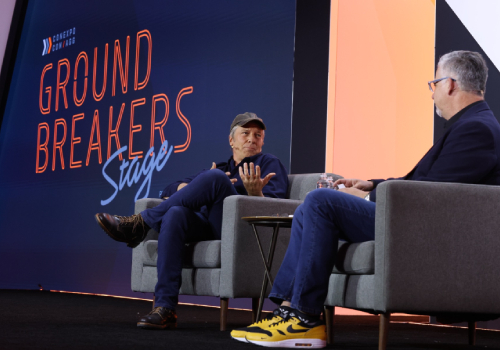
In a conversation with Terry Dolan, head of construction brands for CNH, Mike makes a case for rethinking how America talks about skilled work.

The most persuasive workforce message comes from people in the field, not copy on a brochure.
WHY STORIES FROM THE FIELD MATTER
Mike argues that honest, human stories — not polished campaigns — shift perceptions.
Dirty Jobs succeeded because it invited viewers into real workplaces without sanding off the grit. It entertained, but it also served as “a love letter to hard work and skilled labor,” reframing what meaningful work looks like.
Mike brings that same approach to the mikeroweWORKS Foundation, which has helped thousands train for in-demand careers across welding, electrical work, HVAC, line work and equipment operation.
“They’re prospering,” he says. “Most of them are six figures; all of them are on a path to it.”
He regularly interviews scholarship recipients years later and shares their stories: no degree, little or no debt, a trade in demand and a clear impact on the built environment. Those specifics resonate far more than generic promises about “opportunity.”
The lesson is simple: the most persuasive workforce message comes from people in the field, not copy on a brochure.
PRACTICAL TAKEAWAYS FOR CONTRACTORS AND CONSTRUCTION LEADERS
There are several concrete ways construction leaders can influence how the next generation sees the trades.
1. Treat construction career decisions as milestones. Terry recalls dealers hosting signing-day ceremonies for high school students entering technician programs, complete with hats, photos and proud families.
“It’s such an incredible, prideful moment for these kids,” he says.
Construction firms can mirror that energy by celebrating apprenticeships, certifications, promotions and journeyman status as major achievements.
2. Be explicit about earnings and advancement. Mike shares an example from a Texas data center where electricians under 30 were earning more than $250,000 a year with no student debt and multiple job offers. Pay varies by market, but clear ranges, advancement timelines and real examples help parents, students and career changers see construction as a viable path.
3. Lead with work ethic and merit. Mike’s foundation offers “work ethic scholarships” requiring applicants to sign a “sweat pledge” focused on gratitude, responsibility and effort.
Contractors can adopt a similar stance: define expectations clearly, spotlight people who live them and use those examples to attract candidates drawn to the culture as much as the paycheck.
4. Put real people at the center of workforce messaging. From OEMs to contractors, many companies are doing impressive work on training and internal trade schools. The challenge is that most of the country never hears about it.
Bringing those efforts into the open through jobsite tours, school visits, local media, social channels and company sites turns abstract talk about “workforce development” into relatable stories about actual careers.
WORKFORCE DEVELOPMENT AS A STORY WORTH JOINING
Mike frames the larger challenge with a question he believes every policymaker and industry leader should answer: “What did you do today to incentivize the closing of America’s skills gap?”
For contractors, that answer starts close to home. It looks like telling the story of a bridge project through the crew that built it, highlighting the technician who keeps a hospital’s backup power online or celebrating the apprentice who just finished a first major job.
The future of construction depends on more people recognizing the meaning, stability and impact embedded in the work. The industry is full of those stories already. The opportunity now is to share them — clearly, consistently and with the same pride that goes into every finished project.
Watch the full conversation between Mike Rowe and Terry Dolan for free from the 2026 CONEXPO-CON/AGG Ground Breakers Stage.
PHOTO COURTESY CONEXPO-CON/AGG