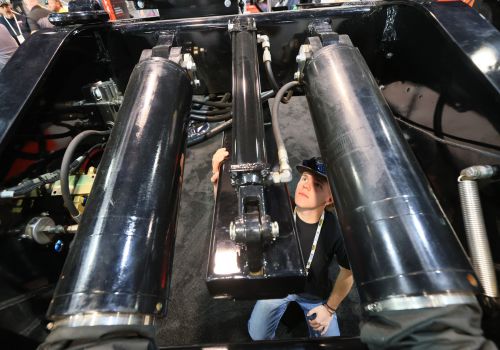
A contractor attends a career fair expecting questions about equipment and trades.
Instead, students ask about drones. They ask about software. They ask about engineering, marketing and data. Some want to know who manages schedules and budgets on large construction projects.
Those conversations reveal a challenge many contractors face when recruiting. Students may be interested in the skills construction companies need, but they do not always associate those interests with construction careers.
"There’s still a perception that a career in construction means one thing, when in reality it takes an incredible mix of people and skill sets to build what we build," says Aria Morgan, vice president of marketing and corporate affairs at Plateau Excavation. Construction companies rely on professionals in engineering, technology, estimating, project management, safety, communications and finance alongside field personnel.
That disconnect often develops long before a student starts applying for jobs or exploring training programs.
Students Know What They Like. They Do Not Always Know Where It Fits
Most teenagers are not evaluating careers by title.
They are evaluating interests.
Some enjoy technology. Others gravitate toward leadership, communications, math or problem-solving. As they begin researching careers, they naturally look toward industries they believe match those interests.
Construction is often absent from that search.
A high school student may understand what a software developer or marketer does. The same student may have never met an estimator, scheduler or project engineer. Those roles are obvious to contractors because they interact with them every day. For students, many of those careers remain invisible.
That creates an obstacle before recruiting even begins.
Students cannot explore jobs they do not know exist. As a result, some look elsewhere despite having interests that align closely with careers available throughout the construction industry.
Aria believes the conversation should begin with those interests.
"I think we should be asking, 'What are you good at, what do you enjoy, and let me show you where that could fit in this industry,'" she says.
The challenge, of course, is showing students what those opportunities actually look like. That is where the jobsite becomes one of the industry's most valuable recruiting tools.
The Jobsite They Expect Is Not the One They Find

Start showing them GPS-controlled equipment, drones, BIM, 3D modeling, data, sophisticated estimating systems, massive pieces of equipment and the technology involved in managing complex projects, and suddenly it looks completely different.
Aria Morgan
Plateau Excavation
Many students arrive at a construction site with a fairly simple picture of the industry.
They expect equipment, hard hats and physical work.
Then they see how projects operate.
"I think a lot of students still picture construction as someone with a shovel or a hard hat," Aria says. "Then you start showing them GPS-controlled equipment, drones, BIM, 3D modeling, data, sophisticated estimating systems, massive pieces of equipment and the technology involved in managing complex projects, and suddenly it looks completely different."
For students interested in technology, that moment can reshape how they view the industry.
The tools used to manage modern projects often look very different from the image many students bring with them. Drones collect data, modeling software helps teams plan work, machine guidance improves accuracy and digital systems track progress across large projects.
The technology often draws students in. What they notice next may have an even bigger impact.
Technology Gets Their Attention. The People Keep Them Interested.
A large construction project brings together far more careers than many students expect.
The equipment operator is visible.
The scheduler who built the timeline is not.
Neither is the estimator who helped win the project, the engineer reviewing plans, the safety manager supporting crews or the project manager coordinating dozens of moving pieces.
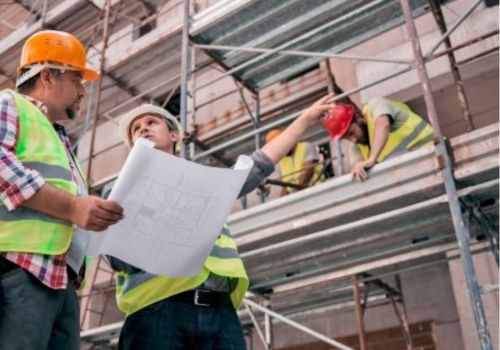
Students who walk a jobsite begin to see how those roles connect.
What starts as curiosity about a drone or a piece of equipment often turns into questions about the people behind the work. Who manages the project? Who analyzes the data? Who develops the schedule? Who handles communications?
Those questions move the conversation beyond construction as a trade and toward construction as an industry.
That shift matters because students are not all looking for the same career experience. Some may be drawn toward operations. Others may prefer technology, business, engineering or communications. A jobsite gives them a chance to see how those interests fit together on a real project.
Once students start asking those questions, recruiting becomes less about promotion and more about exploration.
Seeing The Industry Creates Better Recruiting Conversations
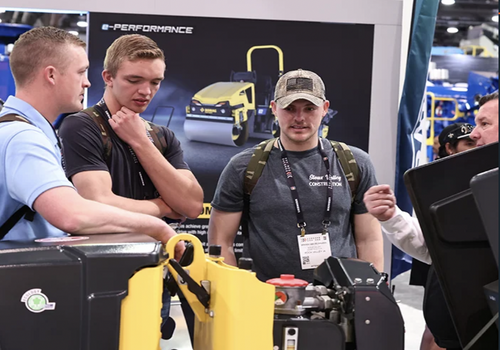
Career fairs, construction camps, internships and jobsite tours all give contractors opportunities to connect with students. The most effective programs do more than explain what construction is. They allow students to experience it.
Aria encourages companies to introduce students to employees in different roles and at different stages of their careers. Conversations with a young project engineer, estimator or equipment operator often feel more relatable than a presentation from senior leadership.
Those interactions help students connect careers to real people. They can ask how someone entered the industry, what skills they use each day and what opportunities have emerged throughout their career.
By that point, the conversation is no longer centered on misconceptions about construction. It is focused on specific jobs, responsibilities and career options.
That is why modern jobsites may be one of the industry's strongest recruiting tools.
For contractors, that may be the real value of a jobsite visit. A student who arrives expecting to see equipment may leave talking about engineering, technology, safety or project management. The work has not changed. Their understanding of it has.