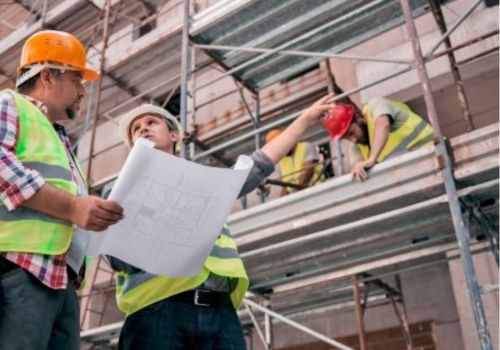
Most jobsite problems originate long before crews arrive. Skilled estimators identify conflicts in plans, specifications and schedules early enough to resolve them before they affect productivity in the field. The real value of preconstruction work is eliminating uncertainty before it reaches the field.
Contractors who understaff estimating early pay for it later in change orders and lost productivity that the original bid never anticipated. The financial exposure compounds fast once a mistake reaches the field, since fixes at that stage pull in multiple trades and eat into the schedule the crew cannot recover.
What Good Construction Risk Assessment Actually Prevents
Estimators see a project long before a single shovel touches the ground. That head start lets them spot conflicts buried deep inside plans and specifications. Autodesk research documented that preconstruction and design services may account for up to 15 percent of a project's total budget. That spend is nothing compared to the cost of catching the same issues once construction is underway.
The gap between office cost and field cost widens the further a project moves along. A conflict caught during preconstruction gets resolved with a phone call. The same conflict caught during framing pulls in the architect, the general contractor and every trade already scheduled behind it.
A missed dimension on a mechanical plan can cost an hour to fix at takeoff. The same mistake can cost weeks to fix once ductwork is hanging from structural steel. Every downstream trade scheduled in that space has to shift. The resulting delay usually shows up as a change order the estimating team never priced.
Why Risk Assessment Saves Money Early

Design-phase mistakes tend to have an outsized impact. Every downstream trade must adapt to them. A single missed dimension can cascade through structural, electrical and finish work before anyone notices.
Design-phase mistakes tend to have an outsized impact. Every downstream trade must adapt to them. A single missed dimension can cascade through structural, electrical and finish work before anyone notices. By the time the conflict shows up, three trades are scheduled in the same space. Something has to move, and it costs someone real money.
Better construction bid discipline forces estimators to question assumptions before bids go out. Questions like those surface risks a rushed estimate would miss completely. Common misses include undersized machines, unrealistic productivity assumptions and mobilization windows that assume perfect weather.
Bid-stage assumptions carry weight the whole project. A single unrealistic productivity number can push the schedule out by weeks once real conditions hit. Estimators who pressure-test those numbers against past job data catch the errors that would otherwise show up in the field as missed deadlines.
Risk assessment extends beyond plans and quantities. Supplier performance can create as much disruption as a design conflict. Reviewing suppliers on more than price protects the schedule as much as the budget. A delayed shipment can force the crew to shuffle work or stand down entirely.
Fewer Field Decisions, Faster Projects
Crews move faster when the office has already solved the hard problems. Every unresolved question becomes a decision someone has to make live. That someone is usually a superintendent running a crew and coordinating deliveries at the same time. Reducing the number of live decisions keeps crews focused on the actual work.
Strong construction risk assessment work turns a stack of unknowns into a short, manageable list. A shorter list lets superintendents make faster calls instead of stopping work to investigate. The real productivity gain shows up in weekly progress reports.
Contractor stories about smooth projects almost always trace back to strong upfront planning. Projects that struggle usually skip that same upfront work. Investing time in the groundwork pays off every day crews spend on site.
The estimating team also sets the tone for how the crew reads the plan on day one. Crews walking onto a site with clear sequencing and staged materials move differently than crews sorting through open questions. Such a difference shows up in daily production numbers by the end of the first week.
The Estimating Office Builds Field Speed
Great projects rarely happen by accident or thanks to a lucky crew. They happen because critical decisions were made early. Materials arrived and crews stepped onto the site with the hardest problems already solved.
Protect margins consistently by treating construction risk assessment as core project delivery work. Treating it as a checkbox before the bid goes out is where overruns start. This shift in the office helps avoid having to explain those overruns in the field.