When Katherine Boniface started her career as a geologist, a simple task became unexpectedly complicated: buying a pair of steel-toe boots.
On her first day in the field, she was handed a list of required safety gear and asked a female coworker where to find women’s safety boots. The answer surprised her. The nearest option was a hunting and fishing store where women’s choices were nonexistent. Katherine did what she had to do and bought the smallest men’s boots available to make it work.
“I was working years in big, bulky, heavy, ugly stuff,” Katherine said. “When you’re a woman that’s already on site, you already kind of stick out. And then you also feel like a potato. It really gets to you.”
Today, Katherine is the founder of Obert Workwear, a company dedicated to creating work pants and safety footwear designed specifically for women in construction, engineering, agriculture and other field-based professions.

When you’re a woman that’s already on site, you already kind of stick out. And then you also feel like a potato. It really gets to you.
Katherine Boniface
Founder, Obert Workwear
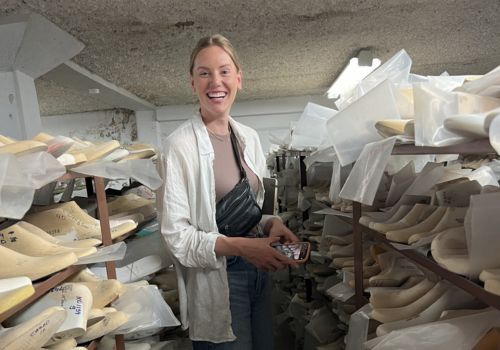
After years of struggling to find gear that fit, Katherine began exploring what it would take to create better options. She spent years researching manufacturing, connecting with industry experts and teaching herself how footwear and apparel are developed before finally holding her first sample in hand.
The company name comes from her grandmother's maiden name, Obert. Later, Katherine learned an unexpected piece of family history: her great-grandfather had been a bootmaker, a discovery that reinforced her decision to pursue the business.
Through the process of starting Obert, she learned that simply shrinking men’s products wasn’t enough. Women’s PPE often requires different sizing, fit and design considerations to work as intended.
More Than a Sizing Problem
Many contractors understand the importance of personal protective equipment. What often gets less attention is whether that equipment is designed to fit the worker wearing it.
For Katherine, conversations with women across industries helped reveal the scope of the challenge. Engineers, tradeswomen, landscapers, agricultural workers and first responders frequently shared similar stories: oversized clothing, limited options and equipment that was never designed with them in mind.
Katherine remembers speaking with an aerospace engineer who routinely used tape to secure oversized clothing around her wrists and ankles because the gear available to her didn't fit properly.
Their experiences weren't isolated incidents. A study by the Center for Construction Research and Training found that 88% of tradeswomen reported difficulty obtaining properly fitting PPE, and more than three-quarters said they had been exposed to a workplace hazard as a result.
That's when Katherine realized the issue went beyond comfort.
"This is a tangible safety issue for women."
The examples aren't difficult to imagine on a jobsite. Boots that are too large can affect footing, while loose or bulky PPE can create distractions and hazards when workers need to focus on the task at hand.
But as Katherine continued talking with workers, she found another layer to the conversation.
When PPE Impacts Belonging
Safety may be the most immediate concern, but properly fitting workwear also sends a message about who belongs on the jobsite.
For many women, being handed gear that doesn't fit can create a daily reminder that they were not considered when decisions were made. It may seem minor compared to larger workforce conversations, but those small signals can shape how employees experience their workplace.
Calling this out doesn't mean framing the issue as a divide between men and women. In Katherine's view, properly fitting PPE should simply be an expectation for everyone.
"We want to bring more women to the job site. We don't want to push out men," she said. "We are all existing. You have clothes that fit, I have clothes that fit and it's just table stakes at that point."
For employers looking to better understand the experiences of their workforce, Katherine recommends starting with a few practical questions. Do employees feel safe in the gear they're wearing? Can they easily find properly fitting PPE? Are there obstacles that have gone unnoticed because no one has taken the time to ask?
More Options, Fewer Barriers
For Katherine, Obert Workwear isn't ultimately about boots or pants. It's about making sure workers can focus on the job instead of the equipment they're wearing.
Asked what success would look like, Katherine doesn't point to sales numbers or market share. She hopes future generations of women entering the trades will have something she didn't: options. The goal, she said, is for a young woman shopping for safety gear to find just as many choices as her male coworkers.
Visit CONEXPO-CON/AGG Women in Construction for more powerful stories about how women are shaping the industry.