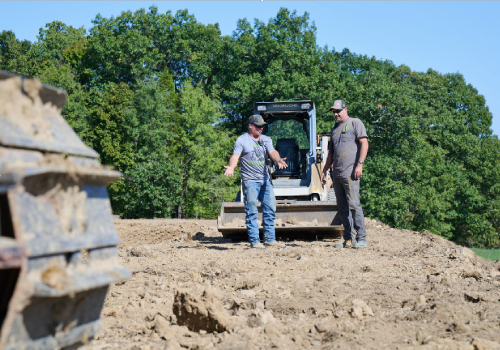
The foreman could run a crew. He knew the work, understood production goals and had earned the respect of the people around him.
Then he got promoted.
Suddenly, the job looked different. He was expected to coach younger workers, resolve conflicts, communicate with management and keep employees engaged, all while making sure the work was done. The technical skills that made him successful did not automatically prepare him for leadership.
Construction companies encounter versions of this scenario every day. As experienced employees leave the industry and workforce shortages persist, contractors are increasingly promoting workers into leadership positions earlier in their careers.
The challenge is preparing those employees for responsibilities that extend far beyond the jobsite.
"What are we doing to develop these people once they enter the industry to keep them there and move them up?" asked Allison Stepnitz, executive director of BuildStrong Academy of Colorado, a nonprofit that helps people start careers in the skilled trades and connect with construction employers.

"Just because you're a good, skilled carpenter doesn't necessarily make you a great leader.” — Kate Rieling, Catamount Constructors
WHY LEADERSHIP HAS BECOME A WORKFORCE ISSUE
Workforce development brings people into the industry. Leadership development helps keep them there. And leadership quality affects far more than project performance. According to Gallup, 57% of employees who voluntarily left a job say their manager influenced their decision to leave.
"Just because you're a good, skilled carpenter doesn't necessarily make you a great leader," says Kate Rieling, project manager at Catamount Constructors.
Without intentional development, companies risk creating leadership gaps at the same time they are trying to solve workforce shortages.
The solution is providing the right development focus at the right stage of a person’s career:
- Emerging leaders (entry-level field employees): Work ethics, safety habits, communication and mentorship.
- Developing leaders (foremen, superintendents and mid-level managers): Crew leadership, planning, accountability and conflict resolution.
- Strategic leaders (project managers, senior managers and executives): Mentorship, relationship building, financial oversight and culture development.
For many companies, leadership development is also becoming a succession-planning strategy.
As owners, executives and experienced supervisors approach retirement, contractors are identifying employees who can take on greater responsibility and deliberately building financial, operational and decision-making skills before leadership vacancies occur.
BUILDING LEADERS AHEAD OF TIME
Many construction companies are focused on recruiting the next generation of workers. Fewer are asking who will lead them. While skills evolve at each stage in a career, one goal is universal: start developing leaders before they receive the title.
At BuildStrong Academy, students lead portions of training, oversee small projects and help classmates stay on task. The goal is to build leadership habits before students ever step onto a jobsite.
Contractors are applying the same approach in the field, pairing new laborers with experienced mentors. New employees learn expectations, while seasoned workers practice leadership before stepping into foreman or superintendent roles.
Contractors can use trade associations, technical colleges, workforce groups and chambers of commerce to build leadership skills without standing up a full internal training program.
Many construction companies are focused on recruiting the next generation of workers. Fewer are asking who will lead them.
SMALL ACTIONS, LONG-TERM IMPACT
Even with accessible resources, contractors face the same obstacle: time. Project deadlines, staffing shortages and daily operational demands often push leadership development to the back burner.
Alison says leadership development requires a deliberate investment of time and resources. "If you don't spend time on leadership development, you're going to have higher turnover."
Leadership development can start with simple, repeatable actions:
- Assign rotating “lead for the day” responsibilities to entry‑level workers.
- Use interns or shadows to help supervisors practice clearer communication and expectation‑setting.
- Replace annual review feedback with ongoing career conversations.
- Give a promising employee responsibility for a meeting or intern.
The next generation of construction leaders is already on today's jobsites. The question is whether companies are giving them the tools, experience and opportunities they need to step into larger roles when the industry calls on them.
Learn more about Next Generation Builders: Impacting Our Communities Through Leadership Development by purchasing On Demand Education Access from the CONEXPO-CON/AGG 2026 show.
PHOTO CREDIT: SHUTTERSTOCK/FOTOANDALUCIA