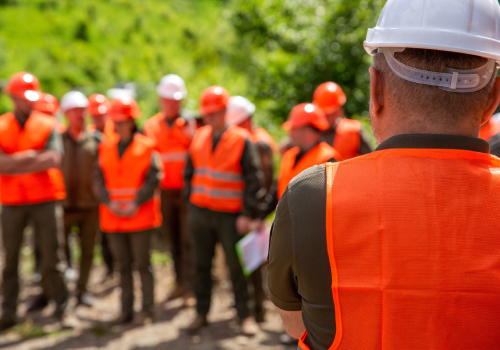
Safety policies may be posted inside trailers and repeated during toolbox talks — but the real expectations show up in the field, in the split-second decisions supervisors make once the work starts moving. Workers notice when a shortcut gets waved through to keep production on pace or when a concern goes nowhere because the schedule is tight.
“People are going to do what their boss wants them to do the most,” said Justin Ganschow, business development manager with Caterpillar Safety Services. “And they form that perception by what they hear about the most, what they get asked about the most…which tends to be production.”
Mixed signals between stated expectations and day-to-day field decisions can gradually weaken safety culture across crews before leadership recognizes the pattern.

“We can walk past 99 things that are right and focus on the one thing that’s wrong.” — Justin Ganschow, Caterpillar
WORKERS BELIEVE WHAT THEY SEE, NOT WHAT THEY HEAR
Leaders spend most of their visible safety attention correcting mistakes. Over time, that can train crews to associate safety conversations with violations and discipline rather than the operational decisions leaders want repeated.
“We can walk past 99 things that are right and focus on the one thing that’s wrong,” Justin explains.
Reinforcing safe decisions in real time helps crews understand which behaviors matter once production demands increase. And it can be as simple as:
- Acknowledging a crew for stopping work to address a problem early
- Recognizing a thorough equipment inspection
- Following up when a worker raises a concern before conditions worsen
ENGAGEMENT INFLUENCES SAFETY DECISIONS
When workers see problems bounce around without a clear next step, they start adjusting on their own. This means that fewer incidents get reported and pre-task plans lose the attention needed. This narrows leaders’ visibility into emerging risks.
Consistent involvement reverses that pattern. When leaders stay present and responsive, crews speak up earlier and stay aligned even when schedules tighten.
Regular manager check-ins improve engagement and help employees raise concerns earlier. In a Gallup CliftonStrengths discussion on workplace engagement and communication, Principal Allan Watkinson recommended that managers regularly ask workers simple questions about:
- How they are doing
- How work is progressing
- What support they need
LEADERSHIP REQUIRES MORE THAN WRITTEN PROCEDURES
Effective safety leadership is a combination of four areas: systems, mindset, leadership behavior and ownership. Each one shapes how crews respond in the field.
That shows up in practical ways:
- Systems: Supervisors making changes after workers raise concerns, so reporting loops work as intended.
- Mindset: Leaders reinforcing that safety is part of production, not separate from it.
- Leadership behavior: Crews seeing supervisors make the same calls under pressure, not shifting standards when the schedule tightens.
- Ownership: Leaders participating in toolbox talks instead of treating them as routine paperwork.
Written procedures still matter. But they only work when leaders model them, reinforce them and hold the same expectations across every crew.
WHAT LEADERS SHOULD WATCH BEFORE PROBLEMS ESCALATE
Safety problems rarely arrive as surprises. They usually build slowly, showing up first in how crews participate and how work gets done. Early shifts in coordination, like crews stepping into tasks before alignment or handoffs getting sloppy, are often the first signs that expectations are drifting.
Strong safety leadership is like preventive maintenance: waiting until an incident occurs means reacting to issues that have already been developing. Being positive and proactive will yield better outcomes than blame does.
Instead of focusing only on incident rates, contractors should also watch for:
- Drops in near-miss reporting
- Reduced participation during toolbox talks
- Repeated shortcuts or workarounds
- Unresolved field concerns that linger from day to day
- Different supervisors interpret the same standard in different ways
“Accountability can be the strongest tool in shaping behavior,” Justin notes.
Editor’s note: This is the fourth part of our Summer Safety series. Read part one, part two and part three for actionable ways to keep your workers safe all year.
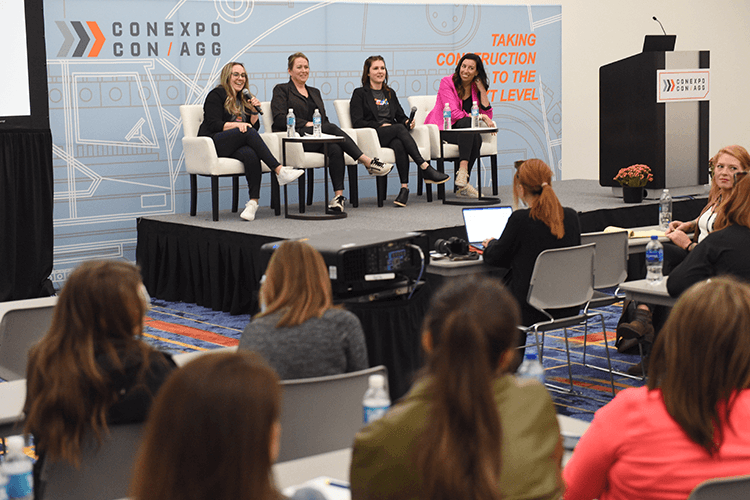
Justin shared these ideas and more during the CONEXPO-CON/AGG 2026 session The 4 Domains of Safety Leadership: Measurable Traits that Change Everything. Watch the full session through CONEXPO-CON/AGG On Demand.
PHOTO CREDIT: SHUTTERSTOCK/BODY STOCK