Construction sites are full of dangers people eventually stop seeing. A laborer waves a loader through a tight access point, assuming the operator knows he’s there. A rigger skips a second shackle check because the steel truck is behind schedule. A worker narrowly avoids getting clipped by a backing loader, but no one stops to discuss it because the pour is running late.
Most of those moments never get formally documented. They disappear into the pace of the day before a supervisor hears about them.
Those near misses and unnoticed behaviors are pushing contractors to rethink how risk gets identified before an incident occurs.

Near misses and unnoticed behaviors are pushing contractors to rethink how risk gets identified before an incident occurs.
TOOLBOX TALKS AND INSPECTIONS AREN’T ALWAYS ENOUGH
Toolbox talks, inspections and pre‑task planning still anchor most safety programs, but a concern raised at 7 a.m. can look very different by mid-afternoon.
A 2025 study from the American Society of Safety Professionals and J. J. Keller & Associates found that 96% of safety leaders now track leading indicators—early warning signs of rising risk. Contractors are expanding that approach with camera-enabled coaching to spot behaviors traditional reporting often misses.
In a recent MIT Technology Review report, entrepreneur Philip Lorenzo described a “tug-of-war” between safety and productivity that can reshape decisions in ways inspections don’t capture.
To help address that gap, Lorenzo created Safety AI, a tool that analyzes daily imagery from drones and other reality-capture systems already used for progress documentation. The platform identifies potential OSHA violations and sends alerts to safety teams each morning.
A recurring close call around a loading zone may never appear in an incident report, but repeated video review can reveal the pattern before someone gets hurt.
HOW CAMERAS HELP COACHING
One of the largest challenges with cameras in construction is the hesitation around how workers think footage will be used. Suffolk Construction offers a clear example of how to reframe that conversation.
Suffolk teamed up with Arrowsight, a coaching-focused safety platform that pairs fixed-point cameras with daily human review. The effort grew out of a multiyear pilot with Zurich North America and Zurich Resilience Solutions, which tested whether short coaching clips could shift field behavior.
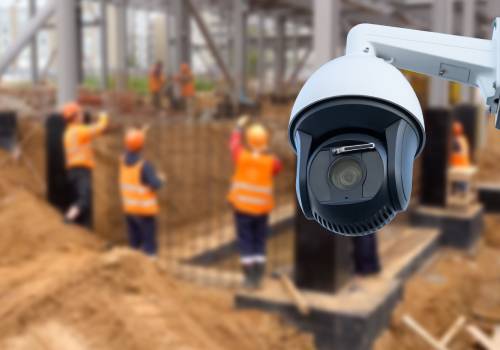
Cameras continuously monitor construction activity in real time while offsite engineers review footage to identify hazards and coaching opportunities. Daily safety emails, trend reports and video clips highlighting potential risks on the jobsite are shared with safety leadership.
Immediate updates help safety teams identify recurring risks that may otherwise go unnoticed in the pace of daily operations.
The pilot program delivered measurable results, including a more than 50% drop in workers’ compensation claim frequency and an increase in worker safety compliance rates to nearly 100%.
Talk with your crew before adding cameras to:
- Define the intent and benefits early
- Communicate how footage will be used
- Reinforce that the goal is improving conditions—not policing workers
WHY REAL-TIME FEEDBACK MATTERS
For contractors using camera-enabled coaching systems, the biggest shift is faster, more specific feedback. Instead of relying on occasional observations or post-incident investigations, teams can review real jobsite moments while conditions are still fresh and address unsafe patterns before they become routine.
This changes coaching from reactive to proactive. Supervisors can point to specific situations from that day’s work to identify repeated close calls around equipment movement, missed PPE checks or recurring access-point congestion before those issues escalate.
Additional benefits include:
- Camera systems operate in the background
- Workers aren’t asked to complete extra paperwork
- Footage collected can also be used for progress documentation
WHAT CONTRACTORS SHOULD CONSIDER BEFORE ADOPTING THESE SYSTEMS
Rollout strategy and communication matter as much as the technology itself. Systems framed as coaching tools rather than disciplinary tools are more likely to gain workforce acceptance.
Before implementation, contractors should consider:
- How footage will be reviewed and by whom
- Whether the system is framed as coaching or enforcement
- How long footage will be stored
- What privacy policies apply on active jobsites
- How and when supervisors will communicate with crews
- Whether the technology supports existing processes or adds friction
These systems are not replacing supervisors or safety walks. They are helping contractors spot the repeated risks that can blend into daily operations over time.
This is the second part of our Summer Safety series. Read part one to learn how to keep workers safe during the busy season.
PHOTO CREDIT: SHUTTERSTOCK/ALEKSANDRKOZAK