


Heavy civil contractors across North America are desperate for talent, but many wait until high school graduation to start recruiting. Amy Henningfield, Director of Workforce Development at Superior Construction, argues the industry doesn't have a labor shortage - it has a visibility shortage. By the time students reach their senior year, they have often been told construction is a "dirty" fallback plan for those who can't make it in college.
Superior Construction breaks this cycle by reaching kids in middle school and exposing young women to heavy equipment early. Amy explains why treating people like high-value infrastructure - using preventative maintenance and mentorship - is the only way to secure the industry's future. By showing students technology like drones and VR, contractors can replace outdated stereotypes with a high-tech career path.
Topics:
- Workforce development ideas every contractor can use
- Why investing in people drives long-term success
- Recruiting the next generation of construction talent
- How to build a culture that retains great employees
Watch now:
Listen now:
Listen on your favorite app: Apple Podcasts | Spotify | YouTube
Subscribe to the CONEXPO-CON/AGG YouTube channel to be notified of new episodes.
Join more than 65,000 industry peers who receive construction industry news and trends each week. Subscribe to CONEXPO-CON/AGG 365.
Episode transcript:
Taylor White: Welcome back, everybody, to the CONEXPO-CON/AGG podcast. I am your host, as always, Taylor White. Today’s guest is somebody whose whole career answers the questions every contractor in North America is asking right now. Where is the next generation of construction workers coming from? I say this all the time as well.
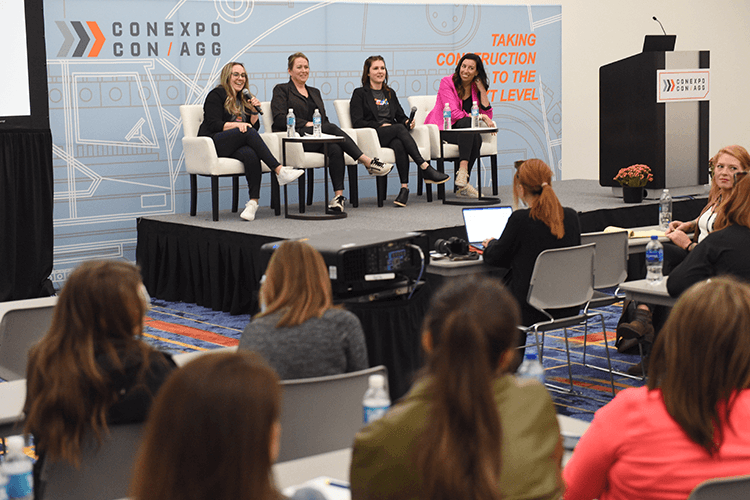
Amy Henningfield is the Director of Workforce Development at Superior Construction, a fourth generation, family owned heavy civil contractor based in Northwest Indiana. She didn’t choose construction. She was a single mom who needed a job. She started as an administrative assistant and, over 30 plus years, worked her way into a director’s seat, shaping the future workforce of this entire industry. She also helped us out at the EmpowerHER workshop at CONEXPO-CON/AGG 2026 and was named Northwest Indiana’s Influential Woman of the Year. Her mantra is simple: You can’t be what you don’t see. Amy, welcome to the show.
Amy Henningfield: Wow. Thank you, Taylor. I sound amazing.
Taylor White: You are amazing. And that is why you’re on the podcast.
Amy Henningfield: Well, thank you. You’re amazing. I am honored to be here. Thank you for bringing visibility to this topic. It is near and dear to me, so I am happy to be here.
Taylor White: Awesome. It is funny, your story isn’t the typical path into construction. You started as a young single mom looking for stability and ended up helping shape the future workforce of the entire industry. What were some pivotal moments that convinced you construction wasn’t just a job, but your calling?
Amy Henningfield: First, I will tell you that I never even imagined being in construction. It is not something that I chose. Like you said, I was a single mom. I was looking for stability. I was really just looking for a paycheck for my daughter and me. It was just a position that opened up at a construction company. I jumped on it and, fast forward, what I have found today is just a purpose for what I do.
As my career progressed, I really realized that construction wasn’t just about roads and bridges. It is about the people. I watched people being overlooked who could have been incredible leaders. I think that just changed everything. Today, I see workforce development as something to help people discover opportunities that they never knew existed. I feel like construction doesn’t just build infrastructure; it builds people. I just kind of found it in my lap. I am honored to be part of this industry. It is amazing.
Taylor White: I couldn’t agree more. There is so much untapped potential in the industry. You often say, "You can’t be what you don’t see." Can you share a specific moment when visibility, or the lack of it, changed the trajectory of someone’s career, including your own?
Amy Henningfield: Sure. That is my favorite saying. I say it a million times a day. It is deeply personal to me. When I entered construction 30 years ago, I didn’t see any women in leadership. I didn’t see women speaking at conferences like EmpowerHER at CONEXPO-CON/AGG. I didn’t see people leading workforce initiatives. They weren’t sitting at the tables.
It was difficult for me to imagine myself there. Now, I am able to give folks a visual so they can see themselves. I can mentor people. I get to witness that transformation in young people now. I have watched so many young women at events climb up on a piece of equipment or be exposed to a job site, and finally, the light bulb goes off. They can imagine themselves being in that position or being that operating engineer. It is an amazing transformation. Visibility matters. You can’t be what you don’t see. It is about possibility, really.
Taylor White: There is tons of possibility in the construction industry. We hear about the workforce shortage a lot right now. What is the biggest misconception industry leaders have about solving that problem? What are we doing that is not working?
Amy Henningfield: In my experience, I think we talk about it the wrong way. It is not just a workforce shortage, but again, it is a visibility shortage. Getting people into the workforce doesn’t happen when you fill out an application. We have to bring awareness to it. Students have to know that construction exists. They need to know that it is a career and a path that they can choose.
If parents, teachers, and guidance counselors are still picturing workforce and construction from 30 years ago, they are not recommending it now. They are not seeing the potential. We as an industry have to create awareness, provide exposure, and have meaningful conversations. We need to get into the classrooms just to let them know that there is a pipeline for them. We need to solve the challenge, but we need to stop waiting until it is too late. We have to start building it much earlier.
Taylor White: What does that look like for a small or medium sized shop that doesn’t have a workforce development department?
Amy Henningfield: For a smaller business, everyone can work on equipment. If something breaks down, you invest in your equipment, and you invest in your safety. But we are not always investing in our people. Just attending career fairs or getting into schools can help. We are getting into elementary schools now, along with middle schools and high schools.
Just having one person participate in those activities and communicating with those future leaders is important. You don’t have to invest a lot of money, but you can partner with schools and send someone there. We have pushed college for so long, and now we need to let them know that construction is a viable career. It is a long term, wonderful industry to be in. A smaller company can do just about anything by creating visibility, inviting kids to a job site, or doing a career day at a school. Many people just don’t know where to start or who to contact, but I have never met an educator who would not allow me in the classroom.
Taylor White: What about social media? Should we be on there? What is your opinion on that, because the young generation is there. Everybody is on social media.
Amy Henningfield: Yes, they are. Everyone is on social media. I am learning to utilize it. I am in my 50s, so it is a little more difficult for me, but attention spans are short. Kids are scrolling all the time. You have just a few seconds to get in front of them. Real life stories are what I find effective. The younger kids want to relate to people. They want to see something cool, like a drone or a piece of equipment. Everyone wants to see the iron.
Social media is another pathway that we should be exploring to try to get in front of these young kids. Virtual reality is cool, too. They love it. Putting on the Meta goggles and showing them a day in the life of a job site allows them to look around. They are competitive; they want to beat the other person in the virtual reality. It is fun to watch.
Taylor White: Social media is definitely good for showcasing the culture of your business and highlighting certain employees who have climbed the ladder. People who started here and ended up there, necessarily without a university education, just worked incredibly hard. I find it interesting that you have said workforce development is infrastructure. What do you mean by that? How should contractors think differently about investing in talent compared to equipment?
Amy Henningfield: I talk about preventative maintenance all the time. My husband is a shop manager and an operating engineer. He is always talking about investing in equipment and preventative maintenance. They try to keep it running before it breaks down. Our safety people are always investing in safety and education.
To me, companies are waiting until they are desperate to get people. Imagine if you treated your equipment or safety that way. We have to invest in people. At Superior, it is our business strategy. We are investing in relationships with schools, colleges, and apprentices. We have mentorship. Equipment helps build projects, but people are what build our future. You can buy another piece of equipment, but you can’t buy that generation of skilled workers. It is infrastructure. We need to invest in those people.
Taylor White: What specific things can we do? Is it finding leadership courses to build the next leaders? Leadership is interesting because every person falls into a place in life, which makes life amazing. What can we do for different types of people at a construction company to invest in them directly?
Amy Henningfield: Investing in people directly involves mentorship programs. We pair a young individual coming in with someone they might never normally have access to, like a member of the C-suite, an owner, or a CFO. We try to pair people up just to let them see the other side of what is happening here. Many people think you just need a brochure for the schools, but I don’t think brochures change lives. Experiences do.
I am a hands on person, and I find many people in our company want direct moments where they can climb in equipment or participate in projects. With your current employees and the students you are trying to recruit, let them meet field leaders, touch tangible items, and build things with their hands. I have seen students climb off equipment and say they never even thought about this because they were still thinking of construction from 30 years ago. It is incredibly powerful. We have young folks who work for us going out and talking to other young folks. They feel the passion and see the opportunities, including having no college debt. We have to expose these young kids to the industry. They are out there; we just have to get them here. Being creative with technology, like drones, GPS, and Leica systems, helps because young people love technology.
Taylor White: You mentioned summer camps earlier. I have daughters, and you mentioned that there is a girls’ camp for construction. I would love to know more about that. When you told me that, I thought it was so smart and cool.
Amy Henningfield: You should have one there, and I would be glad to help you with that. It is one of my favorite initiatives. You can literally watch the perception change in real time. It is a day camp, not overnight. We take high school students and middle school girls for an all girls’ camp and expose them to heavy civil construction. They get to jump on a piece of equipment. The whole camp is run by female construction leaders, from the safety talk in the beginning to the mine visit where they see where aggregate comes from.
We take them to an asphalt plant to see where the aggregate goes, and then to a job site to see asphalt or concrete in action. It is very hands-on and interactive. They love being in the hard hats and seeing the physical labor. It shifts the mindset from just a construction job to a career opportunity. It goes back to my mantra: You can’t be what you don’t see. We are showing them that women can do this. We don’t need special provisions; we just need the possibility and visibility. They don’t want to leave. We create connections and then follow up in their schools. We are trying to broaden the pipeline and show that outdated stereotypes are wrong. It is very impactful. I have two daughters and a granddaughter now, and I want to bring that forward for her so she never has to experience what women did 30 years ago.
Taylor White: The industry is changing, and it is important to show that change. It is a male dominant industry, and exposing girls to it early is a great way to fix that. How long has the camp been going on?
Amy Henningfield: Currently, it is just two days. This is our second year. We have expanded to a second camp in Indiana, and it has really gained traction. One of the cool things is seeing how the moms react. Some of the girls felt isolated before, and then they found this group of women. It is powerful when a mom says it was the best two days her daughter has had all year. I sometimes take this job for granted, but talking to these girls and showing them this career is very humbling. It brings happy tears.
Taylor White: Doing things like that is what actually changes the industry. You have worked with schools, apprenticeships, and contractors. What is the most effective thing you have seen a company do to inspire a young person?
Amy Henningfield: It is visibility. Get into the schools, have the summer camps, and put them in front of female leaders. At career fairs, I see amazing companies that have only males standing at the table. The girls walk right by, and you may see opportunity walking right past you. They might be the best laborer or operator you would ever know, but you don’t provide a female presence they feel comfortable with.
We are all awkward at that age. You don’t always want to walk up to a table full of men to talk about your career. Whenever we have a female representative from Superior, the table is full and teachers send students to us. Having representation for females allows them to feel confident. Exposure changes perception, but experience gives them the passion. Get them on a job site if you can.
Taylor White: What are you saying to these people in schools?
Amy Henningfield: Every student needs to know what their options are. I try to explain that I am not there to talk them out of college, but I want them to know construction is an option. It is a great career with no college debt, good benefits, and health coverage. Apprentices can come out making 100,000 dollars a year. Money talks to kids.
Beyond that, we want them to know it is not just a shovel in the ground. We have legal, marketing, and IT departments. There are professional opportunities as well as skilled trades. I try to help students find their strengths. If sitting behind a desk is not for them, they can work with their hands or do estimating. I always bring someone who can fly a drone because that gets their attention. I let them know that skilled trades built their schools and communities. When you are a grandparent driving over a bridge, you can say, "I built this." Construction is not a bad thing.
Taylor White: What do you think would surprise parents and teachers about today’s construction industry?
Amy Henningfield: Technology. It has changed tremendously. The common thought was that construction is a dirty job, and while it can be, it is now more innovative and technology driven. Drones, GPS, and virtual reality are things parents don’t always associate with construction. There is engineering, project management, and even environmental science involved. Very few careers allow you to drive by a project and say you helped build it.
Taylor White: We have people here who genuinely enjoy working outdoors in extreme temperatures. It is rewarding. How do you keep people once you hire them? Let’s talk about retention.
Amy Henningfield: People want to feel valued. Benefits matter, but people also want purpose. They want to grow and have someone believe in them. Companies can’t stop investing in people once they are hired. Mentorship, leadership development, and continuous education are vital. We offer education reimbursement and new opportunities to grow. Recruiting gets them here, but leadership is what keeps them here. You have to give them a reason to stay. Investing in them and including them in difficult conversations matters. Superior is good about asking how we can do better.
Taylor White: That loops back to culture.
Amy Henningfield: Absolutely.
Taylor White: Investing in people is culture. It is not just having a pizza party. We do canoe and kayak days or camp days with team competitions.
Amy Henningfield: We did that last Friday. We did a playset build for cancer patients. We paid our employees for the day to meet and build a playset for a young girl in her backyard. It was an amazing day where everyone worked for the common good. Watching people give back is very cool. We do a lot of team bonding events to get people out of the office. This is your second family, sometimes even your first. You have to create those experiences because people do not stay where the culture is toxic.
Taylor White: Regarding mentorship, we have laborers who are very smart. How could someone like me, with a day filled with meetings and Zoom calls, be a mentor to them?
Amy Henningfield: For us, we try to schedule it. If you don’t put it on your schedule, you won’t do it. You could just go out on the job site and say, "Come walk with me," and start talking. Or have them sit in on a difficult conversation or a meeting. It is about giving them access to someone they normally wouldn’t see.
Our Superior Women in Construction group has a leadership mentorship program where women are paired with the C-suite or operations managers. We ask them to have difficult conversations about what women are experiencing in the field. Anyone can be a mentor. It is just making a connection and taking time, even if it is just an hour for a walk on a job site. I learn from mentees all the time. Invite an intern to shadow you and explain the "why" behind decisions. Just checking in is important. It can change a person’s trajectory.
Taylor White: What is the best piece of advice you have ever received?
Amy Henningfield: Don’t wait. Don’t shrink yourself. There is no right time. For so long, I suffered from imposter syndrome. I wish someone had told me years ago that I didn’t have to wait until I checked all the boxes. If I had just been more confident. Be yourself. Women make up only 11 percent of the industry, and I wish I wouldn’t have shrunk down. I had an individual tell me that I am capable and exactly where I am supposed to be. I wish I had known that a long time ago. Don’t change for anyone. I felt I had to be one of the guys for so long, but I deserve to be here.
Taylor White: If a 17 year old student is listening who has never considered construction, what would you tell them?
Amy Henningfield: It is okay if you don’t know what you want to do. Construction isn’t just one job; it is hundreds of careers. If you like working with your hands or solving problems, there is a place for you. You can build roads, bridges, and hospitals. There is purpose in it. You can be an equipment operator for 10 years and then decide to be a carpenter. Being in this industry gave me confidence and lifelong friendships. It is a small but large community.
Taylor White: Looking back on your journey, what has the industry given you beyond a paycheck? Why do people underestimate that part?
Amy Henningfield: It has given me purpose. I was a 20 year old single mom who quit college. I fell into construction and worked my way up. The company helped me continue my education. Thirty years later, I got my bachelor’s and master’s degrees. Now I am doing leadership coaching to help young folks gain confidence.
This industry is a way of life. I have found intelligent and empowering people here. My journey has had peaks and valleys, but I want my legacy to be about change. When I started, they gave me a 2XL safety vest and gloves that didn’t fit. It was a safety hazard. I went home and cried, wondering if this was the industry for me. Now, we have women’s vests that fit. I want my granddaughter to enter this industry feeling supported. We don’t need special treatment; we just need the opportunities.
Taylor White: The EmpowerHER workshop at CONEXPO-CON/AGG was a niche event. How did you feel that went?
Amy Henningfield: It was amazing. The fact that you did that shows forward thinking. It was empowering to be in a room with so many women. It was impactful and emotional. I think it should happen more than every three years. There should be mini events in different areas.
Taylor White: I love the camp idea and your proof of what a woman can accomplish. Any final thoughts?
Amy Henningfield: I would tell your listeners to get into the middle schools and elementary schools. That is where our future people are. If this helps one company think about going into younger schools, that is a win. We have to show them that with hard work, this can be an amazing career. Visibility is key.
Taylor White: Thank you so much, Amy. I appreciate it.
Amy Henningfield: Thank you, Taylor. I appreciate you taking the time to talk to me today.
Taylor White: Thank you very much, Amy. Same to you.