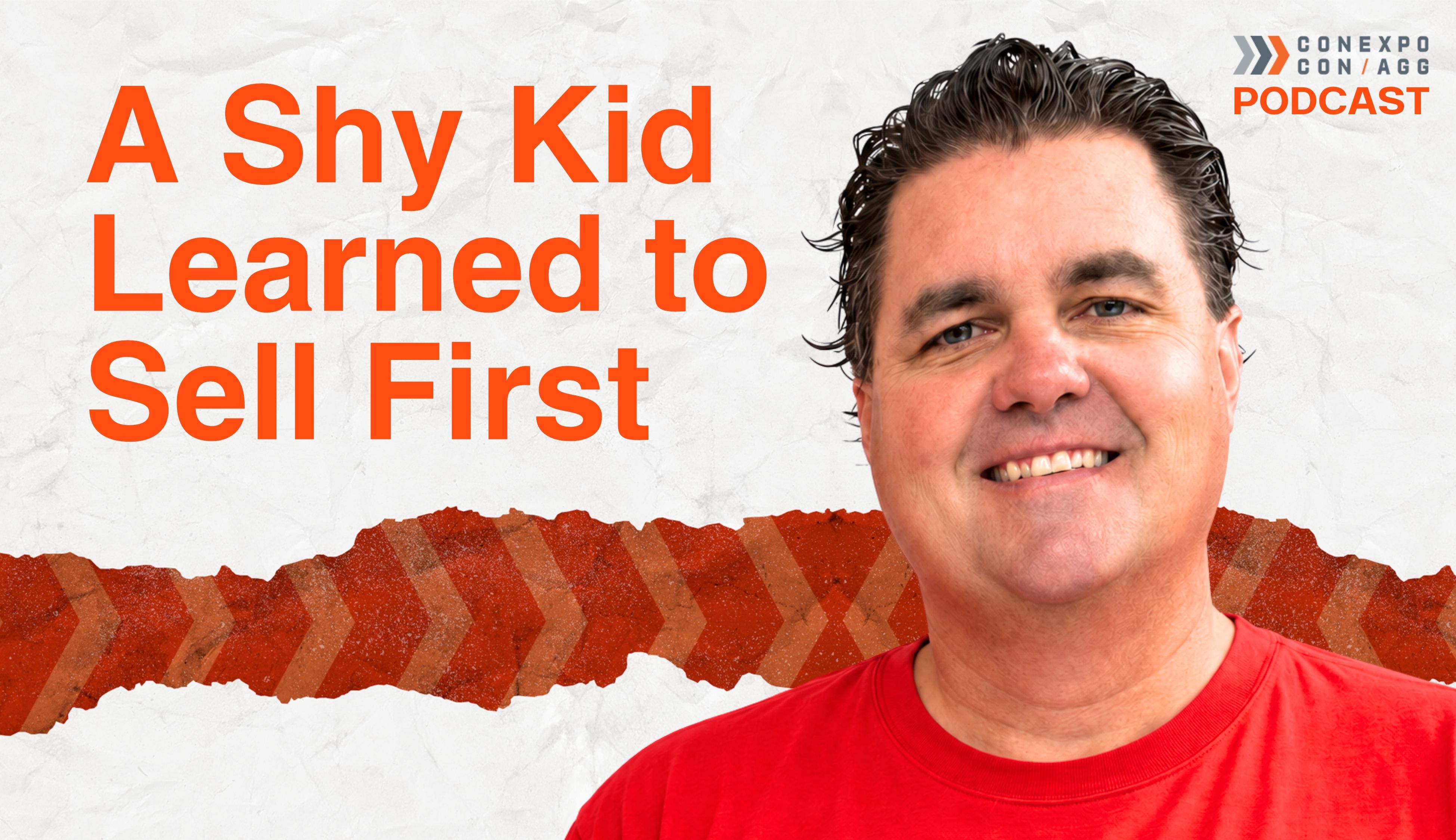



Kyle Eberts is the guy who gets the call for flooded basements, house fires, and unattended deaths. He tells Taylor today how slowly insurance money arrives, why he and his father nearly came to blows over the company name, and what he built in Claude in 30 minutes.
Kyle runs Crew Restoration & Construction in Sioux Falls, SD, with 40 teammates across a 100-mile corridor. His crews handle water, fire, hail, mold, asbestos, lead, and trauma cleanup, plus the rebuilds. He started as a UBS stockbroker to avoid working for his dad before joining the family construction firm, pivoting to insurance restoration, and rebranding the company. In this episode, Taylor asks how techs move up, how Crew staffs a 24/7 emergency line without burning people out, why insurance jobs cost more, and how bi-weekly personal goal meetings changed his team. They finish by discussing the call-grading bot Kyle built for his new retail roofing center and why he thinks people will stop using Google within a year.
Topics:
- From stockbroker to construction business owner
- Rebranding and growing a restoration company
- Using employee goal setting to improve retention
- How AI is changing construction marketing
Watch now:
Listen now:
Listen on your favorite app: Apple Podcasts | Spotify | YouTube
Subscribe to the CONEXPO-CON/AGG YouTube channel to be notified of new episodes.
Join more than 65,000 industry peers who receive construction industry news and trends each week. Subscribe to CONEXPO-CON/AGG 365.
Episode transcript:
Taylor White: Welcome back everybody to the CONEXPO-CON/AGG podcast. I am your host as always, Taylor White. Here with me today on this beautiful fine evening, I have Kyle Eberts. How are you today?
Kyle Eberts: I am doing good.
Taylor White: Kyle, I appreciate it. And give people a little bit of background info. We were supposed to be on a bit of a prerecording call last week and I had something going on on one of our sites and so the team kind of helped and took care of Kyle here and I am really excited that we are finally getting to sit down and have a chat. You are from Sioux Falls, South Dakota, right?
Kyle Eberts: I am, yeah. I am, born and raised. Went to school at South Dakota State. So I have never, I haven't left too far from the home. So, it is a good place to live though.
Taylor White: Yeah, you know what? I have driven through South Dakota and it is definitely beautiful. So for anybody who hasn't heard of Crew Restoration, give me kind of the 30-second version. What do you do, where, and how many people?
Kyle Eberts: Most of it is in Sioux Falls and the Sioux City area. So Sioux City is about, whatever, 60 miles south of here. So in this 100-mile corridor, I would say, have about 40 teammates. We do everything that is insurance restoration and construction. So water, fire, hail, mold, anything that has to do with your home or commercial property, and then all the full reconstruction that goes along with that.
Taylor White: Okay, cool. So you have a bit of an interesting background and I want to talk about that. You do have an economics degree. You were a stockbroker at UBS. Then, you know, your dad had a construction company and then restoration. So, former stockbroker, now doing this. Explain without skipping over the important details, how does that happen?
Kyle Eberts: Well, the only thing that I knew when I got out of college was that I didn't want to go into construction with my father. That was the only thing I was sure about. So that is what I did. I went into, it wasn't necessarily a finance job as much as a sales job, and I really, I was a fairly shy kid. So cutting my teeth into a role like that was invaluable to me. It was impossible to me. I couldn't figure it out quick enough, but it was invaluable to me to figure out how to talk the lingo, how to speak to people, how to be able to figure out personalities on the fly and know how people want to be talked to and how they can be sold.
So that was important to me. And then after I was in it for a few years, I realized that my father was getting older and we should work together. So for about 6 months, I think he made me beg to come back to work for him because he was a little bit downtrodden because I didn't want to come work for him right after college and eventually he acquiesced and we started working together. So that was, we built new homes and remodeling at the time. So that was, you know, probably about 15, 18 years, we did that. And then now we got into the insurance world.
Taylor White: Very cool. So what did you see in your dad's construction company that made you want to come back and like what did you see that you knew you had to change?
Kyle Eberts: Well, I didn't see anything that I had to change. Actually, what happened was, literally, I bet two to three times a week, him and I would meet for lunch while I was a stockbroker, and I would tell him about how I was failing and all the things that were going poorly, and he would pump me up and tell me all the things I was doing well. And I could just, I could just see the writing on the wall that, you know, he was my mentor, so I could see the writing on the wall that we needed to work together. I needed to take over his company, and he was getting older. So it wasn't very long until he was going to be to retirement age, so it was important that that legacy moved on. I mean, he started our construction company with no experience in construction whatsoever. So that piece of it alone, I couldn't let that die with him retiring, right? So I wanted to carry on the family legacy.
Taylor White: And your dad is 83 and he is still in the office, correct?
Kyle Eberts: He is, yeah. He comes in for sure every Monday morning. So I kind of do a speech to the entire team, so he is always there for that. And then, yeah, quite a few days during the week he will be in in the mornings, stuff like that. So I think he likes to play cards and do stuff like that and keep his mind right. I am sure he takes some naps during the day, but yeah, he is in the office a lot. And he is a good mentor to a lot of the younger guys as well. I mean, there is barely any, well, there is nothing in construction that he hasn't seen over his 50-plus year career in it.
Taylor White: When you took the business from, you know, construction into restoration and kind of rebranded, how did your dad take that and was there kind of, you know, was there any disagreements over that or pullback from that?
Kyle Eberts: Yeah, so the actual process of what we were going into, no, none. What he didn't want was for me to change the name. It was Eberts Construction, our last name. He felt tied to that, I assume. So that was really hard on him. I remember those conversations vividly. They were, they were aggressive conversations. If you want to say that, we were nearly fist fighting at times to be very honest.
So, but I knew that this was the direction that we had to go. When you change the complete direction of the dichotomy of the company, it must change its name for easier, for ease out to the market, or else your marketing pieces fall flat in my opinion. And that is really where I was going with changing the name. I wanted something very simple that told our story.
Taylor White: Yeah, that is interesting. That would have been a really tough thing for, you know, your father. And I am sure even you as well too. I mean, like your last name on your business is something that is, you know, that is everything. You know, for me, I always, you know, relate it back to myself and I am a third-generation business owner. My grandfather started our construction company and, you know, just the thought of taking away the White, you know, our last name is White, taking away, it's like, but what you are saying and I totally agree with is you are totally changing the direction of the business, everything has to change with it or else it just doesn't, the culture, the vibe, everything just doesn't line up. So that must have been super hard even on your end, not just your dad's end.
Kyle Eberts: It did not come easily. It came with many sleepless nights and much thought about it. And actually my wife now, her and I had first kind of started dating during that time with the transition and figuring out, we didn't work together at the time, we do now, she runs all of our operations. But yes, it was extremely difficult. I still remember when I told him, I still remember those conversations vividly.
It was kind of funny, we had a ribbon cutting when we first changed the name, and someone overheard my mother at the ribbon cutting saying I wish he would have waited until my father was dead before he would have changed the name. At the time that hurt me. Like I don't want my father to die anytime soon. Like you know none of that, none of that was a thought process. But in her mind, I know she knew how hard it was on him. So that hurt her as well. Like just a domino effect of potential destruction at the time. But it was the right move and I knew it in my heart and I had, I had to pursue it. So once I find that in my mind, there is no stopping it.
Taylor White: What is one thing that the brokerage taught you that maybe most contractors haven't seen or taught?
Kyle Eberts: First of all, investing was key. I mean I was Series 7 and 66 licensed, so I could sell any equities or mutual funds, manage money. I could sell anything. So what that taught me, coming out of college, you don't even hardly know what a mutual fund is. So knowing that originally that like one of the first things I did was got us a company 401k, started the match. Like things like that that are more developed, got, you know, started insurance, health insurance for all the guys and paying for the vast majority of that. Like probably more than anything, on top of the investing side, was how larger companies run.
A lot of times in construction, we are the best guy with a hammer and we are either born into it or we start up a construction company because we are good with a hammer. We have never worked in any larger firms in any other industry so we don't really know how large companies should be run. So if nothing else, it taught me structure, things like that. But for the vast majority of what it taught me, it was a sales position.
So I got to know how to talk to people, how people reacted. Like that is first and foremost what it taught me the most. But secondly it would be on the investing side.
Taylor White: Those are some really key parts. I mean, it is interesting when you mention the story, you know, about your father and saying that some of those, you know, conversations maybe got a little aggressive. And it is funny. I mean, I, you know, much as yourself, I have had the same kind of conversations. We didn't change direction, but we rebranded and we grew. And I definitely, you know, my father had a sense of, you know, he liked the business and kind of where it was at. You know, we had four employees. And then I kind of was like, right, we have this amazing foundation of something that I could grow super big, larger. And I kind of had, you know, that vision. And that definitely was met with a lot of just head-on conversations. And, you know, sometimes to the point where like I would tell him, be like, if you are not on board, like I will leave and I will become your competitor.
Kyle Eberts: You didn't want to do that.
Taylor White: Yeah. If he called my, I probably, because I am so bullheaded, I probably would have, but I am glad he didn't because I would have been way further ahead of where I would have been than not.
But it is interesting, you know, this month is "Careers in Construction Month."
Kyle Eberts: I did not know that.
Taylor White: Yeah. Yeah. So, nobody at 18 says I want to do mold remediation. So how do people actually end up on your crew and why do they stay?
Kyle Eberts: The guys on our crew are people that love to work with their hands. They stay because of our culture. I mean, I don't know any other reason than that. They have easy ways to move up in our organization. They can see that path. And to be very honest, when I was in the field, I liked mold remediation and demo and things like that. I thought that was, that was a lot of fun. So I have something in common with those guys. I haven't been in the field for a very long time now, but I can still see the joy on those younger guys' faces. They just get to go in there and take out their frustrations all day. Like there is nothing wrong with that.
Taylor White: No, I don't disagree at all. And you kind of touched on a bit of it. But like growing in the business and stuff, like what does that ladder look like at Crew? You know, if I start as a water tech, where can I be in five years?
Kyle Eberts: Well, we have three levels of technicians. Probably something similar, more similar to what you see in plumbing, electrical, HVAC, where they have to move through stages. So each stage comes with its own prerequisites on levels that you have to meet, and then you move up into a new stage. We pay our guys on incentive pay. So that also increases that incentive pay all the way until you are a lead and you are leading one to two guys underneath you. But we lay out the stages and then once they hit that stage.
The thing in our industry like you probably find more in plumbing is it's sort of laid out timeframe-wise as much as anything. We don't dictate to anyone what your timeframe is. A lot of guys, they don't even want to, they don't ever want to get to a lead position. That is great. I don't have any problem with that, right? I mean, they need to choose their own path and their timeframe. So we don't really choose that. It's more of an equivalency exam, let's call it, or an experience factor that they have to check off boxes on, are you able to build containment? Have you passed your test to do to set up drywall or whatnot? They need to hit certain levels and then they can move up. And then once they hit lead, the next step above that is management. So at that point in time, they really get out of the field and they are managing multiple projects at once.
Taylor White: Do you find it hard because, you know, you run a 24/7 emergencies, you know, also as right. So like, you know, across a 100-mile radius, so how do you staff that without burning people out and losing them to like a 7 to 3 job?
Kyle Eberts: Well, first of all, when they get called on call, they get a bonus immediately whether we get the job or not. So most of the time we have more people wanting to be on call than don't. So the on-call piece is not an issue. And that took time to figure out. When we first started, it stunk. We didn't have a good system and process. Now our system is you have a manager and a minimum of two techs that are on call for an entire week. So the manager will be the one taking the phone call and then they obviously take the call through a strainer to make sure it's an emergency and it has to be done that night or whatnot or that weekend. And then if it hits those criteria, they will either go with another tech or dispatch the two techs. We typically at night and on weekends, we want two people to go almost everywhere. Especially at night, for safety, for everything involved.
So that process is probably one of our easier processes that we need to contain at this point in time just because the guys like making the additional money. A lot of times on top of their bonus, they are working overtime hours. Like there's a ton of benefits that they really enjoy. And we are working towards a process of working seven days a week. And then, you know, the guys that are working on the weekends would have days off during the week, but we'd have a full rotation where during the day we have people that are working those hours anyway so weekend hours don't become, you know, overtime, things like that. Just to alleviate that issue, because you really, you need to look at your equipment daily. It's got to be processed every day to make sure we are drying properly, things like that. So every weekend we've got equipment running.
Taylor White: Do you get into abatement, like asbestos and stuff? Do you do that as well?
Kyle Eberts: Pretty much we do it. Lead, asbestos, trauma, mold, hail, water. I mean almost, I honestly don't know of a service that we don't provide on that level.
Taylor White: Trauma meaning like a crime scene?
Kyle Eberts: Correct. Death, yeah.
Taylor White: Oh, you do that stuff too?
Kyle Eberts: Correct. Yep.
Taylor White: Wow, that is crazy. Do you have to hire like a, like do you have like certain guys that like just do that? Cause I am certain not everybody can see that.
Kyle Eberts: For the most part, our guys are on the tech side. Like some of that stuff they, they like that kind of stuff. It's kind of cool to them.
Taylor White: It is interesting. I get it.
Kyle Eberts: Mostly, when you say trauma, people are like, oh my god, like mostly it's some feces or some blood on the floor. You know, just whatever came out, usually it's not an actual suicide where it's mass blood, everything, you know, things like that. And for the most part, you know, I am just spitballing here, but we probably do one a month or something to that effect. So they are not as prevalent as, you know, we might do five mold jobs today. Those are just much, much more prevalent all the time.
Taylor White: I have always thought about that business because it's a business that nobody thinks about but like so many people have at-home deaths or, you know, unattended deaths where they have been sitting for a while and the body, you know, starts to decompose and the carpet has to come out, the subfloor has to come out, the drywall gets sucked up into the millwork and stuff. And it's like, you don't, nobody thinks about, okay, like a company has to go in and clear that out. And I have always wondered like is it, because like who calls that? Like I guess it would be like power of attorneys or the executors of the estate would be the ones that have to call a company to do it. Not so much like government or municipal people or like the police being like, come clean up this thing. You know, I am just thinking like tender-wise. But what a pretty niche thing to be able to do.
Kyle Eberts: It really is. That is why our marketing gets to be so critical because we do do such a breadth of things that we need to market to all of those. And you are exactly right. The municipalities, the cops, or the EMT, or whoever got rid of it, they are not calling us. It's got to be a call from the direct consumer typically. And it's the wife or the sister or whoever is the executor of the state or closest to them calling in. Now...
Taylor White: And is it covered by insurance usually?
Kyle Eberts: A lot of times that is still covered by insurance. But you are exactly right. The protocols for blood and feces are exactly the same as a sewer cleanup. Anything that it touches, it cannot be cleaned for the most part, unless it's seriously non-porous, then it can be cleaned. But for the most part, you are tearing everything out that it came into contact with.
Taylor White: What is it like working with insurance companies all the time?
Kyle Eberts: Okay. So insurance companies get a really bad rap. The reason that they are in business is because the consumer pays them premiums. They don't take it lightly to lose their consumer. You know, they don't. And especially on the agent side. Like that is how they make their money wholesale. The insurance company does a really good job of trying to keep their customer. Now, do they have parameters in place that where they will pay and where they won't? Absolutely. They are large companies and they have to. There's no ifs, ands, or buts about that. But for the most part, they stick with their standards and they are not, they are not going above or below those standards. What they're saying, essentially, the insurance industry as a whole, every insurance company from State Farm to the smallest one that you have never heard of that's independent, lives by those same standards. If you fall inside that criteria, you are covered. So, to be very honest, I like working with the insurance companies.
Taylor White: And do you find that water payment terms with insurance companies? Are they, do they pay on time, on schedule or sometimes is it a little more difficult to pull the money out of them?
Kyle Eberts: Okay, so that is the only critical piece. It is five times as hard to pull the money out of them as a direct consumer. And there is one reason for it. The whole system of insurance is set up so they make money on their money. That is the only way they make money is actual interest on your premiums as you pay them. So every dollar that they can hold for one day in payouts is a dollar in interest that they made. They do it on purpose. There is no ifs, ands, or buts about it. We all know it. And that part is fine. Once again, as long as I know the rules going in, I am good. Just tell me what the rules are. But because they do hold that, now we have to charge a premium for my services. If we could get to a system where we could get paid out immediately like you would with a consumer, it would be a game changer for everyone involved. But we are never going to get to that system. So you have to charge them a premium because I know I am going to have to wait on my money.
Taylor White: Well, that is actually very interesting. And it makes total sense. You have to find, you have to charge a premium in order to finance your, their business and to keep operating.
Kyle Eberts: We become a bank at that point in time, for the most part.
Taylor White: What is one thing about restoration that would surprise a guy who has maybe spent 20 years in dirt work?
Kyle Eberts: What's something that would surprise you? I mean, just the different things that we see every day. And my, and that is part of what my guys like about the industry is that it never gets stagnant for them. They are literally not doing the same job today as they are going to do tomorrow. Today they will be doing a mold cleanup. Tomorrow a car ran into a building and they are shoring it up or the next day there was a fire and they are boarding it up or they are starting the demo on the mitigation. Like they literally, we do so many different types of things. It would make your head spin. And things you would never even think about. Lightning strikes and the most plutonic green mold that lights up an entire room with it being dark in there. Like stuff you have seen that is pretty freaking cool that you would never see other than in this industry.
Taylor White: That, yeah, that is pretty interesting. I am sure you guys see a lot of, a handful of, a handful of stuff. We recently just had a project where we had a bunch of black mold that was starting just from moisture from a flooded basement. And we had to get a remediation company in there to clean it and air scrub it and do all of this stuff. And it was expensive. But I mean, you know, it needed to be done and nobody wants to breathe in mold. And we needed to in order to seal the deal with the client and finish off the project, we needed to get a piece of paper saying that we are all clear. So, you know, you have to, you have to pay for that.
So I find that interesting. And it sounds like a really neat business. And I think how you operate your business as well is also interesting. Now, I know you mentioned something that kind of about a year ago you started sitting down with every single one of your employees every two weeks to talk about their goals. Not work goals, their goals. Where did that idea come from?
Kyle Eberts: I worked with some consultants with a group called Cardone Ventures. That is where it was born from. They do it with their employees and they call them PPF goals. So personal, professional, and financial goals. And we break them down into 1, 3, and 5-year increments. So our teammates are looking out towards the future. And we literally sit down with them every two weeks. A manager sits down with on a one-on-one and just talks about what their goals are and how they want to progress, how they want to progress with the company, and how that means more money to them and how that'll change them personally.
They sold it pretty well, but they didn't sell it well enough. The way that we are able to transpire with our teammates, our employees now is incredible. We know them on such a cellular level now and we are so close and bonded with them, it makes everything flow so much easier because we are in sync with each other on what they want. And I am going to provide them a roadmap on how to get there.
Taylor White: You use Cardone, like Grant Cardone?
Kyle Eberts: That's the name that they use. So Grant is not really involved in this venture. They use Grant's name because he had such a big name, right? It's actually, I don't know if you've ever heard of a guy called Brandon Dawson, but Brandon is his partner and Brandon runs this side. He started up about 5 years ago. I geek out to this stuff, but they are absolute geniuses. They really are. It, the cost of it was more than I ever thought I would ever spend on anything, but when we got down to it, absolutely worth every penny out of pay double. I don't tell him that though.
Taylor White: But on the subject, you know, you said in our pre-call that you weren't sure if you could actually pull it off. What was that first month like? Because that is a big task, right?
Kyle Eberts: So I went to a conference by myself. So I took away about five things from it. And that was one main thing that I am like, oh man. At the time, I don't even think we did yearly reviews with our employees. So to even think about something like that was so daunting that so luckily my wife and I work together, so we could kind of tag team it. So she took some and I took some, but the first month and then the way our teammates looked at us like, what? Now, what? You know, the construction industry, like they are not big on new things and change and all that. So yeah, I bet the first 6 months was clunky. To be very honest, we are about a year deep into it now. We are finally starting to get where we are really comfortable. It's taken a year maturation process of bore with really end. A lot of work to get there. But so rewarding, so worth it for everyone involved. And it'll help us with recruiting and everything else going forward to grow the company.
Taylor White: 40 people. So, you kind of answered this, so 40 people every two weeks, about a thousand meetings a year. Who is running them? You or your managers? How long do they take?
Kyle Eberts: At Cardone they preach a half an hour per meeting. We shortened ours to 15 minutes because there are so many. But each, each manager has approximately 3 to 5. Brandy, my wife does more. I think she does 8 or 9. But they really preach that that's about the maximum you want to do. And then I don't, I, I do two now, I guess. But for the most part I am out of the out of the scenario. You really want the people, the manager mixed with the technician that they work together. They are direct reports to each other. Even though they know what's happening on a regular basis because they are talking about work too in those, but for the most part we want it to be a personal meeting on their end.
Taylor White: Have you noticed, like what has changed from doing these? You know, you said it's kind of changed, you know, about people coming to work in the morning and, you know, boosted morale and, you know, what has your turnover changed, you know, from before to after?
Kyle Eberts: You know, I don't know if our turnover has changed. We have never had a high turnover I guess. It's hard to explain, but the connectivity that you have with each one of your teammates is a game changer. And I keep saying teammates, we don't call anyone employees here, they are teammates. But the connectivity we've had with everyone here over the last year and knowing because when you start to get into their personal goals, you start getting into their personal life as far as they want to take it. We don't get any deeper, any deeper than that. That's not the point to try to get into someone's life. But it automatically flows into that. So you just can connect to these people, to your teammates so much closer when you are meeting with them every two weeks and talking about their goals.
Taylor White: Walk me through one real conversation, okay, you know, change, change the name, but what, what did this 15-minute conversation, how does it start?
Kyle Eberts: When I was doing them, and I believe they still do them pretty much the same. We do have a form that we are going off of. The main thing is that we want to kind of keep on track. So the form is to know what are your goals, what did you do, you know, what have you done over the last two weeks to perform, to try to get closer to that goal, and what are we going to do the next two weeks. That's, that's really what it is. When I was doing them, I left it almost wide open. I wanted them to speak. If I could not talk at all during the entire 15 minutes, I wouldn't. I would literally, how are you doing? And have them vomit what, information all over me because that's how we can really get deep. As you know in construction, it's hard, you've got to pull that out of them sometimes, right? So, and that's really where the maturation came in. I think it was more their comfortability with it than really ours on the management side, right? The techs being comfortable with, I'm going to talk about my personal life. Like that doesn't feel right. So it took a while. It, and when you're only meeting every two weeks, six meetings is three months. You know, so it probably took three to six months with a lot of them before they felt comfortable with it. Now that they feel comfortable with it, now we go to another level. Once we get to that level, we work to another level. Like just like anything else, it's baby steps and how you're finding connectivity with your, with your teammates and your employees.
Taylor White: Yeah, I think kind of what you are doing too, right, is you are creating a mindset for your teammates and you are kind of starting, I guess a bit of a higher level of thinking with them. And you know, you said that, you know, construction guys by nature are the more reserved and quieter and, you know, we are not really talking to them about mindset. You know, I got guys and girls like that across our organization as well too. Do you think that that, that is our industry or do you think that that is what you, the people attract?
Kyle Eberts: I do think that's our industry but I think that's most industries. And that, that's really my jam. Every Monday morning we have a all-hands-on meeting. So I talk to the entire team, all of them in the same room, and we don't talk about business. We talk about mindset, happiness, how you should work and go home and have balance and enjoy your life and all of those types of things. One thing the construction industry does not do is talk about those things enough. Most companies want to look at their employees as robots. Like you should come in, do this work that I tell you, and then leave and then come back the next day, right? That is just, it's insane to think about.
So the probably the biggest thing that those one-on-ones taught us was that it taught the teammates that we care. If anything else, like until you show them that you actually care, they look at you like you don't do anything all day. If you are not in the grind with me, if you are not swinging a hammer with me, if you are not demoing with me, if you are not cleaning with me, you don't care about what I do on a regular basis. Well, when I am sitting with you every two weeks, you can get a feel for how much I care for you.
Taylor White: What happens when, you know, let's say somebody's the other way, somebody does have tons of drive and ambition and you are talking to them on this one-on-one and they tell you that their goal is to leave and start their own business?
Kyle Eberts: Oh, I had that happen three months ago. And I said to him, that is spectacular. I am clearly an entrepreneur and I love that. So that is your job to progress out of this company. My job is to make it so profitable for you to stay in this company that you are going to be an intrapreneur here instead of having to go out on your own and get kicked in the teeth like I have for the last 20 years. I have already done the hard stuff. Partner with me instead of against me. And he is like, well, that makes sense. And we could shake hands on that and that needs to be the way he thinks.
He needs to think like, I want to do everything and learn everything so I can go out on my own. Well, that going out on your own hopefully is managing teams with me, not against me.
Taylor White: Yeah, I like that. I like what you, I like your answer to that. That is very true. Right. It is, and if you are not afraid to, you know, bring people in or profit share, you know, you talked about incentives at the beginning as well too, right? That is that's all huge. Um, and, and on that kind of business talk of, you know, profit sharing and whatnot, it kind of makes me think about something as well. On our call, you talked about buying a retail roofing business, right?
Kyle Eberts: Yep.
Taylor White: So why purchase rather than build from brand new?
Kyle Eberts: Okay, so I did not purchase an existing company. We started up with a dealership, but it was from scratch. So the dealership is Klaus Roofing Systems. In my opinion, the most thought-out roofing system that I in one million years I would have not thought, had this much thought process to how to put a roof together. And I've been doing it my entire life. So in my opinion there is nothing even close to it. That is why we invested in it. But on top of that, the overarching company that owns Klaus Roofing Systems is Contractor Nation. It's a guy called Larry Janesky. If you ever hear anything that Larry speaks about or does, the guy is an absolute genius.
But we have always done roofing in the past, so it wasn't, we were adding a new system on the retail side, clearly to just go out for that segment, the roofing and the siding retail, but it wasn't, we weren't recreating the wheel. We had our subcontractors and our employees in place that could do all that work. So it was a transition. Most of the transition, to be very honest, was on our call center side because the leads come in differently than they ever have in the past.
So we had to actually create an outbound call center for our retail roofing division. That was difficult and it still is. We are under six months deep into it. I had a meeting this morning with them. I just created a bot this weekend that took in every one of their calls, records them, listens to them, and then ranks them and gives them a rating for every one of their calls, outbound and inbound. And we are on day three of that.
So working through them, and I'll be honest, I thought our call center was good. Our reviews and our ratings that we got were not. A lot of them in the 50th percentile. And part of that is I need to tweak how we are grading and things like that. I am guessing it's a little hard comparatively. But that just goes to show you how many different things that we do and they need to know all those aspects so they can talk to the customer when they are calling in.
A lot of that is difficult. I discount that because I have been doing this for 30 years. Well, they have not. Most of them that come into our call center, they don't know what a nail is. You know, I mean literally. They know nothing about construction. We've got to teach them up to do that.
Taylor White: Tell me about this bot. I literally, what do you use, Chat or Grok or anything like that? So did you make a Grok bot?
Kyle Eberts: I used Claude, but it is the exact same thing.
Taylor White: Yeah, exactly. I use Claude too.
Kyle Eberts: Oh, you use Claude? So we use RingCentral as our, as our internet ring provider.
Taylor White: And you can connect it to Claude as a connector?
Kyle Eberts: Yep, it's got a connector on it. It's sick. And it took me, and I was telling everyone on Monday morning what I did, I literally had that entire thing built in 30 minutes.
Taylor White: That's insane.
Kyle Eberts: And the things that we can do with it now are just, and especially on the marketing side, the marketing game is changing when I say rapidly, it's an inferno. It's changing almost weekly sometimes on how we need to change our marketing efforts. So the way that we're marketing on the internet today versus just two months ago, it's literally not even the same thing. We are doing so many different things because of what AI is going to come down to. Now, you don't have the total buy-in from the entire, from all consumers yet. They are still using Google and things like that. Within 12 months, you won't go to Google for anything anymore. I don't care how old you are. If you have a computer, you will be using AI as an online, not only chat or a search bar, but you'll be using it for much, much more. And it's going to go that way so incredibly fast. It's going to take people by storm.
Taylor White: Yeah, AI is like, it's insane. I feel like I am constantly learning more and more about it. You know, talking to other business owners about it. Like I have a, I have Claude open right now. It's like a scheduled task I have every morning. At 6:00 AM, it combs through my text messages, my emails from both companies. Um, it goes combs through my calendar and it tells me what's in my calendar, what's in my emails that I haven't responded to that I should follow through or that I mentioned that I will talk to them about tomorrow or what it thinks is just important. Then it combs through my text messages and people will because I'm sure just like you, hey, I'll touch space tomorrow. You completely forget about it because 50 other things happen. And then at 6:00 AM it spits this thing out to me, sends me an HTML link, I go to it, shows me my day on a graph and breaks down everything like an order of highest priority to, so it's kind of like a personal assistant. But then on top of that, it also will go and here are draft replies that sound just like you. Do you want me to hit reply and send these things? And it's like, insane.
Kyle Eberts: And I'm just, that's just touching the crisp of it. AI is insane, Claude is insane. And like the stuff that you could do with it is, is crazy. Like, like I'd love to hear about some other stuff that you are doing with Claude.
Taylor White: So many things, but it's kind of funny last night, my wife and I were watching TV and she, like an advertisement came on for something with like high school or something like that. And she just made the comment, it's got to be impossible to be a teacher now because kids are cheating with AI. And my response was good.
Kyle Eberts: Yeah, exactly. We are requiring all of our teammates in the office to use AI. Why would they not be required to use it at school? Like, it's not cheating. It's evolution of our species. It really is. I mean, I use it for literally everything. There isn't anything I do now that doesn't have an extension on it or a connection. I just downloaded Muse, which is Facebook's AI app. That is a game changer on the mobile now. I use that almost as much as I use Claude because you are always on your phone and it's, and it's nearly free and it's smart. So it's hooked up to everything that I have and once again, all those connectors, it just goes right into all of our apps and does everything. I don't touch anything.
The biggest thing that I am starting to teach our teammates to do is throw away your, your keyboard. You need to get rid of your keyboard, touch the microphone, and talk into AI. Because what happens is you give it more context when you talk into it, even the um, ah, ah, all that, just say it all and sit and puke into the microphone, tell it everything you could possibly think of, better than you typing a couple sentences and, and not wanting to type anymore. That's the key in my opinion to start to get them acclimated with it, just speak to it. And then when it gives you a prompt and you don't like it, tell it you don't like that. Tell it never, tell it always, give it parameters towards how it should work, it'll be your best friend within a week.
Taylor White: I tell the team too, like they will be like, oh, you know, we need, I want to split out this daily LEM and get it to build this formula on Excel but it won't do it. I'll go into the same thing, give it a prompt, it does it. Well, how did you get it to do it? I'm like, AI, it's all about prompts. And, and I do the same thing Kyle, that is a great piece of advice to somebody. And I tell people the exact same thing. Hit the microphone button and talk into it. Because when you are typing, people are lazy when they type and they try to not talk how they normally would talk. So and then they are not going to type out all the full information. Because AI is only as good as the info that you give it. So saying everything and like my prompts will be that, but I don't, who cares? It took me 25 seconds to spill out that. Where if I was typing I'd be like, make email, short form, you know what I mean? You sound like an idiot.
Kyle Eberts: Yeah, exactly.
Taylor White: No, I, I think you are, you are spot on with that. And like the connectors with Claude as well too. And even, you know, creating images or, or rendering, like I have a building company and showing them, okay, this millwork, it should look like this. Now with Claude Design, I can go in, put the measurements in, show it and kind of give my client an idea of what this millwork is going to look like in their space, you know? And then go to a millwork company and get it professionally done. But like for preliminary idea stuff, oh my God, it saves us thousands of, and saves the client then thousands of dollars too, because I'm not having to charge for that.
Kyle Eberts: It is the truth. I was in a, I was at a conference with, there are seven other restoration companies that we meet every other, twice a year in person. And I, someone else was presenting so I was just playing around. I grabbed all of their names, plugged them in and said, rank them on how, how Google would, if I, if I search Google, how, how would, how would these companies rank? We got, we were number two or three on Google, but you know, ranked them one through seven, gave reason why. I said now rank them on how AI would scrub their, their emails. It was or their, their website. It was almost completely flip-flopped. How one company that was on the top with Google was on almost on the bottom with how their AI is going is going to scrub it and crawl it. That is a game changer for how you need to worry about your website, your inputs. Not only that, but your social media makes so much difference now where they were only a small sliver of the pie, now they are the pie. So we really gotta be out everywhere and be posting at all times.
Taylor White: I could not agree anymore. I think it's also like, there are so many good connectors that help you with like managing content, managing your social medias that can tell you how post are doing, when to post, what you should be posting, what competitors are posting. It's a game changer on that front as well too, just managing your social media content and just managing your marketing strategy.
Kyle Eberts: Yes, no doubt. Ask you what I use AI for, that podcast that I was on a bit ago that I was just listening to, I plugged it in AI and said, what did I do terribly at? Give it to me straight. My AI is called Badass Chuck. So he gives it to me straight. I am like, no fluff, man. You just, you tell me how it is and that is what we are going to do. So, he is pretty cool.
Taylor White: I like that. I have a question. I want to know where do people find you and Crew because you talked about social media, are you doing stuff online? Can we see what you guys are doing on social media?
Kyle Eberts: Anyone in our area knows about us on social media. We are all over Facebook, YouTube, Instagram, we are all over almost any media that people that own homes would be on. So, crew3r.com is our website. We have a really nice website that shows all the breadth of things that we do and all the products and services that we provide. But for the most part, if you have damage to your home or business, we do it. There really isn't anything that we don't do. So. And we come out and get free estimates so we are always a caring hand. We say we are the crew that cares.
Taylor White: I like that. Well, Kyle, I love that we touched on the AI because it is a big part of it and I think people pull a lot of value from that. I think your journey from what you were doing previous to now is something that it is inspiring for a lot of people as well too, because you kind of hit it head-on and you came from a different industry and I really appreciate you taking the time to come and speak to our audience today on the CONEXPO podcast.
Kyle Eberts: Thank you very much. Thanks for having me.
Taylor White: Appreciate it.
All right, guys, that has been our CONEXPO-CON/AGG podcast. We will catch you guys on the next one.
Thanks Kyle.