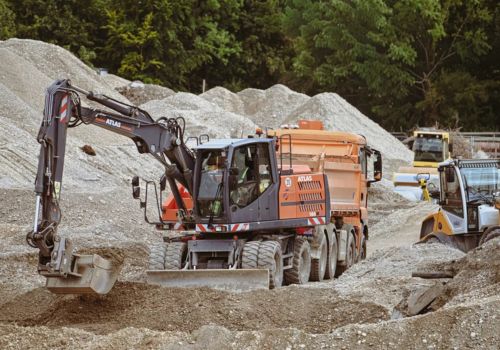
A fleet manager renewing a diesel excavator lease in 2028 will face far different emissions rules than those written into today's contracts. As regulatory bodies move forward, construction heavy equipment manufacturers are already engineering to meet draft Tier 5 standards years ahead of active enforcement. Contractors who wait for the final rule will ultimately pay more for fewer choices when replacement time arrives.
Preparation costs far less than reactive compliance, especially for fleets tied to long-term financing or rental commitments. Carbon reduction in construction is no longer a niche concern; Tier 5 simply formalizes the metrics many proactive owners already track. Understanding what changes, and what stays the same, allows contractors to seamlessly plan replacements, retrofits, and rentals without operational surprises.
What Tier 5 Emissions Standards Actually Require
At its core, Tier 5 standards significantly tighten allowable NOx and particulate matter emissions on new off-road diesel construction heavy equipment. The California Tier 5 engine standards feature staggered compliance dates that will soon impact most engine categories across active job sites.
Implementation runs on a phased schedule tied directly to engine power class:
-
NOx reduction of 80 to 90% beyond Tier 4 Final: Requires enhanced selective catalytic reduction (SCR) systems across most engine categories.
-
Particulate matter reduction of roughly 5%: Forces diesel particulate filters (DPFs) onto engine families that previously skipped them under Tier 4.
-
Interim standards effective 2029 to 2033: Timing varies by engine power class, spanning from 19 kW up to 560 kW.
-
Final standards effective 2031 to 2034: Full compliance becomes mandatory across all covered off-road categories.
-
Extended useful life requirements: Emission controls must remain verifiably effective over significantly longer service periods.
According to industry projections, contractors may face additional costs associated with newer engine technologies and emissions-control systems. Consequently, carbon reduction in construction fleets will become a standard line item on every replacement bid after 2028.
How Construction Heavy Equipment Manufacturers Are Responding
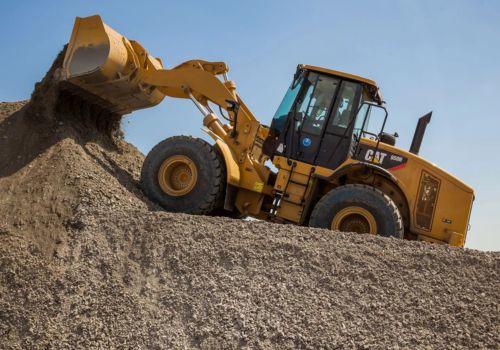
Leading construction heavy equipment manufacturers are running Tier 5 engine development in tandem with aggressive electrification programs. This dual-track investment fundamentally shifts the choice for contractors at replacement time.
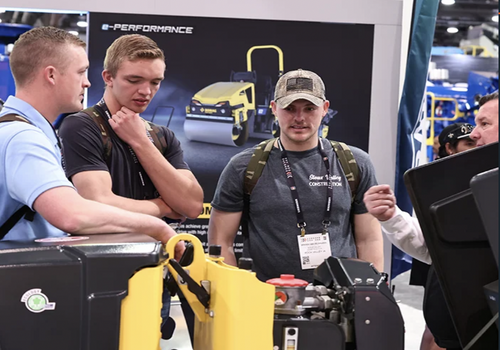
Industry majors like Caterpillar, Volvo, and Komatsu are engineering next-generation diesel platforms alongside battery-electric and hybrid alternatives. The shift was evident at CONEXPO-CON/AGG 2026, where equipment manufacturers showcased an expanding lineup of electric machines, from mini excavators to wheel loaders and compact track loaders. Contractors now have additional options when evaluating compliance strategies and fleet investments.
Rapid gains in battery technology are also altering the payback math for electrified fleets. Some electric machines cut jobsite emissions by up to 95% compared to their diesel counterparts. Due to lower operating costs, total cost of ownership (TCO) savings frequently offset the higher initial purchase price within a few years.
For applications where full electrification isn't yet feasible, hybrid platforms offer a practical middle path. Hybrid excavators recover braking energy to deliver substantial fuel savings without requiring off-grid charging infrastructure. Recognizing this balance, rental fleets are increasingly stocking hybrid models so contractors can test the technology before committing major capital.
Fleet Planning Decisions Contractors Should Make Now

Contractors do not need to replace every machine at once. Retrofitting existing equipment remains an option for units not yet scheduled for replacement, though owners should evaluate potential impacts on warranty coverage, maintenance requirements, and performance.
Since equipment replacement cycles often span three to seven years, Tier 5 already falls within today's planning horizon. Contractors purchasing equipment in 2027 or 2028 may need to account for future compliance costs now rather than absorbing them after bids and specifications are finalized. Public infrastructure projects, urban developments, and low-emission zones are also placing greater emphasis on cleaner fleets, making compliance considerations part of both fleet planning and bidding strategy.
Contractors do not need to replace every machine at once. Retrofitting existing equipment remains an option for units not yet scheduled for replacement, though owners should evaluate potential impacts on warranty coverage, maintenance requirements, and performance. Rental fleets offer another path by providing access to compliant equipment without accelerating capital spending.
The challenge is determining which approach makes the most sense for each part of the fleet. High-use machines may justify replacement sooner, while lower-use equipment can often remain productive through retrofits or rental strategies during the transition.
Where Tier 5 Fits in the Bigger Picture
Tier 5 adoption is ultimately a fleet planning challenge. Replacement schedules, rental agreements, and retrofit decisions all take time to evaluate, making the transition as much an operational exercise as a regulatory one.
Compliant equipment is already entering the market, and the options available today are broader than they were just a few years ago. That gives contractors time to evaluate what makes sense for their fleets, adjust equipment plans, and spread costs across normal replacement cycles rather than making rushed decisions as phase-in dates approach. When Tier 5 requirements begin taking effect, the groundwork will already be in place.