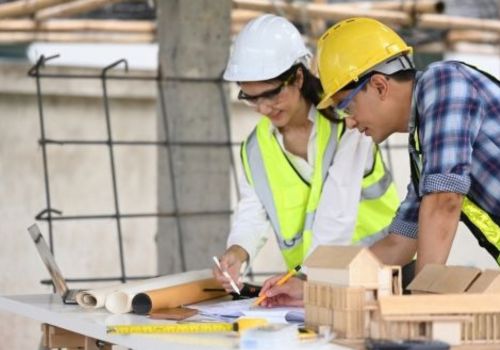
At 6 a.m., before earthwork operations ramp up, utilities crews break ground, or any concrete or paving placement begins, Schlouch Incorporated crews gather for their daily safety huddle.
It serves as both a pre-task planning session and a release point for field concerns. Schlouch teams walk through the day’s tasks, flag risks and challenge each other. Open and direct communication is expected, and crews are encouraged to speak up with their concerns for the day.
“It is important to connect as a crew and plan for potential hazards at all levels,” says Stayce Rowlands, concrete coordinator at Schlouch.

“One team” doesn’t mean everyone agrees. It means they work through disagreements and keep moving forward.
CULTURE DRIVES WORKFORCE DEVELOPMENT
Across construction, coordination is becoming more important. Today’s workforce spans five generations working side by side, bringing a wider range of expectations around how work gets done. Stayce works alongside the leadership team founded by her parents, Barry and Deb Schlouch, who started the business in 1983.
Generational differences show clearly in training. Newer workers often want more context and repetition, while experienced leaders may be more used to demonstrating a task once and moving on. When those expectations do not match, productivity suffers and frustration grows.
Employee expectations have also shifted. A 2025 Gallup study found that work-life balance and personal wellbeing are now the top factors employees consider when choosing a job.
For contractors, that raises the stakes. Retention is more challenging, and contractors can no longer rely on workers, regardless of experience level, simply adapting to the job.
TRAINING THAT WORKS IN THE FIELD
On a busy jobsite, workforce development must be practical. Effective training reflects how people actually learn:
-
Hands-on instruction
-
Repetition, not one-and-done demonstrations
-
Clear explanations of why tasks matter
A common breakdown occurs when a supervisor demonstrates a task once and moves on, leaving a new worker unsure how to proceed.
“You have to tell them, show them, and then have them do it,” Stayce explains. “And it will likely take more than one time depending on the task or skill.”
WHAT A CULTURE OF CARE LOOKS LIKE
Culture is built through daily habits. On Schlouch’s jobsites, that includes safety huddles, celebrating milestones, supporting employees’ personal causes and encouraging teamwork.
When asked what “care” means, workers point to daily actions: staying hydrated, helping each other and supporting one another. When crews feel supported, they communicate more openly, solve problems faster and stay longer. Strong culture turns conflict into progress.
“One team” doesn’t mean everyone agrees. It means they work through disagreements and keep moving forward.
SIMPLE STEPS CONTRACTORS CAN TAKE NOW
For companies looking to strengthen workforce development, the starting point doesn’t have to be complex. Stayce recommends beginning with clarity and consistency:
-
Define leadership standards. Align expectations, write them down and communicate them clearly.
-
Use daily touchpoints intentionally. Go beyond task updates to surface issues, reinforce expectations and keep crews aligned.
-
Pay attention to signals. Body language and feedback often reveal problems before metrics do.
-
Build training into the plan. Workforce development requires time, resources and structure.
-
Use demographic data. Tracking retirements and experience levels helps prevent gaps before they impact the job.
LOOKING AHEAD: BALANCING PEOPLE AND PROGRESS
As contractors adopt new technologies and face ongoing labor challenges, workforce development will only grow in importance. Stayce sees three priorities shaping the future: choosing technology that improves safety and quality, planning for workforce shifts and embedding training into long-term strategy.
Above all, Stayce returns to a simple principle: be present.
“Show you care about safety by practicing it every day,” she says. “Be available. Be there.”
When crews feel supported and expectations are clear, they take ownership of the work and of each other. That’s what turns a jobsite into a team, and a company into a place people want to stay.
Learn how Schlouch Incorporated also ensures the mental well-being of its workforce in this article about leadership’s role in mental wellness.
PHOTO CREDIT: SHUTTERSTOCK/KIKUJIARM