Construction companies don’t lack data. They lack connection.
From on-highway trucks to off-road equipment and small tools, information is often scattered across systems that don’t speak the same language. The result is a fragmented view of operations—and missed opportunities to improve efficiency, safety and decision-making.
That’s the challenge Geotab is working to solve: bringing fleet, assets and jobsite activity into a single, unified platform.

Instead of reacting to isolated data points, contractors can begin making decisions based on how the entire operation is performing.
FROM DATA SILOS TO OPERATIONAL CLARITY
For many contractors, telematics is already delivering value by optimizing routes, improving maintenance schedules and enhancing driver safety. But those gains are often limited to individual systems.
The next step, according to Geotab CEO Neil Cawse, is connecting those systems into a broader ecosystem.
“It’s the open approach to how we bring everybody’s solutions together and make them all tie together and work,” he says.
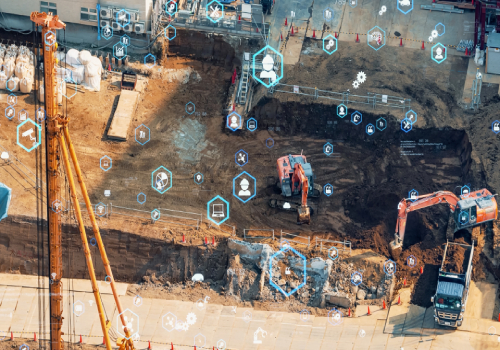
In practice, that means combining fleet data with asset tracking, equipment performance and jobsite activity to create a more complete operational picture. Instead of reacting to isolated data points, contractors can begin making decisions based on how the entire operation is performing.
That shift is where real gains in productivity and profitability begin.
WHY AI DEPENDS ON BETTER DATA
Artificial intelligence is accelerating that shift but only if the underlying data is reliable.
“The digital copy gives the AI the context that it needs to be able to transform your business,” Neil explains, referring to the concept of a digital twin, a cloud-based representation of real-world operations.
Without that context, AI can produce inconsistent or misleading insights, especially in construction environments where fleets include mixed equipment types, manufacturers and data standards.
This inconsistency has already created a level of skepticism in the industry.
“When you interrogate that data, especially in a mixed fleet scenario with AI, you get some wacky results,” says Geotab VP OHV David Swan. “This has led to a trust gap in construction.”
To address that, Geotab is working to standardize how off-road equipment data is structured and interpreted. The goal is to deliver what David describes as “decision-grade insights”—data that contractors can act on without second-guessing.
VIDEO, SAFETY AND REAL-TIME INSIGHT
One area where connected data is already showing a measurable impact is safety.
Geotab data shows that integrating video with telematics can reduce accident rates by 20% to 50%. That’s because video adds critical context to driver behavior and jobsite conditions. This turns raw data into actionable insight.
“Video is now like oxygen,” David says. “It is weaved into all of the operational systems in what we’re doing.”
Advances in AI are making that video even more valuable. Vision-based models can now interpret jobsite activity with minimal setup, allowing contractors to identify risks, monitor compliance and improve training without extensive manual oversight.
EXTENDING CONNECTIVITY TO THE JOBSITE
While telematics has long been established for on-road fleets, extending that same level of visibility to off-road equipment—and even small tools—remains a major opportunity.
Geotab’s approach includes building a unified data structure across equipment categories and expanding connectivity through new hardware and Bluetooth-enabled tracking.
Contractors can lose a significant percentage of these assets annually, creating both cost and productivity challenges.
By bringing those tools into the same connected ecosystem, contractors can better understand utilization, reduce loss and improve overall jobsite efficiency.
BUILDING TOWARD A FULLY CONNECTED JOBSITE
The goal is a single platform that provides a complete, real-time view of operations from fleet performance to equipment health to tool usage.
Through its MyGeotab platform, the company is working to deliver that unified experience, combining data, workflows and insights into one system that can be used across the business.
The long-term vision goes even further: a fully connected digital twin of the jobsite, where no data is left behind and every decision is informed by a complete operational picture.
For contractors, that’s not just a technology upgrade. It’s a shift in how the business runs.
And as AI continues to evolve, the companies that benefit most won’t be the ones with the most data but the ones that can finally connect it.
Watch the full session End-to-End Connectivity for Construction: On Highway, Off Highway, One Solution, One Platform, held during CONEXPO-CON/AGG 2026, for free, on demand.
PHOTO CREDIT: SHUTTERSTOCK/METAMORWORKS