A grading crew falls behind faster than most contractors expect. One extra pass across a new highway. A machine that struggles to maintain power in heavy material. An operator constantly correcting grade because conditions changed halfway through the cut. On large roadbuilding and site development projects, those delays quickly turn into added fuel costs, overtime and schedule pressure.
That pressure is changing how contractors evaluate grading equipment. Higher-horsepower graders are increasingly being used to move more material, reduce rework and maintain consistency on demanding jobsites.
“Today’s contractors are being asked to deliver more work with fewer people, tighter timelines, and increasingly complex project requirements,” says George MacIntyre of Case Construction Equipment.

Contractors are not simply buying horsepower — they are evaluating how quickly crews can complete grading work with fewer passes and interruptions.
WHY CONTRACTORS ARE MOVING TOWARD LARGER GRADERS
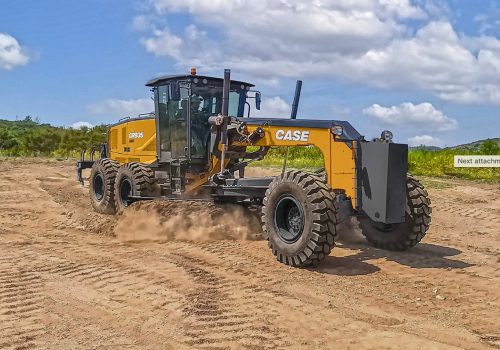
The shift toward higher-horsepower graders is showing up most clearly on roadbuilding, large-scale site development and heavy earthmoving projects where production demands are high and material conditions are constantly changing.
“When you’re cutting a new road, you usually need a steeper moldboard angle to dig in and move more material. So the higher horsepower helps,” George notes.
Contractors are not simply buying horsepower — they are evaluating how quickly crews can complete grading work with fewer passes and interruptions.
On large subdivision or highway projects, even small reductions in passes can create measurable savings in fuel, labor, blade wear and overtime. Finishing grade faster also helps downstream crews stay on schedule.
CASE has also seen strong feedback from contractors using larger graders in demanding snow removal operations in Canada, where operators reported they were able to cast heavy snow farther.
HELPING OPERATORS WORK MORE EFFICIENTLY
The move toward larger graders is happening alongside another major shift: equipment is increasingly being designed to help operators work more consistently with less fatigue.
Skilled grader operators remain one of the hardest positions to fill in construction. As a result, manufacturers are focusing more on systems that simplify operation and improve grading consistency.
CASE’s larger graders use a continuously variable transmission (CVT) system designed to maintain steady ground speed while automatically adjusting engine RPM based on workload. The goal is to reduce tire slippage, maintain smoother grading performance and allow operators to focus more on grade quality instead of shifting gears.
At the same time, machine control and global navigation satellite system (GNSS) technology are becoming standard expectations on many jobsites.
For contractors, machine control and GNSS systems help crews:
- Hit grade more accurately on the first pass
- Reduce repeated grade checks and rework
- Move material more efficiently with fewer passes
- Help less experienced operators perform closer to the level of veteran crews
“When speed and precision matter, the systems do a lot of the heavy lifting,” George notes.
WHAT CONTRACTORS SHOULD EVALUATE BEFORE MOVING UP
For many contractors, the decision is no longer whether a 200 hp grader is sufficient. The bigger question is whether moving into the 300-hp class creates enough production gains to justify the investment.
Moving into the 300-hp range can help contractors:
- Run larger moldboards more confidently
- Move more material per pass
- Reduce bottlenecks on high-production projects
- Maintain production in demanding material conditions
The return depends on the type of work crews perform consistently. That makes evaluating total project efficiency more important than focusing only on purchase price.
Contractors should also consider how precision technology, automation and machine control systems fit into their long-term operations strategy. As grading technology becomes more connected and automated, those systems will play a larger role in helping crews maintain production despite ongoing workforce challenges.
“Moving into a precision system is one of the fastest ways to improve efficiency and ROI,” George shares.
Learn more about CASE Construction Equipment’s latest lineup as showcased at CONEXPO-CON/AGG 2026.
PHOTO COURTESY CASE CONSTRUCTION EQUIPMENT