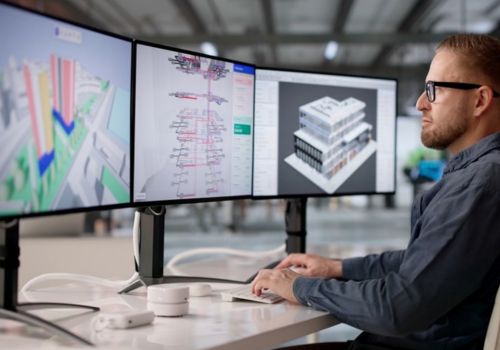
A pipe fitter stops mid-install because the duct overhead sits exactly where the sprinkler line should go. The drawings missed the conflict, so the crew waits while someone chases an answer. Moments like these are where digital twin technology can help. A digital twin is a digital representation of a physical asset, project, or jobsite that brings together design and field data to help teams identify issues before they become delays.
Crews rarely keep a model open all day. They reach for one at friction points, not for routine work that already runs smoothly. The value climbs on crowded, tightly sequenced jobs where a wrong guess means rework.
Digital Twin Models Must Reflect Current Reality
The digital twin technology is most useful when it reflects current field conditions. When the information shown in the model differs from what crews encounter on-site, teams may become less likely to rely on it for planning and coordination.
Model accuracy depends on updates being incorporated as conditions change. Field revisions, RFI responses, and as-built adjustments need to flow back into the model, so it remains a useful reference throughout the project. Without that process, the digital twin can become more reflective of original plans than current conditions.
Many contractors assign responsibility for maintaining the model to a specific individual or team. Consistent updates, along with data from building information modeling (BIM) systems, sensors, and other site technologies, can help keep a digital twin relevant throughout construction. The role does not necessarily need to be full-time, but it should be clearly defined.
Regular updates help teams use the model with greater confidence, while outdated information can limit its usefulness and lead crews to rely more heavily on field verification and other sources of project information.
Use the Model Where Mistakes Are Costly

The heaviest use comes on projects with significant coordination demands and at predictable moments where a wrong move costs hours or dollars.
Crews do not stare at a tablet all day scrolling through model views for fun. They pull it up when something on the ground fails to match what the plans suggested. The heaviest use comes on projects with significant coordination demands and at predictable moments where a wrong move costs hours or dollars.
Simple jobs with two trades and a short schedule rarely justify a full digital twin setup. The model earns its cost on projects where sequencing, trades, and site constraints stack up fast. Hospitals, data centers, and industrial retrofits fit the profile because coordination failures can cascade across weeks of work. A missed clash in a mechanical room can stall multiple trades waiting on the same space.
On those projects, crews are most likely to rely on the model:
-
Before starting a task that overlaps with another trade's work
-
When a dimension in the field does not match the drawing set
-
During a conflict between mechanical, electrical, and structural runs
-
Ahead of a pour, lift, or installation that cannot be easily undone
-
When sequencing a handoff between two crews sharing the same area
The model gives project teams a way to identify conflicts before crews mobilize and serves as a decision aid when coordination questions arise. Crews that use it at these points can avoid rework that eats into the schedule. Fast-moving residential framing or simple site work often does not carry the same coordination burden, and pulling up the model for routine work can add friction without adding much value.
Digital Twin Technology Works Best as a Coordination Tool
The right question is not whether to use a digital twin. It is whether the job has enough coordination pressure to justify the setup and upkeep. Contractors get the most value when matching the tool to the constraint. Heavy trade overlap, tight site logistics, and phased occupancy all strengthen the case for a digital twin. Straightforward work with room to adjust in the field may not.
Digital twin technology does not replace field experience or crew instinct. It gives coordinators and superintendents a shared reference when the drawings, schedule, and site conditions stop lining up. Its value comes from helping teams navigate complexity, not from being used on every project or every task. When kept current and applied where coordination matters most, it can provide another layer of visibility before problems reach the field.