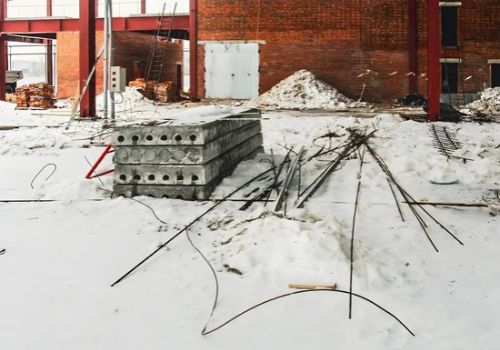
A hard freeze rolls in overnight, and by 7 a.m. the haul road is a sheet of ice. The concrete crew can't start the slab pour, and the excavator operator won't risk the ramp. Two subcontractors pull into the gate anyway, ready to work with nowhere safe to go. One cold night has just tested construction site safety and the schedule before anyone finished their coffee.
Most of the disruption can be traced back to preparation that was neglected in the fall. Winterizing the whole jobsite, from drainage to schedules, turns a seasonal threat into a manageable condition. Treating the site as one system, rather than machine by machine, closes the gaps cold weather exploits.
Why Winter Puts Construction Site Safety at Risk

Cold weather multiplies ordinary hazards. Ice turns walkways, ladders and scaffold planks into fall risks, while short days cut visibility.
Cold weather multiplies ordinary hazards. Ice turns walkways, ladders and scaffold planks into fall risks, while short days cut visibility. Meanwhile, cold air saps dexterity, slows reaction time and drains batteries across the site. Freeze-thaw cycles also shift soils, heave temporary structures and loosen fencing and signage.
The Occupational Safety and Health Administration (OSHA) provides guidance on cold-weather hazards and employer responsibilities. Employers must protect workers from recognized hazards, including winter weather hazards. Delays add their own risk, since crews rushing to recover lost days tend to cut corners.
The good news? Most winter headaches are predictable, and plenty of them cost very little to prevent in the fall. A few hours of prep now can save weeks of scrambling once the cold begins. Here’s how you can keep your crews safe and your site ready for whatever winter brings.
1. Build a Written Winter Weather Plan
Start with a site-specific plan that covers snow removal, temporary heat, material storage and work stoppage triggers. Assign clear owners for each task so nothing depends on memory during a storm. Share the plan at a toolbox talk so every crew knows the triggers before the first storm.
2. Assign Someone to Track Forecasts Daily
Regional forecasts often miss conditions on a specific site, especially near water or at elevation. Designate one person to check hourly forecasts and share go or no-go calls before crews mobilize. Pair forecast checks with on-site observations, such as overnight lows on exposed decks and ramps.
3. Clear Walkways to Protect Construction Site Safety
Map priority routes such as stairs, ladder access, scaffold platforms and parking areas. Stage shovels, deicer and traction mats near each route so crews can clear them before work starts. Clearing routes is only half the job, because melt often refreezes by late afternoon. Schedule a second pass before shift change, when long shadows hide new ice.
4. Manage Drainage Before the First Freeze
Standing water becomes ice overnight and can undermine subgrades during freeze-thaw cycles. Grade low spots, clear inlets and keep pumps ready so meltwater has somewhere to go. Check drainage again after every thaw, since frozen inlets can back up quickly.
5. Protect Materials From Moisture and Freezing
Cement, drywall, adhesives and coatings can fail when moisture and cold reach them. Store sensitive materials in heated or covered enclosures, and raise pallets off frozen ground. Tarps alone rarely hold up in high winds, so secure covers with weighted edges or straps.
6. Prepare Concrete and Earthwork for Cold Conditions
Frozen subgrade and unprotected pours can cost concrete its strength and lead to cracking. Line up insulated blankets, ground heaters and cold-weather mix adjustments before temperatures drop. Coordinate with suppliers early, because cold-weather admixtures and heaters run short once winter arrives. Earthwork crews should also plan around frost depth when scheduling excavation.
7. Make Cold Stress Part of Construction Site Safety Training
Crews need to recognize early signs of frostbite and hypothermia in themselves and each other. Set up warming areas, rotate tasks in extreme cold and encourage a buddy system on exposed work. Treat every cold-related close call as a near-miss worth reporting, since those reports reveal patterns before injuries occur.
8. Add Lighting for Shorter Days
Winter darkness arrives during active work hours, especially near the end of a shift. Add portable light towers at access points, laydown areas and active work zones. Check that light towers have fuel or charge for the full shift. Good lighting also helps operators and spotters see each other around moving equipment.
9. Use Temporary Heat Without Compromising Construction Site Safety
Temporary heaters keep work moving, yet they also introduce fire and carbon monoxide hazards. Ventilate enclosed areas, keep fuel stored away from heat sources and assign someone to monitor heaters. Cold also shortens battery runtime on electric equipment, so plan charging and spare capacity accordingly.
10. Build Weather Float Into the Schedule
Every winter schedule needs realistic weather days rather than optimistic assumptions. Sequence enclosure and interior work so crews can shift indoors when outdoor conditions turn. Real-time jobsite data helps teams adjust handoffs quickly when weather changes the plan. Communicate weather calls early so subcontractors can adjust staffing without wasting a trip to site.
Making Winter Readiness Part of Construction Site Safety
Winterization works best as a fall routine rather than a scramble after the first storm. Review the plan with crews before conditions change, then evaluate its effectiveness after major weather events. Use those lessons to refine procedures and reinforce safe work habits throughout the season.
Winter will still bring frozen mornings, difficult working conditions, and occasional lost shifts. However, a proactive approach helps crews navigate disruptions safely and resume work more efficiently when conditions improve. Consistent preparation protects workers while keeping projects on track as much as possible.