A highway expansion project is moving fast. Multiple crews are working across miles of the active jobsite. Field teams need updated site conditions quickly to keep layout, prefabrication and coordination moving.
They scan the work area, push data into the workflow and move forward assuming the capture is accurate enough for the next phase. But weeks later, the field conditions do not align with the level of precision required for the work. Rework follows, along with lost time, added cost and schedule disruption.
On other projects, the opposite problem happens. Teams spend valuable time collecting highly detailed scan data for work that only requires general site documentation or progress tracking.
“People get really caught up in how accurate things are, and for a lot of projects, it’s overkill,” says David Epps, Chief Technology Officer at Envision Construction, who has worked with Light Detection and Ranging (LiDAR) systems since 2008.
Contractors are collecting more scan data than ever before, but more data does not automatically lead to better decisions. The challenge is matching the right level of accuracy to the work.

Contractors should stop treating TLS and SLAM as competing technologies and instead start integrating both into a single system.
THE TRADEOFF CONTRACTORS CAN’T IGNORE
The decision between using terrestrial laser scanning (TLS) or mobile LiDAR systems with simultaneous localization and mapping (SLAM) comes down to one core tradeoff: precision versus speed.
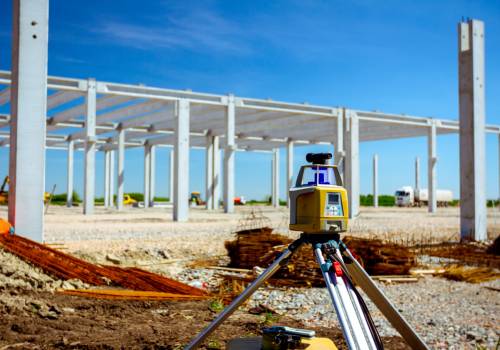
TLS units are stationary systems mounted on tripods that map highly detailed data with accuracy of between 1 and 3 millimeters. That precision makes them valuable for layout validation and documenting existing conditions before major work begins.
SLAM scanners take a different approach. Because these scanners are mobile and deploy more quickly, crews can cover large areas quickly with lower measurement quality, typically ranging from about 1 to 3 centimeters. Its speed makes SLAM useful for ongoing documentation, walkthroughs, renovation assessment and capturing site conditions without slowing.
Recent research suggests that newer SLAM systems are narrowing the accuracy gap with TLS in some applications while collecting data much faster, though SLAM systems can still introduce more noise in tighter-tolerance work.
WHERE JOBSITES GO WRONG
With these technologies in hand, contractors can easily collect scanned data, but there are challenges to consider.
Common mistakes include:
- Using SLAM where precision matters. Tasks involving tolerance verification, layout coordination and legal documentation often require higher-confidence TLS data.
- Over-specifying TLS. Some teams default to highly detailed TLS units even when projects only require general documentation or coordination.
- Treating all scan data the same. A fast mobile scan may be sufficient for progress tracking, while final verification work may require a much higher level of confidence.
CHOOSING THE RIGHT TOOL FOR THE WORK
The most effective scanning processes start by first knowing what the data needs to accomplish.
Use TLS when measurement quality directly affects outcomes. Common examples include:
- Floor flatness verification
- QA/QC validation
- Layout coordination
- Prefabrication fit checks
- Field documentation for dispute resolution
- Detailed modeling of complex spaces
Use SLAM when speed and mobility matter more. Common use cases include:
- Regular site updates
- Interior walkthroughs
- Existing-condition documentation
- Large site capture
- Early-phase coordination
Use BOTH when projects require speed and validation. TLS can establish reliable control points while SLAM surveys capture changing field conditions more efficiently.
WHY HYBRID WORKFLOWS ARE BECOMING STANDARD
Contractors should stop treating TLS and SLAM as competing technologies and instead start integrating both into a single system. David uses TLS scanners to create a precise “spine” across large jobsites and then uses SLAM scanners to fill in gaps around buildings, trees and active work areas.
This approach improves efficiency while reducing the risk of coordination issues and rework caused by using an inappropriate level of scan detail for a task.
Contractors are also moving toward more connected forms of data collection through drones, mobile scanners and other systems. A 2025 peer-reviewed study evaluating SLAM on active construction sites noted that improving SLAM performance is critical for autonomous workflows that depend on continuous mapping and localization in changing environments.
Scanning technology is shifting from scheduled scans to automated capture. “I’m looking for a world where autonomous data capture systems can feed data directly into my system,” David says about the future of scanning.
As scanning workflows continue to evolve, contractors must understand where speed matters, where precision matters, and how to combine both effectively to reduce rework and make faster decisions in the field.
Take a deeper dive into scanning in the CONEXPO-CON/AGG 2026 session To SLAM or Not to SLAM...That is the Question! Watch the full session through CONEXPO-CON/AGG On Demand.
PHOTO CREDIT: SHUTTERSTOCK/ROMAN023_PHOTOGRAPHY