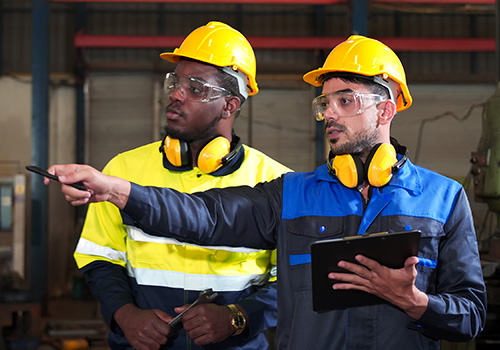
Your workers are on the front line with your equipment, which means it is crucial to invest in the right training with the right people. Effective construction managers are people who think ahead, display critical thinking skills, communicate well and are cool under pressure. When reliable workers are in place, you can be sure that your equipment is safe, limiting damage to machines and limiting harm to your workers.
Proper use of equipment is often cited as an important aspect of keeping workers safe on the job site, but proper use is important for the machinery itself, too. Proper entry and exit of equipment keeps workers safe, but it also ensures no unnecessary weight is placed on parts that can’t bear the weight.
One way to ensure your workers have the skills necessary to protect your equipment is through safety training and certification programs.
Keep your fleet in tip-top shape
Routine maintenance schedules should be based on the manufacturer’s guidance along with any unplanned repairs that might occur between services. No matter how prepared your workers are, accidents do happen and machines depreciate over time. Knowing when to repair or replace goes back to the need for critical thinking skills. While many of us get headaches from thinking about the numbers, knowing the true cost of the investment in your equipment will help you make important decisions.
Benefits of maintenance records
- Keeping maintenance records will let everyone know what servicing has been done and when. If a service technician asks when the last service was, any worker can refer to the records.
- Detailed record keeping should include the date, along with the service provided and any additional notes about the equipment’s operation. These details will help keep everyone informed without spending time searching.
- Keeping these kinds of records, along with routine maintenance, will make it easier for mechanics to recommend any preventative maintenance to take before a larger issue occurs that could require a much higher price tag.
The right place at the right time
As any construction professional knows, the weather has a habit of complicating, well, everything on a construction site. This applies to your machinery, too. Storing equipment indoors with ground protection is the best option. Containers or warehouses can keep equipment safe from the elements, while also protecting from theft.
The difficulty of keeping equipment safe is heightened by the industry’s mobile nature. Equipment has to be moved from site to headquarters to another site and it can be difficult to know how to store machinery. This is where options like storage cages are important. These storage options can fold for flat packing, making transportation much easier. While set up, these cages can help prevent theft and offer some level of customization, ensuring your equipment will fit and still be secure.
Equipment also shouldn’t be stored for too long. If you have machinery you don’t use often, you can try cycling through any equipment that you have multiples of or consider selling rarely used duplicates. This will help keep each machine running while also not overworking it.
ABC – Always be communicating
Communication is crucial in each of the above considerations. Knowing the who, what, when and where of construction equipment is paramount, but being able to communicate that information is a practiced skill. Develop a plan to regularly communicate with workers, maintenance providers and leadership. Since your workers see machinery in action, encourage them to say something if they see equipment functioning unusually or something questionable on the job site.
Invest in fleet management software
Your fleet’s safety can be a lot to manage. As with all industries, technology offers solutions to help keep track of everything. Maintenance software helps you see big picture machinery concerns, while also allowing you to dial in to individual maintenance records. You can set up plans for risk management, increase your equipment’s lifespan and keep workers safe – all in one place.
Final thoughts
When equipment is operated by trained operators, maintained routinely, stored properly and issues are communicated efficiently, your fleet will be safe and secure. Digitizing your fleet management allows a high-level view of how your fleet – and budget – are protected.
Photo credit: Otello/BIGSTOCKPHOTO.COM