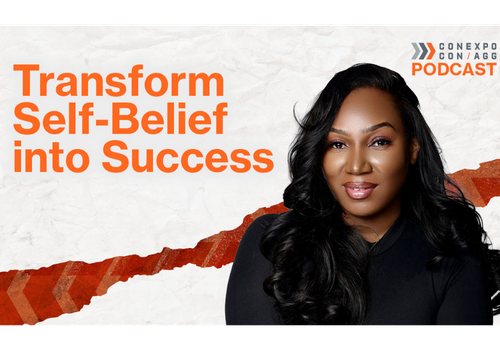



How does the youngest asphalt company owner in Wisconsin, and the only woman of color in that role, build a thriving business? Ebony Jennings shares her journey of honoring her family's legacy while forging her own path in a male-dominated field. She offers a direct look at the challenges and advantages of her unique position.
Ebony explains why certain industry programs, designed to help, can sometimes feel like a double-edged sword, and gives practical advice on how women can build the confidence needed to lead and earn respect. Her story provides a clear blueprint for attracting the next generation to the trades and succeeding against the odds.
Topics:
- What to expect from the EmpowerHER Workshop
- How women can build confidence in a male-dominated industry
- Fixing the skilled labor shortage
- How to prepare your team for CONEXPO-CON/AGG
Watch now:
Listen now:
Listen on your favorite app: Apple Podcasts | Spotify | YouTube
Subscribe to the CONEXPO-CON/AGG YouTube channel to be notified of new episodes.
Join more than 65,000 industry peers who receive construction industry news and trends each week. Subscribe to CONEXPO-CON/AGG 365.
Interested in hearing more from Ebony? Add the EmpowerHER Workshop to your CONEXPO-CON/AGG 2026 registration today! Limited spots available for this two-day event taking place Friday, March 6 – Saturday, March 7.
Episode transcript:
Taylor White: Welcome back, everybody, to the CONEXPO-CON/AGG Podcast. I am your host, as always, Taylor White. I would like to thank our sponsor, John Deere Power Systems, for sponsoring this amazing podcast. And I do want to remind everybody that March 3rd to the 7th, coming up in just weeks, regardless of the timeline, okay? I want everybody to go, podcast 20, please go buy your tickets, go to the website CONEXPO-CON/AGG. Two thousand exhibitors, three million plus square feet of just everything that, you know, you want to see. If you were talking you want to specifically see this, you want to specifically see that, it is all going to be there. And all the top industry pros are also going to be there. So please, I can't stress it soon enough, podcast 20, get your tickets.
With me here today, I have somebody who is going to be at the show as well. And I've had the pleasure of meeting myself on a panel months ago in Chicago. Ebony, thanks for being on today.
Ebony Jennings: Of course, thank you for having me.
Taylor White: We were just in Chicago, for everybody, Ebony Jennings and myself, we were on this panel talking to some people about, you know, our experiences at the show and looking forward at what's coming. So Ebony, I think, and I never even got the time to also fully understand, why don't you give people a little bit of an introduction of who you are and what you do?
Ebony Jennings: My name is Ebony Jennings. I am a third generation business owner. My grandfather started off in the asphalt. He worked many years for different companies, but he started his own, which is my company now, Jennings Asphalt, in 1984. I took it over in 2021, and now we're thriving. I am the youngest asphalt company owner in the state of Wisconsin where I live, only woman, and the only woman of color in the state of Wisconsin that owns an asphalt company.
So yeah, you know, I've done a lot with my community by, you know, trying to, I do a lot of posting about our work and, you know, to gather more people to get the insights of asphalt. Because when you think of construction, you think of like residential, commercial. When you think of road construction, you may think of concrete or some people think of asphalt, but they don't know the ins and outs of it. So I love showing that side of our business.
Taylor White: That was fantastic. And you touched on something that I think is actually so unique and crazy because like yes, you know, we have women on the podcast that own construction companies, but specifically niching into women, you know, women-based owned asphalt companies, but then also women of color owned construction companies. That's, I mean, an amazing thing on its own. Like, maybe touch a little bit on that. Like, any hurdles that because of that or positives because of that? I just, I mean, it's a pretty unique scenario, so I think that that's something to definitely talk about.
Ebony Jennings: We'll start with the positives first because I, you know, I like to showcase that everything is not, you know, super negative, especially being a woman in a male-dominated industry. Actually, there are a lot of men that are extremely welcoming to women in this industry. So I would say that was one of the pros of owning this company, is because men, when out in the fields, the times that I do have to go out in the field, they have been nothing but warm and welcoming and let women do their thing and taking on our expertise and going along with that, not combating my ideas or how things should go or maybe this will work this way or scheduling. They do respect that.
Another positive thing of being in this business, there's not a lot of people, men or women, that look like me in this industry. So when they see me out, it's almost like you are a community hero or they've never seen anything like that, so they want to engage more. How could I get into something like that? So I love that part of this business and just gaining more momentum for the company to take a chance, you know what I mean? So when I do step into rooms, it's not just a pretty face. I know exactly what I'm doing, I know what I'm talking about. I'm experienced in this, and I gain my respect and trust that way.
I will say the downside of being in this business, you definitely, even though that was the pros of it, I definitely had to network and prove myself and go out there and fight for what I wanted in this business. Especially just hearing stories of my grandfather, the struggles that he went through, I feel like I had to vindicate him in this business. Yes, we have certifications put in place for smaller businesses and minority businesses and women-owned businesses to be able to bid on projects and actually compete. However, I wish that we were all on one, you know, playing field, that it goes by the level and quality of work that you do and not just like low bid or, oh, in order for you to work with what is promised contract, they need to work with you. So you have to have these certifications to say, "Hey, I am a black business owner." I don't really, you know, like that part. It's the name of the game. So even though I have all these certifications, I had to get that to be able to play with the big boys.
Taylor White: That's an interesting take and I definitely want to follow that up. For everybody listening, what she's talking about and what we have as well here too is, you know, like the city that I live in will put out tenders and you actually will qualify higher than somebody else if you have an indigenous factor to your business or if you're LGBTQ factor or women-owned or minority-owned. And what you're saying, and correct me if I'm wrong, but maybe possibly you don't see that as a positive and maybe we should all just be like, "Hey, we are all just people that have, you know, construction companies and we're all bidding on the same project. How about we go by quality, you know, and price rather than maybe all these other things?" So do you see the minority, slash, you know, women-based bid winning as a positive or a negative?
Ebony Jennings: I see it as a little bit of both. So let me explain why. I see it as a negative because you're coming in already as minority first. Not business owner, not being qualified, not being skilled. I'm coming in as a black woman that you need to be able to at least, you need to factor out 30% contract, me 30% of this project just because I'm black. I don't care for that part. I know that it's needed because people of color have been at a disadvantage in our earlier years to be able to compete on projects. So you are being basically really oppressed. You know, you can't get in on these projects or you're not big enough, even though you have the skills, you have the years behind you. And I feel like that's what my grandfather had to deal with. He didn't have any certifications because there weren't any certifications, you know, back then. It's either you win the contract or you don't.
Now, the good side of that is you have those certifications to protect you and to say, "Hey, we get a shot at getting onto this project." Though it may not be as a prime contractor, but you still are getting your name out there, showing your level of skill in this business so you can perform. I think that that is a good sign because hey, you need those certifications to be able to play big in this game. You know, if you're trying to scale out of doing just driveways and patching, you're going to have those certifications to be able to get you, you know, until you can get to a prime contractor level. It's unfortunate, yes. However, it's the name of the game, at least in this field.
Taylor White: Yeah. And like, I mean, take those things to your advantage too. I mean, like at the end of the day, they're a positive for you. Like if you're going to win, you know, the bid over the, you know, over the next guy or girl because, you know, like you fit, you check more boxes, and I mean, hey, like, yeah, necessarily not a bad thing for you. But at the same time, kind of what you're saying too as well is coming into it, it's like, "Well, how do you make friends in the industry?" You know, if it's like, "Oh, well, they're going to win the bid because, you know, they check more boxes off than us." And I understand that. But I think looking at it as a whole and what you're talking about as well too, it also is just trying to solve a problem. And I think that the problem being that we need more women and minority-based business owners in this world. Not just, you know, your city or my city, but like, specifically. So talking to kind of that, like what do you think we have to shift and what do you think we have to change or what do you think we have to do to show in order to kind of fix that problem and get some more, more businesses that are more diverse in the industry?
Ebony Jennings: I think that we have to, honestly, if I'm just being honest, I think we have to look at a skill level. And before you even look at the skill level, I think, I believe that if we put trades back into high schools like we did, or even as low as middle schools, at least for them to kind of get that momentum. Because we don't live in a world where you want to go work with granddad in the summer. We don't live in a world where they push trades a lot. You more so will see the four-year colleges of being pushing. That doesn't work for everyone. So I think that, you know, that would be a great thing to start there.
However, as far as running the business, to really look at skill level, really take a look at it, you know, and we need to do more training within. Because I know, especially the bigger companies, if you are not coming in skilled and ready to rock and roll, you're fired. Those guys who don't have a lot of skill, but they are looking to, you know, to be trained and to be cultivated, you really don't see that with the bigger companies. So they'll come to maybe like a smaller company or a mid-sized company where you can get the... Because I know for me, we do a lot of on-site training in March before we're stepping out into the field in April. So I think a lot of that would just look at skill level and start giving opportunities and more training, and I think we'll go far.
Taylor White: I had a podcast with Mike Rowe and we were talking about how they took trade programs or trade classes out of high schools. You know, whenever, you know, 70s and 80s and you know, 60s, 70s, 80s, they were trying to push, you know, post-secondary universities and colleges and stuff. And it was kind of like trades are looked down at like the, you know, the second class kind of thing. But they took shop out of school and auto and stuff. But you're exactly right with how do we fix a problem? It's about fixing the problem as a whole and just getting people to observe the trade from a more positive standpoint as well too. And not look at it like a second option, which I think is kind of the problem too, right? Is it's almost like a second option. It's a second class job, which is totally not what it is. But that's how the world perceives it. Maybe that's how we're told to perceive it.
What can we do as our part? Is it social media? And then what do we show on social media? You know, like what are we showing these people about the trades? Are we showing them success stories? Showing them the truth about working out in the weather on the nice days, but also there's, you know, bad days outside too. What can we do for our part to do something? Is it something like social media? Do you do, do you post on that and try to show kind of what you're doing on there?
Ebony Jennings: I do. This goes back to what I said on the panel. People go where the hype is. I do believe that a lot of business owners in this industry will agree with me where it's hard to find good employees that's going to stick, you know, and play and actually be skilled, first of all. I truly believe that it starts with social media, what you're putting out, and to make this industry look good, right? Because it is good. And I'm speaking for, because I worked on both sides. I worked at corporate America, worked for Northwestern Mutual in finance. So I've been a corporate woman. And now that I am in the skilled trade, this just works out for me better.
However, it's not just about being a laborer, right? Or a foreman. It's the whole pie. You need to have a skilled engineer if you have one, or a project manager. How do you do that? You got to go out and push what you're selling, right? So we are selling this industry. It's cool to do this and be honest about it, right? A lot of people think of blue-collar workers of they only make such and such amount of money a year, and that's not true. I know what I pay my employees, and they all live good. You know, just really, just pushing that narrative because it's the truth of being and just really just being honest and not a fluff. Because I feel like, you know, when people push four-year colleges a lot or it puts you in the mind that once you graduate, you're going to have this degree, you're going to go out and get this great job and you're going to be making all this money. That's not the truth. However, a first-year laborer can make, you know, upwards or I think more like 40, 50 thousand dollars versus someone coming out of a four-year college and they have this degree that cost them almost 100 grand and they're not even making that when they're going into their first job.
It's only going to happen if we really start with the youth first. It's so hard to kind of cultivate a grown-up because you really have to be teachable. I feel like, you know, it only happens if we are getting back to the youth and pushing it, you know, back in like the schools and, you know, things like that and hyping up two-year colleges.
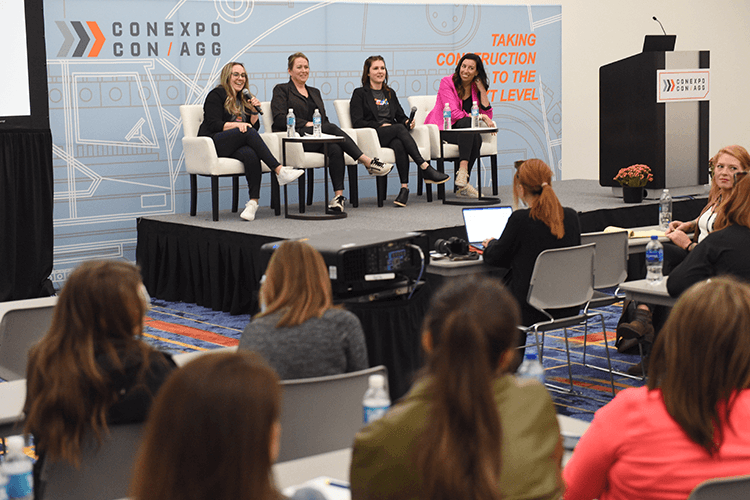
Taylor White: Yeah, I totally agree. And you know, kind of speaking of like building community and overcoming challenges, you're on a panel coming up at CONEXPO-CON/AGG this year. It's called the "EmpowerHER" workshop. Tell us a little bit about it. I know that's going to be moderated by Missy Scherber. There's Katie Kelleher and Amy Underwood are also on it. Tell us a little bit about this workshop. I believe it's a two-day event, correct?
Ebony Jennings: It is a two-day event. It's definitely going to be really good for the women to come along because I know that some women, not all women, but some women have a hard time navigating this industry. Even though some companies are very welcoming to, you know, to women. However, that's not the story for all women. I know that we are all going to, you know, talk about our process, our challenges, and things like that and how to combat and how to grow, you know, within this industry. So it's going to be extremely phenomenal for women. And those women that I'm on a panel with are phenomenal, extremely educated, and have a lot of experience. So I can't wait for that.
Taylor White: Yeah, no, I'm super pumped for it. It's definitely new for 2026 and it kind of coincides with Women in Construction Week. And I think it's going to offer some real value just about creating community, sharing experiences, and kind of like the best practices even for businesses now. And you know, I think the workshop is probably also very important because it, you know, inspires and educates, it addresses unique challenges as well in the community. And maybe like, let's just touch a little bit on, you know, the inspiring and educating. We were just touching on that kind of as a whole. You know, we need to get trades in the schools and whatnot. But generally speaking, it's a lot of males that are navigating towards this industry. So what are some things that you believe or you think are strong points for, you know, women to start getting involved in the trades?
Ebony Jennings: Confidence is key. You cannot come into this business and let a man or their expertise, right, or their point of view to kind of bulldoze you over. What you bring to the table is of value, and if you know that it's valuable, always speak up. So that is my biggest thing in this industry because you can definitely get walked over in this industry.
Coming into this industry, the best thing that you can do outside of that of confidence is being very sisterly towards other women that's coming into this industry. Building a village and a sisterhood with other women in this industry can take you far as well. Women are extremely valuable to construction, especially the truck drivers. They are phenomenal. And it's okay to not just apply for a job or being in the office. Maybe you bring more value into the field and look into that. Just don't sell yourself short. Don't, you know, stay small within this industry. This industry is already male-dominated, and I don't foresee it being women-dominated ever. But I know that we will always have a place in this industry. It really is go big or go home with women in this industry. So I think that you should have that mindset and always come in to grow. Do not stay stagnant in that one position for 20, 30 years. Move around within this position in this industry and figure out, because even though, like, I am president and CEO here, I step out in the field too because I'm just as good out there as well. I'm not a person that's going to, you know, "Hey, you know, I'm the owner." So I don't... If someone calls in or someone, you know, someone's dropping the ball out there or anything, it doesn't matter what I'm doing. I assure you I will take those heels off and strap those boots on and get out there with those guys because the job is going to be done.
Taylor White: That's the confidence that comes in, you know, and I think what I want to know and touch on a little bit more is what builds the confidence. Because at the beginning of the podcast, you were talking about being a woman, minority, being a woman in the industry, and you're talking about, you know, what you're talking about walking into a room. That's what sets you apart and that's what, you know, also ultimately helps you in the industry. So I would believe that, you know, what builds confidence is also knowing your industry really well. But what sort of things, if a girl's like, "Okay, like, I want to build my confidence, but where do I start? Where do I start to build my confidence?"
Ebony Jennings: Confidence can be built. I feel like I've always been a confident person, so that just came natural to me. I can appreciate taking on a challenge. All of us, we have it in us. You just need to, it just needs to come out. That is where your village is going to come from. That is where your sisterhood comes in at. And you need that because you may not be as vocal as me or someone, another woman you know in your industry. Having other women in this industry with you that you can lean on and you can talk to and someone, you know, inspire you and motivate you. You need that in this industry because like I said, men are very opinionated, men are very ego-driven. And I don't think some of them are intentionally trying to do it, it's just how men operate. And so you have to operate like a man sometimes and still keep your feminine about yourself. You have to come in and be just as direct. You have to come in and be matter-of-fact. You have to come in and set precedents of who you are because you're not going anywhere.
So as long as you have that in your mind, "I'm here to stay, I'm not going anywhere," and what you bring to the table matters. I assure you it's going to come out of you. You will state your claim, you will talk more and be more vocal. It's not the easiest. It may not happen right away, but eventually it will. But having that village, and that's why I love other organizations like Women of Asphalt. We need more organizations like that because it's not a lot of women in asphalt, it's not a lot of women in construction, but the numbers are growing. We're getting there. I believe that that is really going to be, like, the only way. I can't say, "Oh, you need to pray about it" or... The last thing you should talk to a man about having confidence for a woman. You have to get with your village and your sisters and build that sisterhood with other women. And it doesn't have to be within your company. That's why these organizations are coming around. I have a mentor through one of Asphalt, and her business is all the way in Texas, and we don't talk frequently, but she has instilled so much in me. Now I speak up so much more, you know, of just hearing what she had to go through because she's been in the business longer than I have. And for her to be able to get to where she is is not going to be being docile, that's for sure. You have to embody a man.
Taylor White: I think, I think you nailed it. And I think it's also funny when you said, like, "Don't talk to, you know, a guy about, you know, being a woman in construction and like, you find yourself a community." I think that's probably actually why the "EmpowerHER" workshop is going to work so well as well too, because people are, yes, people are listening to this conversation, but they're also listening to it coming from, you know, a guy's trying to ask you questions about it. And if it was two females that were in the industry talking right now, you guys would be able to be like, just feeding off each other of, like, "Oh, yeah, okay, let's touch on that. Let's touch on that. That's important. That's important." And I think that's what's so cool. I mean, you look at somebody, you know, Amy Underwood, you know, Mrs. Scherber or Katie, just being in the industry, and you kind of all share your same experiences and what's going on, and you're able to kind of chat about that.
But when you mentioned, like, having a community, I think that's really important. I think that's where social media is good too because like all yourself included and everybody on that panel kind of shares their story on social media as well too. So it makes it more relatable or more reachable for people to see that. And, you know, I have a daughter, two daughters, and hopefully one day they'd like to come in the industry, and I hope that they look up to girls like Ebony online and I hope that they see what you guys are doing and being champions for the industry. What type of message do you think, you know, yourself included, do you think these social media construction influencers, women that are influencers for or not even influencers, just spokespeople, you know, for the industry online, what type of message should we be putting out there? Should they and you be putting out there?
Ebony Jennings: Trades are the way to go. That's it. It's not to take away from, you know, going to get a law degree or a doctorate in something. What I'm saying is we really need to be pushing this industry. It's not a dying industry, it's actually really growing. But we can grow more and we can grow faster if we push this industry harder towards the younger generation. The younger generation and, and not just boys. This is not just a man's field. There are women, I was just looking at some content from a woman engineer and she, at times she wears her pink hard hat, I do too. And she goes out there and she's extremely educated and she knows exactly, you know, what she's doing, if not more than her counterpart. So really just pushing this industry to bring both males and females into this industry. And not just laborers either. You have people who are younger generation who are extremely good at math. That's your next engineer, project manager, or estimator. You know, that brings quality to this industry because you need a good project manager on these for the projects that you're taking on. This is not work that you can just wing.
And social media. Those two things, social media, social media, social media, because everyone's on it. That's why cable went down. No one's really, you know, watching TV like that anymore. How are you going to get to the thoughts of people? You get to them through social media. And where do people go? Where the hype is. If you are boring, you're just pushing out bland content, of course someone's going to keep scrolling. But you making this industry look not only cool but lucrative, you're going to gain more employees or people looking to join this industry. I could be posting something on my social media, but they live where you live and then, you know, they come and apply at your job, I mean at your company, you know? So we got to do that. I think that's the way.
Taylor White: Speaking about hype and, you know, what's fun in the industry and building up the industry, this CONEXPO coming up, which is obviously there's a lot of hype around it. What is this your, this is your first CONEXPO?
Ebony Jennings: This is my first CONEXPO. I'm hyped up about CONEXPO, of course, my portion. I'm really excited about that because I love speaking to women about what we do. And really, because I know that this is where, you know, we're gaining that momentum because our seasons typically start around March, April, you know? So it's going to be super cool. I'm so glad. I pray that we have a lot of women that's coming. I know we had a lot of great women that came to World of Asphalt last year. So I'm looking for all those asphalt women that own the companies and or they work alongside their dad or a couple of heavy hitters that are women that play big roles, if not owning the company themselves. And I just, I'm praying that all of those women are there to show that we are just as good, if not better.
Taylor White: Well, there's people coming from all over the world, you know? And what's the biggest thing, I guess, that you're looking, you're looking forward to? And first, I do want to say, like, crazy honor, you know, and that's amazing that you get to be on this workshop and be a part of it. And that is so cool. And that's a massive notch on the belt for you. So congrats on that as well too. Well earned and well deserved. Outside of that, like, yeah, what are you most excited about? Like, what's your preconceived idea of CONEXPO not being there yet and not seeing it? And then after, I'm sure we'll do a podcast in the future, you'd be like, "Oh, I was so right about this," or "I was so wrong." But like, what do you expect?
Ebony Jennings: First of all, I expect thousands of people to be there. This is a huge deal. I actually, I just had a friend that was in Vegas and she's seen all of the hype before we even get there, right? So it's all, you know, on the billboards and things like that. So I know it's going to be a huge turnout. I'm looking forward for that. I'm looking, of course, to network and to build relationships. I'm looking for Cat to be there because I'm ready to buy some new equipment for that. I'm excited about the classes and the panels that we have this year. We didn't have, you know, panels at World of Asphalt, and that is my favorite part. You can do a lot of walking around and then you go back to your room because, you know, this is just the big expo, but really having pockets of different panels going on. Something's going on over here, something's going on, you know? So you really get a big use out of and value out of your day, especially that towards the latter time because people get tired, you know, during expos. So I'm really looking forward to seeing what's new out as far as the equipment goes. And I am extremely excited and looking forward to the multiple panels that are going on, to hearing different perspectives and taking different classes because you want to bring that value back to your business. But the panels definitely got me. That's probably my number one.
Taylor White: Yeah, the educational, the educational sessions are what was most exciting for me last time that I went. I think there's a lot of value in them and I think that it's really cool. People listening, you can add them onto your pass, like through the CONEXPO website. You can go through and see all the different sessions, even the "EmpowerHER" one, and you can kind of add it onto your badge. And, you know, I just think that there needs to be more advocates for the educational session. Like, it's so cool going and seeing the machinery and talking to people and you can still do that, but there's something to be said about like really finding your niche. And I think that's what's so specific about CONEXPO is they have so many panels that are niched into exactly what you want: marketing, technology, equipment.
Ebony Jennings: It's something for everybody. Yeah, this time around. That's awesome. So you won't feel like you're fading into the background or, you know, you're just there, you're just kind of standing around aimlessly. And it's something for everybody. So I think that was a great component and they should do more of that. I don't know if this is going on, but I hopefully it is, that it'll be different companies or like, you know, you're there doing individual podcasts. So when you come to buy, like the awards, you know, "Come on, let me get a word in with you," and, you know, what's going on with your business and how can you, you know, just things like that. Because we need, because everybody can't come to CONEXPO, right? So if they have something that they can kind of listen into while they're, you know, away, or they can kind of see what's going on, you need stuff like that. So I think that's great because it's something for everybody.
Taylor White: Yeah, and I think actually what they offer is a lot of the educational sessions, they are filmed as well too. And I think that people can see them after, they can buy them after, and which I think is really neat as well too. What are your plans, you know, between now and CONEXPO to get prepared for that? You know, just what does that look like between now and CONEXPO? It's coming up really quick.
Ebony Jennings: Me and my team are getting together in about two weeks and we are starting to plan. So I have some notes that I want to do. We're going to be doing a lot of filming on our own because this is their boss's first time being on a panel for CONEXPO, it's my first time at CONEXPO. So we are all excited about that. They're being, cheering me on, things like that. So planning out, what do we want to buy, of course, that's number one. And then two is who do we want to network with? Because we are building a brand ourselves here at Jennings Asphalt. And I know that this year we are catering more towards the women. So we have some merch we want to kind of give out and see how that goes. That's pretty about it. I know we are already just paying attention to what we want to buy, especially my foreman. They are just extremely excited about the new equipment that we want to purchase. And we just meeting some of everybody. I mean, we know each other from Instagram, right? And we want to network and, you know, you see how we can all work together some way somehow. That was our biggest thing because we are much fans of you all. You know, your podcast, we listen to around the shop at times when we're fixing things around here or I'm listening to it in the truck. Yeah, we're just looking forward to that. We're kind of baby-stepping our way in because it's our first big event and we're just excited.
Taylor White: So many people share the exact same thing that you're talking about because there's people that are seasoned vets of going, then there's people where it's their first time. And I think that that's what's so great about it. And then also companies of all different sizes. I mean, like companies that are massive, you know, there's a 1,200 person company near us, you know, like, they go. And then a company like us where we got 20, 25 people, you know, we go. And I think that's what's so cool, is everybody's experience is unique, but you're able to also really relate to a lot of people that go. Yeah, I'm really excited for that. And I really appreciate you also coming on today and talking to us about that. And I just want to reiterate to people that it's a two-day, I believe it's March 6th and 7th, right? The "EmpowerHER" workshop.
Ebony Jennings: Correct. The guys need to come along too and listen. Not just for women. Don't send your wives and girlfriends or your assistant all just to listen. You come over and you listen too because it could be something that you could be doing better for your company that caters to the women that work for you, you know, or how you can be better or, you know, things that you don't need to fix that you're doing right. And, you know, you can just, "Hey, this person works for me. She went on the panel and she went to listen" or, you know, whatever case may be. I think, guys, that would be a great thing for you to do is come and listen to the women's perspectives and how we got to be into this business. Because all of us were, even though I'm a third-generational business owner, everything that I own, that I have, nothing was given to me. My grandfather had already passed away and all his days were sold. Every truck, every tool I have, every contract I have, I had to build it myself. I had to, I went out and got it. I networked. That's why I said that confidence for women comes in at, because I'll walk on your job site and see that you were in the first stage of business and I know that you're putting asphalt down for this. I will walk on your job site and nine times out of ten, I'm pretty sure I'll be doing that asphalt, you know, when the conversation is done. So come and hear women, listen to us too. Because women, especially us women in this industry, it's majority men. So we're always listening to you. So come and just listen in with us as well.
Taylor White: That's like perfect. It's a great opportunity to actually just stop talking and listen, you know? And I think that that would be, that'd be perfect. And there's no better women than, you know, everybody that's in that panel discussion than to be talking about that than you guys. So I genuinely think that CONEXPO nailed it with who they got. And, yeah, I'm super excited. And we'll see you March 3rd to the 7th down there. People, get your tickets. Make sure to check it out. Ebony, thank you for coming on today, and I really appreciate your time.
Ebony Jennings: Of course. Thank you for having me.
Taylor White: Thank you so much. Thank you, everybody, for listening to the CONEXPO-CON/AGG Podcast, brought to you by our friends over at John Deere Power Systems. We'll catch you on the next one. See you at the show.