For contractors, megaprojects aren’t just impressive headlines; they offer real, actionable lessons about phasing, risk, workforce and digital coordination. These are lessons that apply whether you’re building a new interchange or a multi-billion-dollar district.
Below are four of the world’s largest infrastructure efforts and the practical takeaways contractors can bring back to their own jobsites.
1. NEOM AND THE LINE IN SAUDI ARABIA: PHASE AMBITION INTO REALITY
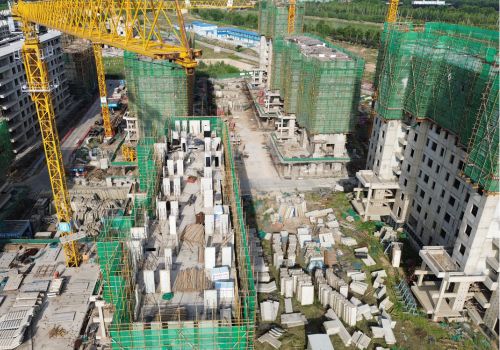
Saudi Arabia’s NEOM development, anchored by THE LINE, a proposed 170-km vertical smart city, remains one of the world’s most ambitious infrastructure undertakings. The total investment is estimated at $500 billion and will redefine the concept of urban development and what cities of the future will look like.
In 2025, NEOM announced vertical construction on THE LINE would begin by year-end, following extensive earthworks. At the same time, external reporting indicates the first phase is being scaled back as planners adjust scope, demand and funding conditions.
Key lessons for contractors:
-
Treat phasing as a strategic risk tool. Even well-funded owners adjust scope when economics and public sentiment shift. Build phase gates tied to financing, permitting and demand.
-
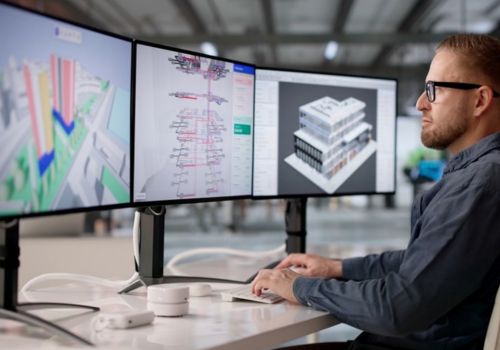
Integrate digital systems early. NEOM’s emphasis on sensors, fiber and AI-ready infrastructure reinforces that BIM, digital twins and data coordination aren’t optional.
2. NUSANTARA, INDONESIA’S NEW CAPITAL: BUILD FOR PEOPLE FIRST
Indonesia is relocating its national capital from congested, sinking Jakarta to Nusantara, a new green, transit-oriented city on Borneo.
The government plans to relocate the first wave of civil servants in 2025–2028, but environmental and Indigenous-rights organizations have raised concerns about land use, ecological impact and whether the population will actually move, creating a risk of an under-occupied “ghost city.”
Key lessons for contractors:
-
Sequence infrastructure around demand. Roadways, utilities, housing and public buildings must be staged at a pace that attracts residents and businesses.
-
Build social licenses into delivery. Environmental and community engagement is now a major determinant of schedule risk. Contractors should proactively budget for impact assessments and ongoing consultation.
Not all megaprojects are visible on a map. Several of the world’s fastest-growing infrastructure categories involve manufacturing, digital capacity and energy reliability.
3. CALIFORNIA HIGH-SPEED RAIL: DESIGN FOR CONSTRUCTABILITY
California’s High-Speed Rail (HSR) remains the largest active transportation megaproject in North America. As of late 2025, 119 miles of the Central Valley segment are under active construction, with more than 70 miles of structures completed.
The project has generated 16,100-plus construction jobs, with up to 1,700 workers on site daily.
In 2025, the Authority released design revisions that reduce tunnels, adjust alignments and tailor engineering standards to rail-specific requirements. These changes are expected to cut cost and accelerate delivery.
Key lessons for contractors:
-
Prioritize constructability at early design stages. California’s redesign demonstrates the value of early contractor input, logistics modeling and value engineering.
-
Strengthen regional supply chains. Hundreds of small and minority-owned businesses participate in HSR work. Standardized components and predictable procurement help local suppliers scale responsibly.
4. THE “INVISIBLE” MEGAPROJECTS: DATA, ENERGY, AND WORKFORCE CORRIDORS
Not all megaprojects are visible on a map. Several of the world’s fastest-growing infrastructure categories involve manufacturing, digital capacity and energy reliability.
-
U.S. manufacturing boom: From January–September 2025, companies announced more than $1.2 trillion in new U.S. production capacity, especially in semiconductors, biotech and electronics that will require new utilities, roads and logistics.
-
Grid modernization: Long lead times for power transformers and substation equipment are driving multi-billion-dollar investments in new U.S. manufacturing plants.
-
Hyperscale data centers: CBRE projects $390 billion in hyperscale investment by 2027, growing steadily to support AI and cloud expansion.
Workforce capacity may be the most critical constraint as these will need workers at a time when the industry is experiencing a significant shortfall.
Key lessons for contractors:
-
Treat workforce as a core project risk. Multi-year workforce planning including covering retirements, local labor availability and training, is now as important as material planning.
-
Follow emerging capital corridors. Data centers, semiconductor fabs and energy-grid reinforcements are driving explosive demand for civil, electrical and specialty trades.
-
Adopt digital project controls. Owners increasingly expect real-time schedules, productivity and equipment-health data. Firms that can demonstrate measurable efficiency gains will win work as pipelines tighten.
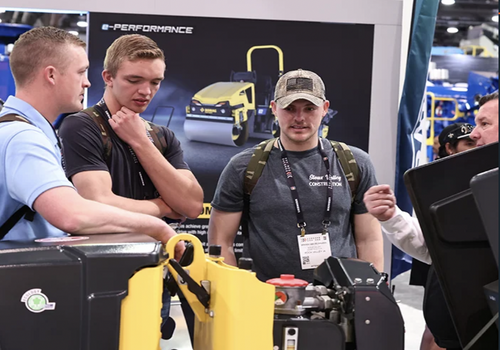
Attend CONEXPO-CON/AGG 2026 to see some of the same equipment and tools being used on these headline-grabbing projects worldwide. The lessons learned will help no matter what size job you are working on.
Photo credit: Justin Chechourka/California High-Speed Rail Authority