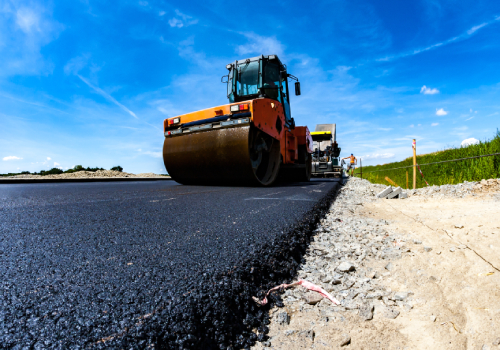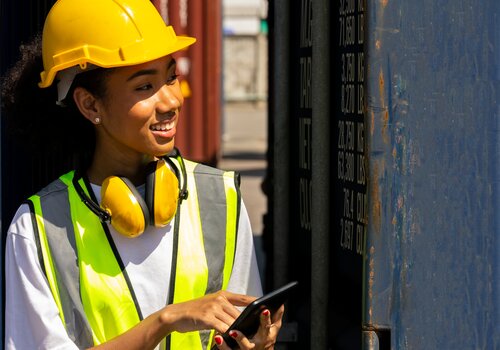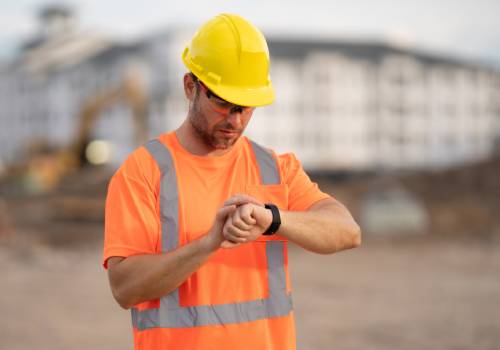
Imagine a typical summer afternoon on a roadbuilding project. A crew is working under high heat, and while conditions haven’t yet crossed the threshold for mandatory breaks, one worker’s wearable sensor flags an elevated heart rate relative to their workload. The system alerts a supervisor, who rotates that worker out before symptoms escalate, avoiding a potential heat-related incident that traditional monitoring may have missed.
Heat risk has long been judged by temperature, humidity and heat index—signals that guide breaks and pace. But they don’t show how a worker’s body is actually responding, which is where new technology is changing the equation.
Across the construction industry, contractors are beginning to shift from measuring conditions to measuring strain, using connected tools and real-time data to identify risk earlier and respond faster.

Contractors are using wearable sensors, smart PPE and integrated monitoring systems to track heat exposure and flag risks as they develop, not after the fact.
FROM CONDITIONS TO REAL-TIME PHYSIOLOGY
Recent research is reinforcing what many in the field already suspect: environmental data alone isn’t enough.
A 2025 study from Osaka University explored how wearable biosensors that track heart rate and physical activity can better measure heat stress in real-world conditions. Instead of relying solely on temperature thresholds, the model evaluates how the body responds to workload, offering a more accurate picture.
Traditional heat monitoring often misses the moment when risk actually escalates. By the time environmental thresholds trigger action, workers may already be experiencing significant physiological stress.
New tools aim to close that gap by providing continuous, real-time insight into how workers are responding throughout the day.
CONNECTED TOOLS, SMARTER DECISIONS
That insight is now being applied on jobsites through a growing range of connected technologies.
Contractors are using wearable sensors, smart PPE and integrated monitoring systems to track heat exposure and flag risks as they develop, not after the fact.
Companies like Skanska have reported using connected jobsite technologies to monitor heat conditions and provide real-time alerts to supervisors, reflecting a broader shift toward data-driven safety management.
Solutions from Bodytrak and MakuSafe track physiological indicators tied to heat strain, such as heart rate and body temperature. Other systems, including VigiLife, combine wearable and environmental data to provide a more complete picture of exposure.
This new technology is helping keep workers safer across jobsites with early intervention using connected systems. These tools are designed to:
- Identify rising heat strain in real time
- Alert workers and supervisors before conditions become dangerous
- Support better decisions on work-rest cycles and task adjustments
- Create a record of conditions for ongoing safety improvements
At the same time, monitoring is becoming more integrated into gear workers already use. Products like the Proxgy SmartHat reflect a shift toward embedding sensors and communication tools directly into PPE, reducing the need for separate devices.
Emerging cooling technologies are also being explored to help regulate body temperature, adding another layer of protection in extreme conditions.
The result is a more responsive approach to heat safety that adapts as conditions and workloads change throughout the day.
REGULATION IS REINFORCING THE SHIFT
As technology evolves, regulation is beginning to follow.
The Occupational Safety and Health Administration is advancing a national Heat Injury and Illness Prevention standard, expected to take shape in 2026. The proposed rule emphasizes monitoring conditions, identifying risk and adjusting protections in real time.
For contractors, that increases the need for consistent documentation and faster response.
Digital tools are making that easier by providing the data needed to demonstrate compliance and improving day-to-day decision-making.
State-level requirements, including those already in place in places like California, are further accelerating adoption and reinforcing a move toward data-driven safety practices.
Recent research in Nature Cities journal shows that heat stress can reduce productivity on construction sites by as much as 41%, while also increasing fatigue, impairing concentration and raising injury risk.
THE HUMAN FACTOR STILL MATTERS
Even with better tools, adoption isn’t automatic.
Heat monitoring technologies raise important questions about data use, worker privacy and how information is applied in the field.
Contractors seeing the most success are positioning these systems as safety tools first, supported by:
- Clear communication with crews
- Transparent data policies
- Defined limits on how data is used
By combining physiological monitoring, environmental data and connected systems, contractors are gaining a clearer, more immediate understanding of risk as it develops.
Technology doesn’t eliminate the danger. But it changes the timing. And on a jobsite, catching risk earlier can make all the difference.
Read about 5 Essential Tips to Keep Construction Workers Cool in Summer Heat and Avoiding Heat Stroke: Tips for Construction Workers to help your workers stay safe as temperatures rise.
PHOTO CREDIT: SHUTTERSTOCK/VOLODYMYR TVERDOKHLIB