On a well-run jobsite, risk is rarely left to chance. Crews are trained to spot issues early before a small problem turns into an incident.
But not every risk shows up in a safety walk.
Mental health is one of the fastest-growing challenges in construction, and unlike physical hazards, it often goes unnoticed until it impacts safety, performance and retention.
As Construction Mental Health Awareness Month begins, contractors are starting to rethink how—and when—they respond to this important safety hazard.

The same way a worn harness or faulty equipment creates risk, so does an overwhelmed worker.
THE PROBLEM IS BIGGER THAN MOST REALIZE
Data from the Centers for Disease Control and Prevention and industry groups like the Construction Industry Alliance for Suicide Prevention continues to highlight the scale of the issue.
-
The suicide rate among construction workers is four times higher than the general population
-
Nearly two-thirds of workers report experiencing anxiety or depression in the past year
This isn’t a fringe issue. It’s widespread, and it’s impacting productivity, safety and workforce retention.
Industry experts point to a mix of contributing factors: long hours, physical strain, seasonal work, job insecurity and a culture that has historically discouraged workers from speaking up.
The result? Mental health challenges that often go unseen until it’s too late.
WHY THIS MATTERS ON YOUR JOBSITE
Mental health isn’t separate from safety; it’s directly tied to it.
Fatigue, stress and untreated mental health conditions can lead to:
-
Slower reaction times
-
Poor decision-making
-
Increased risk-taking
-
Higher incident rates
In other words, the same way a worn harness or faulty equipment creates risk, so does an overwhelmed worker.
The industry must treat mental health as part of its overall safety culture.
That’s why Construction Safety Week is held the first week of May each year. Because mental health and physical safety support the same outcome: a happier, healthier and safer workforce.
WHAT CONTRACTORS CAN ACTUALLY DO
While awareness is growing, many contractors are still figuring out what action looks like in practice. For most, it starts with small, manageable steps that can be tied into existing safety practices.
Normalize the Conversation. Creating space for discussion is the first step in creating a space for mental wellness in the industry.
That could mean:
-
Toolbox talks that include mental health
-
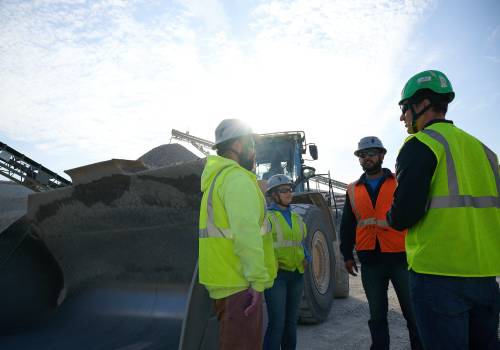
Supervisors checking in not just on work, but on people
-
Leadership openly acknowledging stress and burnout
The goal isn’t to turn foremen into counselors; it’s to make it clear that speaking up is acceptable.
Use Existing Toolkits and Resources. You don’t have to build a program from scratch.
Organizations like the National Alliance on Mental Illness and the Substance Abuse and Mental Health Services Administration offer free, ready-to-use resources.
Resources include:
-
Conversation guides
-
Crisis support information
-
Workplace mental health toolkits
These can be integrated into safety meetings, onboarding and training with minimal lift.
Train Crews to Recognize Warning Signs. One of the most actionable takeaways is realizing that co-workers are often the first to notice when something is off with a team member.
Crews should look for:
-
Withdrawal
-
Irritability
-
Fatigue
A SHIFT IN HOW THE INDUSTRY DEFINES “SAFETY”
For decades, construction safety has focused on the visible: hard hats, fall protection, equipment protocols.
Mental health requires a different approach, but it belongs in the same conversation.
The goal is to move toward a culture where mental health is openly discussed and help readily available.
As highlighted in CONEXPO-CON/AGG’s industry partnership initiatives, culture is where mental health is treated as essential infrastructure, not an afterthought.
WHAT’S NEXT
This article is just the starting point. Throughout May, this series will move beyond awareness to focus on what action looks like in practice:
-
Understanding how leaders can begin addressing mental health through everyday interactions
-
Exploring why assumptions, bias and stress reactions impact the ability to increase mental wellness
-
Recognizing warning signs and taking action early when something doesn’t feel right on your crew
If you or someone you know is struggling, the 988 Suicide & Crisis Lifeline offers 24/7, free, and confidential support. Dial or text 988 to connect with a trained crisis counselor.
PHOTO COURTESY CONEXPO-CON/AGG