Sponsored Content
Construction has always been a coordination-heavy business. People, equipment, vehicles, and materials must arrive at the right place, at the right time, in the right condition. When that alignment breaks down, costs rise quickly.
At the center of many of today’s operational challenges is a deceptively simple question set:
- Who is available and qualified to do the work?
- What equipment and resources are needed and are they job-ready?
- Where are those resources right now, and where do they need to be next?
For contractors managing multiple crews, mixed fleets, and geographically dispersed jobsites, answering these questions accurately is no small feat. Labor shortages, tighter schedules, rising equipment costs, and growing project complexity have only amplified the issue.
For many construction firms, the problem isn’t lack of effort but rather a lack of connected, real-time visibility.
When Information Lives in Silos, Operations Suffer
In many construction organizations, key operational data still lives in separate systems or outside of systems entirely.
Maintenance teams track repairs and inspections in one place. Dispatchers manage schedules in spreadsheets or whiteboards. Project teams submit equipment needs through calls, texts, or emails. Drivers leave the yard with static instructions that can’t adapt to inevitable change.
Each team is doing its best with the information they have, but without a shared, real- time view of resources, decisions are made in isolation—and the consequences show up in the field.
When Resource Requests Aren’t Structured or Connected
Every scheduling and dispatch decision starts with a request from the shop or the field—but in many construction organizations, that starting point is also where accuracy begins to break down.
Equipment, crew, or transportation requests often come in through a mix of phone calls, texts, emails, and informal conversations. Details vary by requester. Priority is subjective. Timing changes after the fact. By the time a request is acted on, it may already be outdated or incomplete.
The impact shows up across operations:
- Equipment teams lack confidence or understanding in asset schedules and utilization data
- Dispatchers plan around assumptions instead of verified needs
- Equipment is overbooked, underutilized, or staged too early “just in case”
- Rentals are approved because availability is unclear
- Transportation costs increase due to last-minute changes
Without a structured request process, it becomes nearly impossible to build an accurate forward-looking schedule. Utilization data is distorted because planned versus actual usage is never clearly defined. Equipment may appear “busy” on paper while sitting idle—or worse, appear available when it’s already committed elsewhere.
The root cause is not poor communication, but requests that live outside the operational system of record. When requests aren’t tied directly to asset availability, maintenance status, location, or project timelines, they create noise instead of clarity. Decisions are then made reactively, often under time pressure, with limited context.
Over time, this erodes trust in the schedule itself. Teams stop relying on utilization reports, contingency buffers grow, and organizations compensate by renting or buying more equipment than necessary.
Until requests are captured in a consistent, centralized, visible way—and connected to real asset data—the entire resource management and dispatch flow remains vulnerable from the very first step.
When Maintenance, Inspections, and Scheduling Aren’t Connected
One of the most costly breakdowns in construction operations occurs when equipment arrives at a jobsite only to be taken out of service immediately. Sometimes it’s an overdue repair. Other times it’s a missed inspection or unresolved damage from a prior move. Either way, the outcome is the same: the asset isn’t job-ready when it’s needed most.
The operational impact compounds quickly and there is a high cost to poor asset readiness:
- Crews are delayed while waiting for repairs or replacement equipment
- Mechanics travel to jobsites only to be turned away or reprioritized
- Rental equipment is brought in to backfill owned assets
- Labor hours, transportation costs, and downtime increase
These situations are rarely caused by a single oversight. More often, they stem from disconnected maintenance, inspection, and scheduling processes. Maintenance teams track repairs and inspections in one system. Dispatchers assign equipment in another. Field teams submit requests through calls or texts. Without shared visibility, assets are dispatched without full awareness of pending repairs, inspection requirements, or planned downtime.
The problem becomes even more pronounced during equipment transfers between jobsites. Assets may arrive damaged, overdue for inspection, or otherwise unfit for immediate use. Projects slow down, emergency rentals become necessary, and budgets take a hit. Just as damaging, accountability becomes unclear—was the issue maintenance, operations, or the jobsite?
When inspection workflows aren’t enforced and asset readiness isn’t embedded into dispatch decisions, responsibility for equipment condition becomes fragmented. Preventive maintenance programs weaken, finger-pointing increases, and confidence in asset availability erodes across the organization.
At its core, the issue isn’t neglect or lack of effort. It’s that asset readiness data— maintenance status, inspection results, and repair needs—often lives outside the scheduling and dispatch process. Until those elements are connected, contractors will continue to face avoidable delays, higher costs, and unnecessary operational friction.
Dispatching Without Real-Time Data
Dispatch inefficiencies don’t just affect equipment. They directly impact drivers and transportation teams. In many operations, drivers receive:
- Static pickup and drop-off locations
- Text messages or printed instructions
- Limited visibility into changing priorities
When conditions shift, as they often do, drivers are left idling, making calls, or searching for assets that may no longer be where expected. Real-time asset locations aren’t always connected to dispatch instructions, forcing drivers to rely on phone calls and guesswork once they leave the yard.
The result of dispatching disconnected from real-time telematics is wasted time, missed moves, and frustration on both ends of the operation.
High-Cost Decisions Tied to Poor Data Quality
Equipment managers are often tasked with making high-cost decisions—rent, buy, move, or reassign—based on incomplete or outdated information. And when equipment
schedules are built from bi-weekly planning meetings, emergency requests, and multiple communication channels, the picture is never fully clear.
This leads to over-renting, over-buying, increased transportation costs, and idle crews. Without a centralized, real-time equipment schedule tied to actual job needs and asset availability, even experienced teams are forced to operate reactively.
From Disconnected Tools to Connected Resource Management
What forward-thinking contractors are recognizing is that these issues share a common root: resource data is fragmented.
Thankfully, modern construction resource management platforms are designed to bring people, equipment, vehicles, maintenance, and schedules into a single operational view. Rather than managing each function independently, resources are treated as interconnected parts of the same workflow.
Within a centralized environment, operational decisions can be made with full context. Teams can:
- See which assets are available, down for repair, or in transit
- Understand how schedule changes impact other jobs
- Reassign resources quickly when priorities shift
- Communicate updates clearly to the field
But the biggest operational gain contractors experience with connected dispatch tools is the move from static plans to living schedules through real-time, telematics-driven data. Instead of reacting after a problem hits the jobsite, dispatchers can spot conflicts earlier and adjust proactively.
This capability is especially valuable in heavy civil, infrastructure, utilities, and site development—industries where a single delayed asset can ripple across multiple crews and schedules. When schedules reflect real-world conditions, teams gain the agility to adapt without chaos.
The result is fewer surprises, better utilization, lower costs, and stronger alignment between the office and the field.
Finding the Right Solution
Solving the Who–What–Where problem is foundational to contractor performance. Those who invest in an equipment management system with connected resource management and dispatching will feel the impact and see the ROI quickly.
Critical elements to look for in a comprehensive solution include:
- User-friendly interface and mobile compatibility for field teams to access schedules, requests, maintenance data and updates in real time
- Real-time scheduling, visibility and alerts to keep teams updated on changes right away without the missed calls
- And, of course, integrated equipment management data including utilization, maintenance, inspections, and more
Platforms like Tenna that offer a fully connected Dispatch Board reflect how the industry is evolving toward unified operations. Among its key equipment management solutions, Tenna’s product enables contractors to manage requests, resources and schedules by overseeing dispatch events in real time and moving assets, laborers and crews with ease.
For contractors, the takeaway is clear: the future of construction operations belongs to those who can see and manage the full picture in real time.
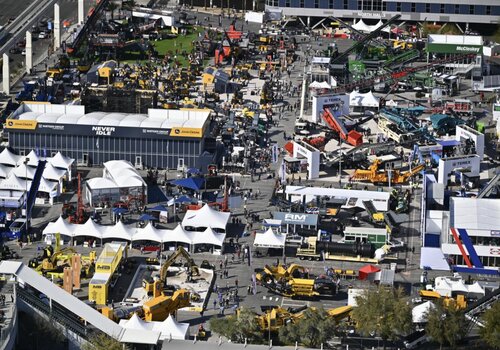
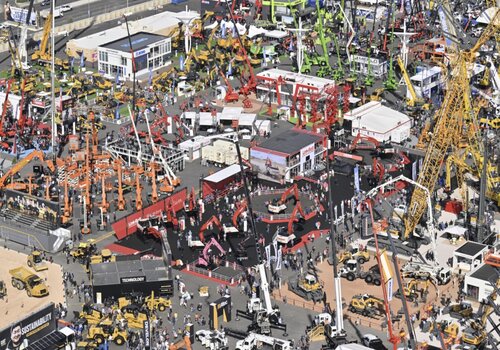
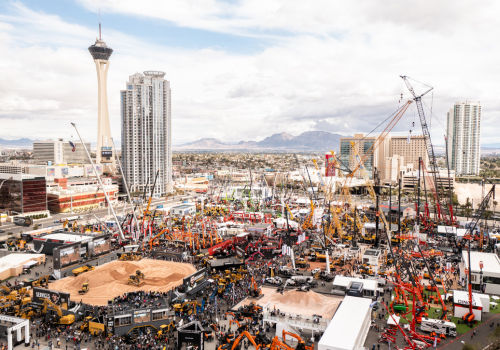
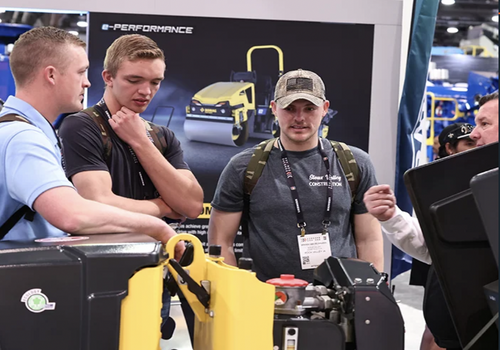
If you're experiencing any of the consequences of disjointed resource management or delayed scheduling data, visit Tenna at CONEXPO-CON/AGG (booth #N11527) to learn more about how our equipment management system can resolve these common operational challenges.
Photo Courtesy of Tenna