


Owners want to finish every construction project under budget, and they buy expensive machines and new technology to beat the competition. But talent walks off the site when they feel disrespected. Profits vanish when you must replace your best workers every month.
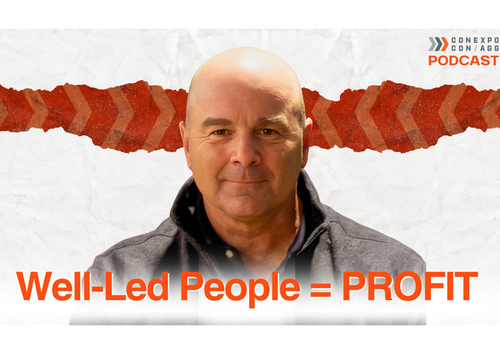
Project managers need a team that works as hard as the machines. Professional Speaker, Coach, and Consultant, Wally Adamchik, explains how to lead with Marine Corps precision. He reveals that most owners give orders instead of building trust, and demonstrates why they must change their site culture to stop the labor shortage.
Topics:
- Why pride in the trades still matters
- The trust and respect formula for great leaders
- How emotional intelligence improves leadership
- Building trust on construction teams
Watch now:
Listen now:
Listen on your favorite app: Apple Podcasts | Spotify | YouTube
Subscribe to the CONEXPO-CON/AGG YouTube channel to be notified of new episodes.
Join more than 65,000 industry peers who receive construction industry news and trends each week. Subscribe to CONEXPO-CON/AGG 365.
Episode transcript:
Taylor White: Welcome back, everybody, to the CONEXPO-CON/AGG Podcast. I am your host, as always, Taylor White. With me here today, I have Wally Adamchik, who has a long history of being construction, Marine Corps, and also, we noted that you were the Notre Dame Leprechaun, which I definitely want to touch on as well. So, Wally, thanks for being here today with us.
Wally Adamchik: I am stoked to be with you, White. I wait every three years for CONEXPO-CON/AGG when we can do it every weekend or every week now.
Taylor White: I love it. Looking back on you know, team sends over a bunch of research and then I dive down and I look at kind of what you have going on, and you have a lot going on. How about you give the viewers and listeners a little bit of background about what you do and why you are here almost?
Wally Adamchik: Yeah, the short answer is I speak and consult on leadership and construction. I used to say that people are the best profit strategy, but I have changed that to say well-led people are the best profit strategy, and that if you know, whether through speaking or consulting or coaching or training, man, if I get it right, there are more smiley faces and more dollar signs on the job site.
Taylor White: You know, I find it interesting and getting into the construction industry and I have a note here that you know, it says your dad and brother were in construction in New York City. I myself am a third generation owner up here in Ottawa. What could you kind of take away from those dinner table conversations growing up that still shows up in your work today?
Wally Adamchik: Yeah, well first, you know, I was a helper when I was 13, 14, 15, so, you know, breaking every labor law probably, but you know, who cares? But I think what not so much the conversations, but being on the jobs and being with these good guys who looked out for me, but treated me hard, but there was a standard and just learning that this is work, but it is rewarding work, and you can see the results, the tangible efforts of your labors, and just a bunch of good people just trying to do good work, I think was the most, that is what I remember and that is what I get when I go out onto job sites now.
Taylor White: Do you think that that culture has remained from back then to now?
Wally Adamchik: Yeah, you know, there is certainly a generational shift as as jobs have become more white-collar, but this is why this "bring back the trades" conversation is so relevant, that there can be honor in the work, there can be great culture. That is my commercial and I am fortunate enough to work with some contractors that believe that and and aspire to that. Regrettably, there is a population of people and contractors out there that are transactional just, you know, eight for eight, ain't nothing special, move on, but I think anybody listening to this is of the former category of going, "Let’s make it better."
Taylor White: What was the transition? You know, you grew up, family was construction, and then you did some Marine Corps stuff. You were an attack helicopter pilot, correct?
Wally Adamchik: Yeah. So, you know, classic American Dream, you know, dad wanted his kids to go to college and my brother went for a little bit, it was not for him, and I did and it almost was not for me because of a lot of beer. But I was fortunate enough to go to the University of Notre Dame on a Marine scholarship and there was no way we were affording it otherwise. And so I was commissioned in the Marine Corps and spent 10 years in the Marine Corps. So, you know, it was the American Dream. I want my son to go to college and I did, and that is kind of the early years. I do not think I fully answered your question. I think I got off track there.
Taylor White: No, that is okay. No, I guess that is how that shift kind of you ended up kind of at Marine Corps school. But I always find it interesting like, you know, what did you pull out of the being in the Marine Corps and doing what you did for your country and for your service, and what stuff relates to what you are doing now? You know, because you do a mean, big part of why you are here is also I mean you do leadership. You are talking all over the place and and teaching people about leadership and being a leader in construction. So what kind of stuff is transferable?
Wally Adamchik: Of course, there is so much. At the most tactical level, as a pilot, it is using checklists. That I do not have to know everything, I mean I know everything, but I do not want to miss a step. And too often, I see people on job sites going, "Well I know," or they are getting ready to go to a project and they do not even have a gear list. They just, "Ah, it is all in the truck." So checklists at the most tactical level.
At the kind of the personal level, it is there is not a lot you can throw at me that I cannot handle. I have had a lot thrown at me and and that is just the confidence thing. At the organizational level, it is that complexity makes life hard. And you know, the government is one of the most complex organizations there is, but you know, we have got contractors listening in who are, you know, 10, 20, 30 million and we have got two billion dollar contractors and the nature of leadership changes as we move up that complexity scale, but at its most human level, from a leadership perspective, it comes back to trust and respect. If I trust and respect my people, they may trust and respect me. So there are a lot of facets of leadership there.
Taylor White: Leadership is something that I am constantly, you know, reading books about, listening to podcasts about, listening to people like yourself about, and I have a couple businesses up here in Ottawa. I sit on a couple boards. I have three young kids, you know, so I definitely am in this space of and constantly analyzing myself on a day-to-day of what would a strong leader do? Am I being a good leader? Am I effective at being a good leader? And that stuff I think is what makes good people good.
Taylor White: You talk about some stuff in your research and it is I find it and I want to dive into some of it because these kind of five megatrends I find very interesting. So one of them being the engagement paradox. What does that look like on a real job site and how does- how would a project manager or a or a Super spot a guy or girl who has kind of got more in the tank?
Wally Adamchik: You hit it first, though, you got to know yourself. What kind of a day am I having? What is my bias? You know, good leaders have good range and by range I mean flexibility of response, and great leaders have great range, flexibility of response, options, tools in the toolbox. So when you talk about having that self-awareness and that self-discovery, those are the table stakes for this conversation because I cannot go out there and objectively look at somebody’s performance if I have got baggage myself. So let us just kind of get that out of the way. We may come back to it later.
Wally Adamchik: But this, I do not even know if the word is stereotype or or hysteria out there that nobody wants to work. I do not buy it. Nobody wants to work in chaotic places where they are treated like a moron and nobody teaches them and all of that stuff. So to make the assumption that the person that comes on your job site is going to be useless and you are and they are going to leave in six weeks probably is perpetuating some challenges you may have.
Wally Adamchik: When we look at the most successful crews across any of the trades, they have low retention. Meaning the leader is doing something to make people want to stay. And oh by the way, and this is one of the more important things I will always say, you never heard me say lower the standard. As we talk leadership and culture and engagement and, you know, all these touchy-feely new-age words, the standard is the standard. It is probably harder to get to the standard with regulations and congestion and means and methods changing and owner demands changing and blah blah blah blah blah. The standard is the standard. What am I going to do differently as a leader to engage with this next gen who did not grow up the way I grew up to help them quote "want" to lean in?
Taylor White: You know, I find it interesting also too in about self-awareness and you said you know we might come back to it. And I think that that is probably in my opinion, one of the most important traits a person could have. Being self-aware and socially self-aware but social awareness as well too. When I walk into a meeting, I can read the room. Are these guys or girls going to be able to put up with some jokes or are we no jokes today? Is that guy maybe having a bit like we deal and everybody does, but you deal I deal sometimes the same clients and the same people every day and I can tell that guy maybe got into a bit of an argument with his wife last night or this morning he left because he is in a bit of a bit of a mood. And point being you never know what people have going on. So somebody that is listening to this, and this is what I ask myself all the time, how can you get good at self or social awareness if you do not have it and why do you think some people do not have it?
Wally Adamchik: So there are two sides to it, right? There is the self side and the social side. So this gets into why are you the way you are? And there are two answers to that. One is nature and one is nurture. One is your DNA is such that you look and think certain things or have the capacity to think certain things. And then there is the nurture piece, which I call the "Mama’s House Story." What was that year those first 10 years of your life like?
Wally Adamchik: So, you know, those two things will come together on on the self side. Now the key thing here is we still have eight we are not done when we are age 10, you know, we are baked, but we are not done. So understanding that Mama’s House Story and there are some stories there that might be good or bad and there might be some blind spots there, etc. You know, so you got to do the work. You got to do some heavy lifting there and journaling is a way to do that. There are apps on the iPhone, but to get the garbage out of here, get it down there and see, "Oh, there is a trend," and, "Oh, I felt that way again," and, "Oh, that guy made me feel that way again," and, "Oh, that guy made me feel that way again," and why did he make you feel that way? "Oh, because that is how my dad used to treat me and he used to treat me bad."
Wally Adamchik: On the other side, on the social, you know, on the social awareness piece, you got to learn to look. Which means you got to recognize you got to bring a little bit of humility. There is a new leadership word. You got to bring a little bit of humility to that meeting that says I do not have to speak the entire time. In fact, I am going to be more quiet and I am going to actually look and see, "Wow, Taylor is a little different today." But all too often we go in on our agenda and I got to get my point across and this is going to cost me money and yeah, those things all may be true, but you said it. Every situation is a little different, but there is a great line for you. The you that you know is not as interesting as the you that we know. We see you show up and you think you show up in a certain way. So there is a lot in that.
Taylor White: You mentioned the first 10 years. I mentioned I have three young kids. What good qualities and good things do you think is important to tell a young father with kids being raised? What is paramount in those first 10 years? What are some things that you should do?
Wally Adamchik: Well, I am not a parenting expert, but there are a lot of people who are reliving their childhood. You know, "I saw my dad do this therefore this is the model." And you know, that is not necessarily true, but it is the only model we have. So I would do some research. And oh by the way, this is not everybody gets a trophy and all of that stuff. I mean, you know, take them out in the woods, get them in sports, get them in first, get them in what they want to get into. It may not be what you want to get into. I was fortunate enough I got my daughter into golf. So, you know, we never did cheer camp. We went and played golf. So I got really lucky with that. But get them into things, get them into activities, and really it is build confidence in the child. Whether that is learning to ride a bike or when they bring home an A-minus or a B-plus, it should not be, "You moron," it should be, "Hey, that is good. What went well for you?" You know, and turn things into coaching conversations. Parenting is probably one of the best leadership labs we have and oh by the way, those little maniacs can drive us more crazy than an 18-year-old laborer could any day.
Taylor White: Yeah. I do not know about that one. But it is a very good point and that is the stuff that I kind of think about, you know, daily also just with our kids and bringing them up in the family business and, you know, what did I do with my dad? What do I think maybe did not work that I did with my dad that, you know, you know, I want to, you know, transfer over to my kids? But I think it is really important to, you know, you are shaping the kind of next generation and at the end of the day, a lot of the times you are a product of your surroundings and you are a product of your parents. So I think making sure that everything is kind of aligned and you try to make good human beings is very important.
Wally Adamchik: That is it, but man, we screw it up all the time.
Taylor White: Yeah, nobody is perfect. Another megatrend I want to talk on. Field and office divide. A lot of the CONEXPO-CON/AGG audience they love these conversations. So pay fairness, 63% in the field, 87% in the office. Work-life balance, 54% field, 74% office. The "I feel like I am failing" mindset, 18% in the field, 2% in the office. That last stat is brutal. What is your take on the field and office divide?
Wally Adamchik: It is never going to go away. We work in an industry that has a field and an office. So we have a geographical dispersion. The other thing that has crept into this thing is this whole white-collar blue-collar BS. But so the field office divide is a chasm. It is never going to go away. There are geographical and social and mental reasons that it is going to be there and the data confirms that. The thing we have to do is bridge the gap.
Wally Adamchik: So for example, if I am doing frontline leadership training and I have got 25 foremen superintendents in the room, my question is where are the project managers? And the owner may say, "Well, you know, this is for the field." I am saying, "Yeah, that is great. Where is the accounting supervisor?" First of all, we are teaching leadership so let you know, let us get the PM and the accounting supervisor in there. But now we begin to break down the walls. We have to create moments to break down those walls and you have to create them because they are not going to happen otherwise. That could be just job site visits for the office and since you know we are not going to put a shovel in their hand, but maybe you can put them in a loader and let them have some fun with that. So it is real. It is negative if allowed to be. I guess it is always going to have a slight negativity to it, but it is something we have to be very aware of and not use as an excuse for a lack of communication because we know that communication is the key and both sides have precious information that are required to get the thing built. But if I am talking trash about you and I call you or text you and you do not pick up the phone and my snarky little field comment is, "Oh yeah, he is out at some 90-minute lunch again." I mentioned trust and respect earlier. Those are two keywords here.
Taylor White: Yeah, I totally agree. And I think you are right. I have the same impression of it. Everyone asks like, "Oh, how are we going to solve this issue?" You are not going to solve the issue you are going to make it you can make it better at your company, but you are never going to solve the issue. You have stuff where social media is filled with memes and quick reels about how, you know, the blue-collar guy is making fun of the white-collar guy who comes to the job site and being like, "You are not going fast enough," but they have never done it before. Like you are never going to get rid of that and I am under the same agreement as that. And what we try to do is we just try to do company events where we integrate everybody. And I will talk to management and say, "Look, like this day is not about you guys all hanging out together and project managers with project managers and numbers guys with numbers guys. Go talk to the field guys. Field guys, go talk to the office guys. Have a couple drinks, have a couple beers. We are at a golf simulator talking, having fun and trying to do stuff like that." And it is never going to be perfect in a perfect world, but it is trying to- we try to enforce like company events like that where it is fun and it is not some cheesy little event where it is like, "Hey, we bought pizza. Come on in."
Wally Adamchik: Yeah, absolutely. It has got to be intentional. It has got to be meaningful if you want it to be meaningful.
Taylor White: Yeah. Another thing I want to talk about that is really important is culture. Culture is retention. What are some points on that that you would share with leaders of businesses, companies? Culture is a big main topic, right? Culture is the reason why somebody stays, why somebody leaves. Why is that so important?
Wally Adamchik: Well, oh my gosh. So first of all, culture attracts. Because if I put my commercial out there, website, reputation, referrals, all that stuff. So you know, look, I was a Marine. I bought into the commercial. And there are a lot of people that do not buy into the commercial and maybe they join the Coast Guard. Whatever. I mean so the commercial matters.
Wally Adamchik: And then when I come in, do we actually live the commercial? So there are attraction factors and retention factors in that. But culture and then maybe values are part of that align everybody. So you know, you seem like a nice guy, come on in, but your Mama’s House Story is different than my Mama’s House Story. So what went as polite in your world may not be polite in my world, but we have a value that says the customer is number one, whatever. Okay, what does that really look like in our world? And let us define that. So those become aligning and that when a machine is aligned, it runs well. When it is out of alignment, there is friction.
Wally Adamchik: So culture then gives us that clarity of how we do things here? And people can self-select in or select out. It aligns us going forward and it gives us that foundation of, "Look, I am in a situation I have never been in before, but I know our values are X, Y, and Z. I am going to be guided by that." And then go back to your company event a minute ago, we need to be talking about these things. I was speaking at the show you know this year and this came up and I don’t know, a couple hundred people in my room in the audience and I said, "How many of you here have corporate values?" And you know, probably two-thirds of the room went up and that is cool. And I said, "How many of you if I went out to the field, your employees would know?" And most of the hands came down and the guy in the front row was like, "Oh, my executive team knows it." And I said, "Then you got a little bit of work to do because if your values do not have value to everybody, they have no value and then you have no culture and then you have no consistency and then every job is different and then we lose money and bad things happen."
Taylor White: Yeah, it is a good point and it makes me think whenever you say that as well too. If you went out there, the guys would be like, "I have no idea," you know? But yeah, it is really interesting actually because it would make you more profitable and have better culture if everybody understood the "why." That is the point that is kind of missing and I think that your company’s why actually kind of shapes your entire culture.
Wally Adamchik: It is all related. You know, so yeah, why do we come to do this? And when you articulate the why, you are setting direction too, by the way. And it is an aligning conversation. So, you know, where are we going and why are we going and how are we going? All of those questions are questions that everybody shows up to work with. They may not say it and they may not ask it as in-depth as, you know, somebody with their MBA, but what are we doing today and why are we doing it and where are we going? And having those conversations with people. "I do not have time to have those conversations. We never had those conversations when I was young." Yeah, welcome to 2026. Get over it.
Taylor White: Yeah. Where does trust come into the conversation?
Wally Adamchik: It is at a premium. For two reasons. First of all, any Wood relationship is based on trust. Now how do we establish trust? If I am a task-oriented person, you establish trust with me by getting the job done. If I am a relational person, you establish trust with me by being a good dude. So there are different nuances to that, but it is the foundational piece between us. The other thing about it is and we can use the word transparency maybe. Trust is at an all-time low. Trust in the clergy, trust in the military, trust in the media, oh that was easy, trust in the government, oh that was easy, you know, trust in the military. So in a world where trust is and fake news. Like look, fake news is real. There is fake news out there. So how do we take all the noise out there and say, "Okay, we are here to work today, we are here to do you know whatever we are doing," and, "I do not know what is happening out there, but this is how we do it," values, culture, etc. And, "Here is why I need you to do it. And if you quote "trust me”, we can actually go do it." But if you do not trust me because I have not lived up to commitments or I have lied to you or whatever, eh, it is just I will take my eight for eight and I will go home.
Taylor White: Building trust is, you know, I recently have a new business. It is a couple years old now and you know, it is a building company. And we have a couple really good clients and we work on trust. And I always have said to people that ask like, "Oh, how is the business going? Oh, how did you get this client or how did you get that client?" And it comes down to well they trust us. They know that they are getting the best deal, the best value, the best work, and we are honest and transparent with what we do through the entire process. And I think if you can build relationships on trust and have a reputation that is not, you know, I think reputation is very important. I am not talking as a business as a whole. I am talking personal now. Like if I tell somebody I will be there at 8:00 AM on Saturday, I am there at 7:55 on Saturday or 7:50 on Saturday morning. I cannot explain how many times I have met other business owners where they say, "Yeah, we will be there," they do not show up. "Yeah, but then they do not do this. Yeah, that is my price and I get hit with a change order." And then it becomes well your word means nothing and now I cannot trust you. And that is what frustrates me about the industry, just about people in general, not even so much the industry. We talk a lot about culture and leadership and but I find that trust is such an important value to speak on and that effectively makes you a good leader, being a trustworthy person, understanding the relationships and how to build trust. But I think there are more conversations to be had about that.
Wally Adamchik: Well, it is something we do not talk about. So it is just this hidden- you either have it or you do not have it. But you know, you say you are going to call me back and you don’t and we work together. You are not even an owner, you know, just we are in the same company. "Hey Taylor, man, you said you were going to call me back yesterday and you didn’t. Is there any you know, I was a little disappointed that you didn’t because I really needed that information." Like where is the feedback on this? "Well, I am not Taylor’s mother. Why do I need to tell him that?" Well, because he dropped the ball. Now look, if it was not a big deal and, you know, I needed information for next week, but if I needed the information off that RFI and you were supposed to get it to me so I could start moving dirt at 7:00 AM this morning. "Hey Taylor, man, I I needed that from you. You let me down. That hurt the team." Right? Learning how to give feedback is actually a way to gain trust because then you get that clarity and it is a way to once again align people, educate people, etc.
Taylor White: That is a great segue because the next thing I actually wanted to ask about was recognition problem. And you know, there are some interesting stats about that. 72% of field get it monthly or never. 66% of the office get it monthly or never. High engaged teams are 21% more profit and 17% more productive. What does good recognition actually look like on the job site to you? It is not the trophy for everyone kind of stuff, but the real version of a super or foreman that, you know, can do tomorrow to make things better.
Wally Adamchik: Yeah, so a couple of things on that. Yeah, the scientific term on recognition and feedback is we suck at it. And it goes back kind of some old school mentality of my work speaks for itself. The other one is, "Hey, how do you know when you are doing well? Well, my paycheck keeps showing up," or, "How do you know when you are doing well? Well, I haven’t got my butt chewed lately." You know, so there are all these jokes, but they are not jokes. This is how it has been. So why do I need to give- I do not need a pat on the back to do good work. You know, all this baggage and so what does it need to and then we get into the trophy piece, which oh my god.
Wally Adamchik: Here is a package for it. Situation, Behavior, Impact. What was the situation? What was the behavior? And what was the impact? So I did it a little bit when I said to you, "Hey Taylor, you were supposed to call me yesterday, but you didn’t," situation, behavior, impact, "I was so disappointed because it set me up to fail." And notice the human aspect of that impact. It is not the job suffered, it is not we have a policy that says, you know, "Hey Taylor, I did not I saw you are not wearing your PPE yesterday. I am concerned you are going to get hurt." It is that I will use the word intimacy in that moment where leader you know, I kind of lean in a little bit as a human being and say, "Hey, this is impacting me." And yeah, we can get to the conversation about PPE is a policy.
Wally Adamchik: But I and what I would say is catch people doing something right. That is why this is so easy. The psychology of this is that a negative comment weighs five because we are negative biased people because negative stuff can kill me. Well, now it is not the saber-toothed tiger sitting across from me, it is my superintendent saying, "Wally, you screwed that up." Biologically, it is the exact same response in me. It is like, oh my god. So negative comments weigh five. So people are going to need critique. So now we give them a, "Hey, Wally, you did not do that well," and I give a, "Hey, nice job." Positive comments weigh one. Now they weigh a little bit more if you say, "Nice job putting the erosion control in place before the tropical storm came in," because now I know what I actually did. All too often people say, "Great job," and I walk away and go, "Hey, I did a great job. I do not know what the heck I did, but I did a great job." So specificity and catch people doing something right. It is not lowering the standard, it is not a trophy. You have that newbie come in, shiny with all their PPE on, "Hey man, great job. Appreciate you coming in on time and having all your PPE. That is exactly how we do things here." Whereas if somebody who has been around for a while, you say, "Hey man, I saw the customer get in your face yesterday and you handled it really well. You were polite, professional, you explained why we were working here and over there and you know one of our values is treating the customer right. Appreciate you doing that." So catch people doing something right is the one thing people can take to the job tomorrow.
Taylor White: Yeah, I think it is important because we actually kind of touched on this recently at a meeting. It was a company-wide meeting actually, it was before we had camp day and it was interesting because we wanted to make sure that our safety officer like our head actually he is like, "What do you want me to, you know, what do you want me to say, Taylor? How do you want, what do you want my speech to be?" I said, "You know what? Focus on everything that was positive." I said, "Because with safety, especially in implementing safety, it is always, 'Hey, you are not doing this,' or, 'Hey, you are not doing this full, you need to do that, you need to do that.'" I said, "So much of your job is telling the guys what they are doing wrong, not wrong, but how they could do it better." I said, "I want you to focus on, 'Hey, I have noticed you guys since I have started here in the past two weeks, we are wearing our safety glasses more. Hey, you know, we are- our PPE is improving. You guys have are doing your circle checks and safety checks, you know, more and there is more detail on them.'" I think- so it is really important like you said, like not just negative, but you have to you get caught up about not doing the positives with the mindset of, "Well, they still get their paycheck so that shows that, you know, I am happy." But you’ve got to communicate the positive as well too.
Wally Adamchik: The brain is amazing and when you start creating pictures, it starts trying to create the picture. So you are standing on the first tee and you are saying, "Don’t hit it in the water, don’t hit it in the water, don’t hit it in the water." And then you are hitting the second ball because you hit it in the water. So when you talk about, "Hey, great job wearing your PPE," all of that stuff, yeah, reinforce the positive, create the picture of what goodness looks like. We do not give a free pass on not wearing the PPE, but create that positive picture and recognize for it. That is not lowering the standard, that is I will use the word enforcing the standard or or recognizing the standard.
Taylor White: You touched on values and I did have a piece that I wanted to speak on about that. Values went down in six years, even though everyone is writing them on the wall. What is going on?
Wally Adamchik: Well, you know, COVID changed everything and everything got better in COVID. You know, we were taking care of our people, etc. My take on it is it first of all, it is hard. People do not see the immediate return, and by immediate return, I mean retention goes up and and profitability goes up. This is an 18-month play for you to begin to put values in place. So if you do not truly believe it, if you read it in a book, it is not going to stick. So the and the researcher quoting there comes from the people in construction report and, you know, it is industry-wide. But the folks I am working with most are kind of at the upper tier who already believe this and are making it happen. So, you know, it is hard, challenges, etc., and most people abandon those kinds of initiatives, but the ones that keep them, there is a payoff.
Taylor White: What are some good examples of this? What are some places that you can say that you are like, these places are doing it right? Because I think they deserve the recognition.
Wally Adamchik: Yeah, so I would be looking at Sargent Corporation in Maine has a great value statement, series of values. C.W. Matthews in Atlanta, Strack in Atlanta, Emery Sapp, they have five Ps. So it is catchy from that perspective. Hoopaugh in Charlotte, Goodfellow Bros. these are and these are all, you know, civil infrastructure contractors that and here is why they are different is when you go to their website, it does not just say safety, quality, integrity. Right? It is differentiated. There are different words. Now, safety is in there. Like Sargent has one, I think it is "We Win in the Field." Go back to the Marine Corps commercial. So we put this commercial out there and and I know I am offending if you contractors here who have safety, quality, integrity are on their website, but you know, that was an MBA that told you to do that 30 years ago and and it is like, yeah, okay, it is better than nothing and and you can absolutely live the heck out of those, but that does not differentiate you at all. And your question we talked earlier about trust is how do I get somebody’s attention? Well, I got to get your attention before I can get you to trust me. So those contractors and there are others, but those are some of the best ones out there. Oh by the way, not only do they have great value statements, they are some of the best contractors out there.
Taylor White: Well, those two things go hand in hand, right?
Wally Adamchik: Yeah, which one is it? Right.
Taylor White: We touched on this earlier, but we also did not dive into the conversation a lot because it was kind of more just people getting to know you. I am interested like you teach leadership doctrine to the Marines and to construction companies. What translates? Like what is one or two things a guy listening on the drive home on Monday morning can do tomorrow Monday morning or Saturday morning or whatever can yeah it is we are filming this on Friday but let us just say on a Monday morning what can a guy do?
Wally Adamchik: Ask more questions. When we get put into that leadership role, you know, I am a foreman, super, whatever, you know, project exec, man, I am the guy. We think we need to have all the answers. And often we do because we have technical expertise, meaning I have put more pipe in than anybody in this company. I am the best at it. So now you come to me with a question of, "Hey, how do I do whatever?" and I go, "Oh, here is how you do it." Because I exist to solve problems and move the project forward. Why couldn't I say, "Well how do you think you should do it?" You know, why couldn't I become that coach and that mentor and that teacher as opposed to the fixer? I recognize there may be some time component here and some quality components, but time components because I haven’t turned you loose to do it. But what is the question to answer ratio? Are you asking more questions or giving more answers? At the end of the day, think about that. And if you are giving answers, you are giving a man a fish and you are not teaching him how to fish, to use that reference.
Taylor White: I guess that is kind of like from the employee standpoint what could I what could I do, you know?
Wally Adamchik: No, I am talking about the supervisor there.
Taylor White: Yeah, but as a business owner, as an owner of a company, too, right? Like I think that translates as well too. I mean because so for instance, our yearly employee reviews are coming up where we give the employee sheets of paper that ask them how are we doing as a company? Are we giving you the tools? And that is the feedback a lot of the time that employers do not want to hear because they know okay they are going to say you know this or that or that. So I think that actually pertains as well because that is what I try to do as well too. I try to tell our guys and girls like reach out to me, send me a text, call me, ask, but it is up to me to go and be like, "How are things going on site?" "Oh no, the job is going good." "No, no. How are things going here?"
Wally Adamchik: Yeah, so man, if you are going to ask, you damn well better listen and listen means do something about it. And all too often and look, you are going to ask that question, you are going to get 50 things. So which of the ones that will move the needle for the company or for the employee? Maybe there is some low-hanging fruit that can show some wins. But if you are not going to do anything with those questions, do not ask them. Because now I do not trust you. So we go back to that. But here is a question you said, you know, for the you know what can I put to work immediately? "Hey, what one thing could I do differently for you this week to help your job go better?" Not 50 things. So I am the superintendent, I walk on the job site, on the project exec, I walk up to, you know, "What one thing could I do differently?" And people are going to look at you like, "What?" But maybe they will give you an answer. And then and then do it. Oh my god, do it.
Taylor White: Yeah, act on it. Yeah, because last year, you know, whenever we did them, there was a bunch of people that had kind of like you see starting to see the similarities, you know, they get talking, "Oh, what are you going to write? What are you going to say?" Because there is a part of them too that are like, you know, we do not want to say something and end up getting, you know, getting in or getting management mad or something like that.
Wally Adamchik: Yeah, isn’t that amazing?
Taylor White: I have a question I thought that was kind of interesting. If you could put one sentence on every job site trailer in North America, what is it?
Wally Adamchik: Wow. Safety, quality, integrity. No, I am joking. Yeah, no on every job site I think it would be "You Matter." You know, for every human being walking on that job site, "You Matter." And that has to do with psychological safety, physical safety. It means this wastewater treatment plant cannot get built without you. I think it is "You Matter."
Taylor White: Psychological safety, define entire conversation. You have a bunch of stats about this, but my audience is definitely kind of wrestling this in real time. Like I want to ask about the medicine construction parallel that you kind of speak about in your research.
Wally Adamchik: Well, and it goes to other industries too. You know, there are a lot of people who first of all across our society across North America, we know mental health is an issue right now. Suicide, 988, when we are taping this, I mean construction suicide week is coming up. We just came off construction safety week. So there is an issue here. And once again, this is not that the next generation is soft. It is because we got boomers taking their own lives too. So and we say, "How are you doing?" You go, "I am fine." Man, if you said that to your wife about the dress she is wearing, "You are fine." It is not fine. It is fine. Men all know that is a bad statement. You cannot say, "Honey, you look fine." So why are we not giving ourselves permission to flourish? You know, what is going on here? And look construction long hours, outside, task-oriented, got to get it done, schedule driven. This is a tough environment. But what happens is we create situations where people do not feel safe speaking up. There are operating room nurses who are not going to say something, "Doctor, you just did that wrong," because he is going to rip her a new body part.
Same thing out on the job site. I mean this is universal and it comes back to we have leaders who are not leaders, they are just arrogant narcissists who are in charge. We have all worked for that person and we remember them. And my advice to everybody else is do not become that person. But what happens? We become that person because that is our quote role model. Get a different role model. Giving ourselves permission to have these conversations. You know, they are different, but finally, we are having these conversations and psychological safety is not about lowering the standard and touchy-feely and everyone on the couch. This is do I feel comfortable speaking up? If I see something, will I say something without getting my butt chewed?
Taylor White: I think that is really important and I think I always- I definitely struggled with that for a long time. And I am trying to get better at it because we went through a stint when I first took over the family business like 10 years ago, we were really growing and super stressful growing, financially, just everything going on, right? And I remember I had an operations manager at the time and everybody would go to him and say, "I do not want to talk to Taylor about this, but this. I do not want to talk to Taylor about this." And I remember just always reflecting going home and saying to my wife I am like, "Am I that much of a dick?" Like and now it is funny, but seriously, it was a big thing where I was like, "What am I putting out there?" Like I definitely an A-type personality. I am definitely a I have a larger than life presence and I am aware of that and I know that, but that is why I tried to really internalize it and fix that over those years and go, "Okay, what am I doing that makes people not want to come and bring stuff to me because they are worried that because I am not going scream and yell and fire you because I had no history of doing this." But it was just this aura that they thought about me that was well that is what he might do. And it was like, no, that is not the case at all. I am actually a really chill honest transparent guy.
Wally Adamchik: Well you are Canadian. I mean that goes without saying right? I mean exactly we are all nice.
Taylor White: Exactly. We are all nice. But what makes a good role model? What could a person do if they are in that position where you know they are the owner and they the employees think that they are up here and they you know they are going to get upset about all this stuff? What could I do as a business owner to make it easier for people to come and talk to me?
Wally Adamchik: Yeah. So a couple of things. We talked about self-awareness earlier. So you know if my tendency is to have a certain reaction, it is to not do that. Okay, well how do you do that? Take a breath. Take a deep breath. So when somebody comes to you and says, "Hey, you know, we did whatever." The answer is, "All right, tell me more. Is everybody okay? Tell me what happened. Hmm, okay." As opposed to anything else. If you have to take the breath. Because when you are delivered bad news, your body responds with cortisol and adrenaline, which is let us go. And then what happens? You go and your body shows it, your face shows it, and you get all ready to go. Take a deep breath when somebody comes with you. And it became a cliché for me when I was a manager. I would kind of drop my head and rock my feet and just kind of rock back a little bit. And it was like, uh-oh, top of Wally’s head. Because people were looking at and and I was trying not to have this emotional reaction. So I was buying time. It became a cliché, but it kind of became that was my technique for buying time to say, "Okay, what do we do here? How am I going to handle this?"
Taylor White: You know, I like the "You Matter" statement, but what is one thing you want to leave the audience with today?
Wally Adamchik: Tomorrow can be better. If you are in a bad place, you can go somewhere else. If you want to learn, you can learn. If you want to stop drinking, you can stop drinking. We all have unmet potential. Tomorrow can be better. The fact that you are listening to this already tells me you are interested in that. And man, if you look at the subjects that come out on this podcast week after week after week, help is here. Tomorrow can be better.
Taylor White: Where can people find you, Wally?
Wally Adamchik: Wallyadamchik.com is the website. I am big on LinkedIn and you know if you want to have a conversation about any of this stuff, send me a DM or an email and happy to have the conversation.
Taylor White: Awesome. Well, I appreciate your time coming on the podcast today, Wally.
Wally Adamchik: Thank you.
Taylor White: All right, thanks for being here. Thanks for everybody listening to the CONEXPO-CON/AGG Podcast. We will catch you guys on the next one.