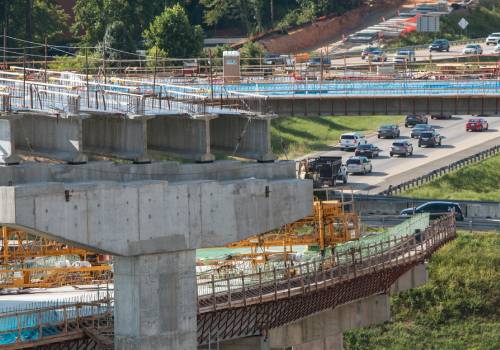
Across the U.S., billions of dollars have been committed to roads, bridges and public works. On paper, the pipeline looks strong.
But on the ground, the work isn’t always moving at the same pace.
Projects are announced but have not started. Timelines shift. Approvals drag. And contractors are left planning uncertainty instead of a steady flow of work.
The issue is how reliably that funding turns into projects you can bid, schedule and build.
“When those systems fall behind, costs rise, safety suffers and competitiveness erodes,” says Brian Bieller, President of BOMAG America Inc.
Funding may be strong, but project timing is not, and success now depends on how well you manage that gap.

The industry isn’t waiting on funding anymore. It’s waiting on alignment.
THE REAL PROBLEM: FUNDING DOESN’T EQUAL WORK
Even when dollars are approved, projects can stall for months—or longer—due to permitting delays, coordination challenges and shifting priorities.
“When you don’t have certainty, you increase your risk,” says Brigham McCown, Senior Fellow at Hudson Institute and CEO of Nouveau Consulting. “Companies don’t hire. Financial entities are less willing to deploy capital. It’s harder to get things done.”
Reliable, long-term funding allows:
- Planning beyond short-term cycles
- Scheduling projects with realistic timelines
- Making correct staffing decisions
- Investing in equipment and technology
WHERE PROJECTS ACTUALLY GET STUCK
The biggest slowdowns are happening between approval and execution.
Permitting remains one of the most significant bottlenecks. Projects can take years to move through reviews before work begins.
“The ability to deliver projects without having to study it to death is really important,” Brigham says.
The impact is measurable. Permitting delays can take years for larger projects and cost trillions in unrealized GPD. This pushes projects further down the timeline and delays when work reaches contractors.
At the same time, infrastructure delivery has become more interconnected across regions. Materials, labor availability, equipment demand and supply chain pressures don’t stop at state lines. Delays in one area can ripple into others, slowing project movement even when funding is available.
How to address:
- Supply chain issues and flows should be looked at with a broader scope. Think regionally instead of just locally or even at the state level.
- States shouldn’t compete against each other. They should look at competition with other countries.
- Just because funding is available, don’t assume that means work can happen. Be sure materials and workers align with planned timelines.
WHY THIS MATTERS TO CONTRACTORS RIGHT NOW
There is plenty of work to be done, but planning for when that work will happen is difficult—even when funding has been allocated. “We need consistency, a certainty, in the economy to keep them stable, to keep them functional,” says Tracy Larkin Thomason, Director of the Nevada Department of Transportation.
Contractors who recognize this shift early can avoid overextending and make more strategic decisions about when and how to grow.
WHAT CONTRACTORS SHOULD DO NOW
This environment requires a different approach to planning and growth.
How to prepare now:
- Plan for variability, not consistency: Expect gaps between project approval and actual start dates.
- Align hiring with confirmed work: Scale crews based on what’s moving, not what’s announced.
- Track approvals, not just funding: Permitting and coordination often determine when work begins.
- Build flexibility into operations: Be ready to adjust as timelines shift.
- Stay positioned without overcommitting: Keep capacity available but avoid locking into costs too early.
- Think beyond the current cycle: The contractors who will be best positioned long-term are the ones that can operate through uneven project flow without losing momentum.
THE NEXT PHASE IS ABOUT FOLLOW-THROUGH
The industry needs better alignment to keep projects moving.
Until funding, permitting and delivery move at the same pace, contractors will continue operating in a start-and-stop environment.
Contractors must manage uncertainty, stay flexible and position themselves now to act when projects finally move.
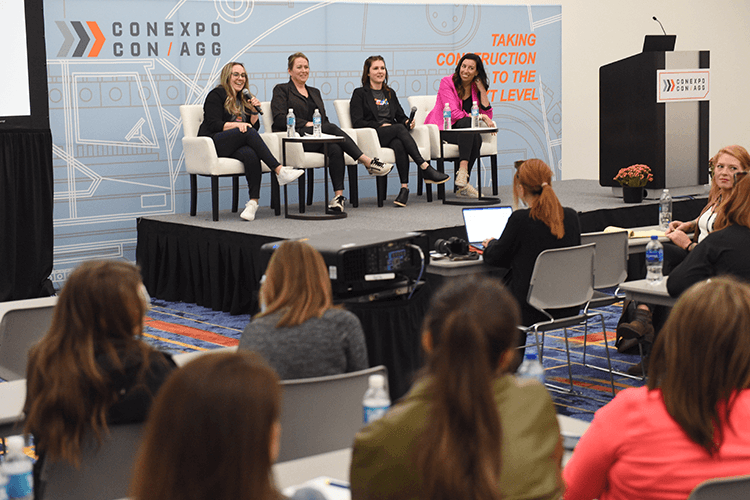
Listen to the full discussion on What’s Next for U.S. Infrastructure held during CONEXPO-CON/AGG 2026, for free, on demand.
PHOTO CREDIT: SHUTTERSTOCK/BLUIZ70